Best Platform for SEO for SaaS to Dominate Organic and AI Search
Organic search is quietly one of the most powerful growth engines in the SaaS world, and the numbers back it up. Organic traffic accounts for 53% of all website traffic among the top 50 SaaS companies, making it the single biggest source of new visitors for any SaaS site. Yet many SaaS founders and marketing teams treat SEO as an afterthought, scrambling for the right tools, the right strategy, and, perhaps most critically, the right platform to power it all.
This guide cuts through the noise. Whether you’re an early-stage startup looking to build your first organic footprint or a scaling SaaS brand trying to outrank well-funded competitors, we’ll walk you through the best platforms for SEO for SaaS, what makes them different, how to choose the right one, and what it really takes to win at organic search.

Key Takeaways
- SEO is a core growth engine for SaaS, driving significant traffic, lowering CAC, and delivering long-term compounding ROI.
- The best SEO platform for SaaS must go beyond basics, offering intent-based keyword research, technical auditing, competitor insights, and AI visibility tracking.
- No single tool does everything; high-performing SaaS teams build a tailored SEO tech stack based on their growth stage and needs.
- Strategy matters more than tools, with success driven by strong keyword targeting, full-funnel content, technical SEO, and consistent link building.
- SaaS companies that invest in topical authority and AI-ready content will outperform competitors as search continues shifting toward AI-driven discovery.
Why SEO Is Non-Negotiable for SaaS Companies
Before we dive into platforms, let’s establish why this matters so much.
SaaS is a subscription-first business model. Customer Acquisition Cost (CAC), churn, and Monthly Recurring Revenue (MRR) are the metrics that make or break a company. SEO directly improves all three, and the data is unambiguous.
The ROI Case for SaaS SEO
Here are some key statistics that should be pinned to every SaaS marketing team’s dashboard:
| Metric | Data Point |
| ROI of SEO for SaaS companies | 702% (First Page Sage) |
| Break-even timeline for SEO investment | ~7 months |
| Organic traffic share (top 50 SaaS) | 26.4% of all traffic |
| SaaS companies treating SEO as a top priority | 63% |
| SaaS SEO budget growth in 2025 | +7.2% |
| Customer acquisition cost via SEO | £560 vs £593 via PPC |
| Visitors who start a free trial from organic | 8.5% |
| Free trial-to-paid conversion rate | 18.2% |
| CAC reduction with inbound (vs outbound) | 15% lower |
Sources: First Page Sage, Gripped, Mike Sonders, Paddle, Conductor
The verdict is clear: SaaS SEO is a compounding revenue asset. Every piece of content you rank, every backlink you earn, and every technical improvement you make continues working for you around the clock without incremental ad spend.
What Makes SaaS SEO Unique
SEO for a SaaS company looks very different from SEO for an e-commerce store or a local service business. Here’s why:
- Long and complex buying cycles — SaaS buyers research extensively before committing. Your content needs to support every stage of that journey.
- High-value keywords with intense competition — Terms like “best CRM software” or “project management tool” attract huge traffic and enormous competition from well-funded incumbents.
- Product-led and content-led funnels — Your SEO strategy needs to serve both free trial sign-ups and demo-request funnels simultaneously.
- Churn prevention content — Help docs, tutorials, and knowledge bases are also SEO opportunities that reduce support costs and improve retention.
- Category creation — Many SaaS companies are defining new categories. SEO must build awareness and capture demand that doesn’t fully exist yet.
What to Look for in the Best SEO Platform for SaaS
Not all SEO platforms are created equal, and what works for a local restaurant won’t cut it for a SaaS company competing globally. Here’s what you should look for when evaluating SaaS SEO tools or platforms:
1. Comprehensive Keyword Research with Intent Filtering
SaaS buyers use very specific language. You need a platform that doesn’t just surface high-volume keywords but helps you distinguish between:
- Informational intent (e.g., “what is customer success software”) — ideal for top-of-funnel blog content
- Comparative intent (e.g., “HubSpot vs Salesforce”) — high-converting, mid-funnel comparison pages
- Transactional intent (e.g., “buy project management SaaS”) — direct conversion pages
- Navigational intent (e.g., “[competitor] alternative”) — competitive landing pages
2. Technical SEO Auditing
SaaS websites often have complex architectures, app subdomains, dynamic pages, JavaScript-heavy UIs, and product dashboards that can create crawlability issues. Your platform must be able to:
- Crawl large, complex sites efficiently
- Detect Core Web Vitals issues
- Flag indexation problems (noindex tags, canonicalization errors, orphan pages)
- Identify duplicate content issues common in SaaS product listing pages
3. Competitive Intelligence
In SaaS, knowing your competitor’s organic strategy is gold. Look for platforms that surface:
- Competitor keyword rankings
- Content gap analysis
- Backlink profiles of top competitors
- Share of voice across your category
4. Backlink Analysis and Link Building Support
Backlinks remain one of Google’s most powerful ranking signals. An estimated 66.5% of backlinks go dead within nine years, which means link-building is not a one-time activity. You need a platform that monitors your backlink profile in real time and identifies new link-building opportunities.
5. Content Optimization and Planning
The best SEO platforms for SaaS include built-in content tools that help you:
- Identify content gaps against top-ranking competitors
- Optimize existing content for target keywords
- Plan content calendars aligned to buyer funnel stages
- Score content quality before publishing
6. AI Search and LLM Visibility Tracking
AI Overviews now appear in 13–20% of all Google searches (up from 6.5% in January 2025), and tools like ChatGPT, Perplexity, and Gemini are increasingly becoming part of how B2B buyers research software. The best platforms now include features to track your visibility in these AI-generated answers.
7. Reporting Tied to Business Metrics
Vanity metrics like impressions and clicks are not enough. SaaS teams need to connect organic performance to:
- Demo requests
- Free trial sign-ups
- MQL and SQL volume
- MRR attributed to organic

The Best SEO Platforms for SaaS: A Full Breakdown
Semrush — Best All-in-One SEO Platform for SaaS Teams
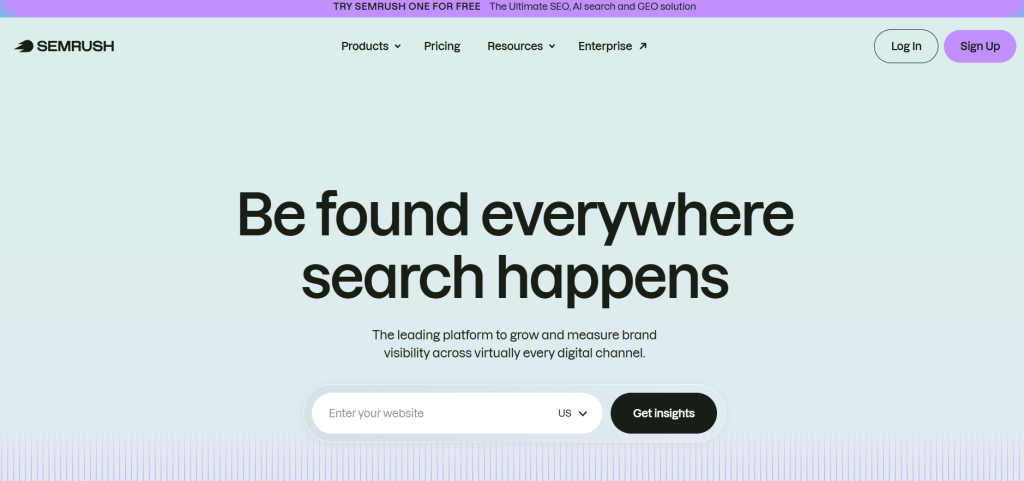
Semrush is widely regarded as the most comprehensive SEO platform on the market, and for SaaS companies, it earns its place at the top of this list. It covers virtually every SEO use case: keyword research, site auditing, backlink analysis, position tracking, content optimization, and competitor analysis, all under one roof.
Key SaaS-relevant features:
- Keyword Magic Tool — Access to 26+ billion keywords with advanced filtering by intent, difficulty, and CPC
- Traffic Analytics — Estimate competitor organic traffic with remarkable accuracy
- AI Visibility Toolkit — Tracks your brand’s presence in ChatGPT, Perplexity, Gemini, and Claude ($99/month add-on per domain)
- ContentShake AI — AI-assisted content creation built into the platform
- Backlink Audit — Real-time monitoring of your backlink profile and toxic link detection
- Position Tracking — Daily rank tracking across locations, devices, and SERP features
Pricing: Plans start at $139.95/month (Pro), with Business plans for larger teams at $499.95/month.
Best for: Mid-market to enterprise SaaS companies that need a unified platform across all SEO functions and want competitive intelligence at scale.
Limitation: Can feel overwhelming for smaller teams. The AI Visibility Toolkit is an additional cost.
Ahrefs — Best for Backlink Analysis and Keyword Research Depth
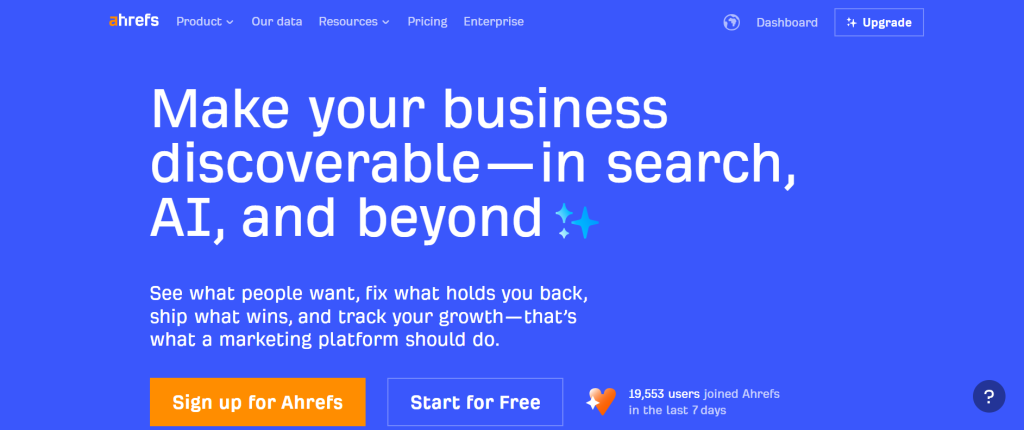
Ahrefs is the tool of choice for SEO professionals who live and breathe backlink data. Its database of over 22 billion keywords is one of the largest available, and its backlink index is frequently cited as the most accurate in the industry.
Key SaaS-relevant features:
- Site Explorer — Deep-dive into any competitor’s organic traffic, top pages, and backlink profile
- Content Gap Analysis — Find keywords competitors rank for that you don’t
- AI Content Helper — On-page SEO assistant that helps you write to rank without over-optimizing
- Brand Radar — Tracks mentions of your brand across ChatGPT and other AI platforms
- Keywords Explorer — Filters by traffic potential, keyword difficulty, and parent topic
- Web Explorer — Full-text search across billions of web pages for link prospecting
Pricing: Plans start at $129/month (Lite), with Advanced plans at $449/month.
Best for: SaaS companies where link-building is a core growth strategy, and teams that need highly reliable, data-rich keyword research.
Limitation: No native content creation tools; you’ll need to pair with a content optimization platform.
SE Ranking — Best Budget-Friendly SaaS SEO Platform
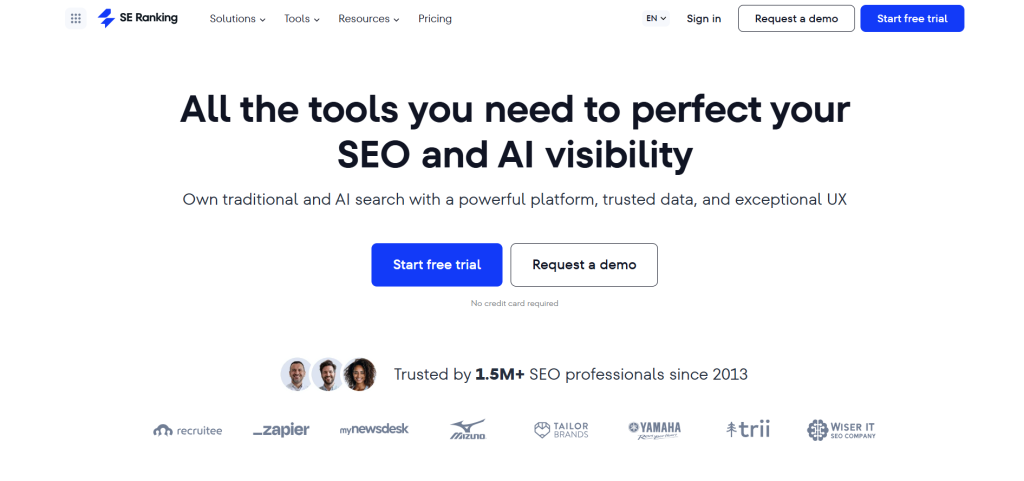
SE Ranking punches well above its price point. With a 4.8/5 rating on G2 (based on over 1,400 reviews), it’s regularly praised as the most cost-effective alternative to Semrush, particularly for SaaS teams that don’t need the enterprise-level data volume of the big players.
Key SaaS-relevant features:
- AI Overviews Tracker — Included in the base plan at no extra cost (vs. Semrush’s $99 add-on)
- Rank Tracker — Daily updates with SERP feature tracking
- Competitive Research — Traffic and keyword data for any competitor domain
- On-Page SEO Checker — Actionable recommendations for optimizing any URL
- Backlink Monitor — Alerts when you gain or lose backlinks
Pricing: Plans start at ~$65/month (Essential), scaling to ~$209/month (Business).
Best for: Early-stage and growth-stage SaaS companies that need professional SEO capabilities without enterprise pricing.
Limitation: Smaller database compared to Semrush and Ahrefs; less suitable for highly competitive global markets.
Surfer SEO — Best for Content Optimization at Scale
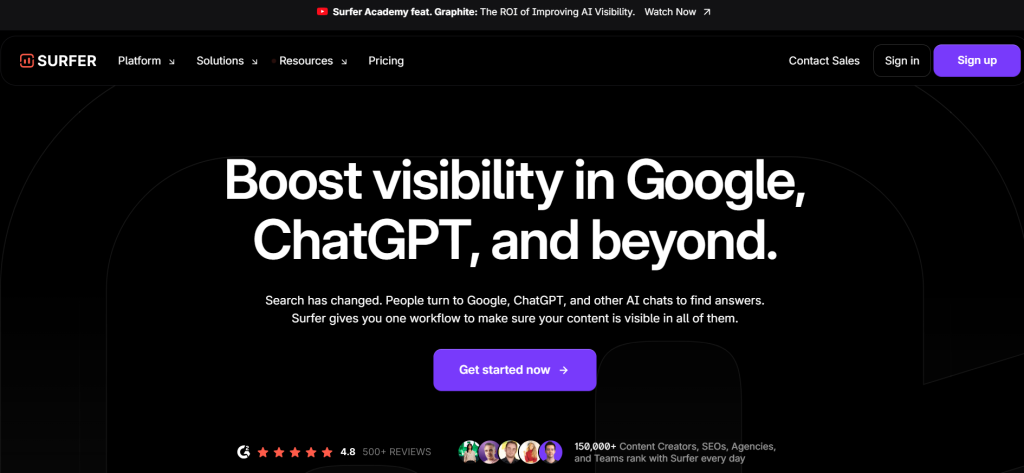
If content is the backbone of your SaaS SEO strategy (and it should be), Surfer SEO is the tool that makes sure every article you publish is structurally optimized to rank. It analyzes the top-ranking pages for any keyword and scores your content in real time as you write.
Key SaaS-relevant features:
- Content Editor — Real-time scoring based on keyword usage, structure, and NLP signals
- SERP Analyzer — Breaks down why the top-ranking pages win for any query
- Topical Map — AI-generated content strategy showing which topics to cover to build authority
- Audit Tool — Identifies optimization opportunities in your existing content
- Integrations — Works with Google Docs, WordPress, and Jasper AI
Pricing: Plans start at $99/month (Essential), with Scale plans at $219/month.
Best for: SaaS content teams that publish regularly and want to systematically improve content quality and rankings.
Limitation: Primarily a content optimization tool; needs to be paired with a full-stack SEO platform for keyword research and backlink analysis.
Clearscope — Best for Enterprise SaaS Content Teams
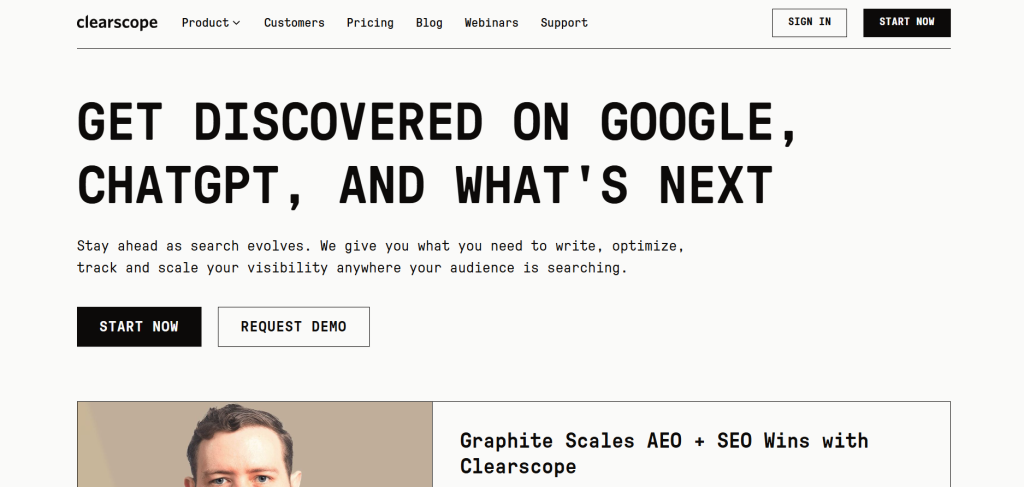
Clearscope is a premium content optimization platform built for teams where quality and precision matter most. It uses Google’s Natural Language Processing (NLP) to help writers create content that genuinely covers a topic with depth and authority.
Key SaaS-relevant features:
- Content Grading — NLP-powered grading system that scores content relevance
- Keyword Discovery — Surfaces semantically related terms your content should cover
- Content Inventory — Monitor and optimize your entire existing content library
- Team Collaboration — Built for multiple writers and editors working on the same content strategy
Pricing: Starts at $199/month (Essentials).
Best for: Enterprise SaaS companies and large content teams where thought leadership and content quality are central to the brand.
Limitation: Expensive for smaller teams; no technical SEO or backlink features.
Screaming Frog — Best for Technical SEO Auditing
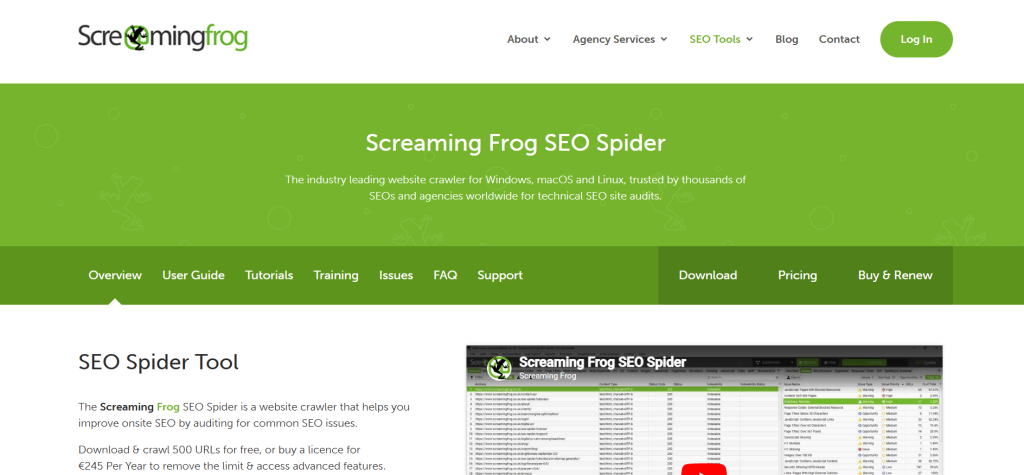
Technical SEO is the often-overlooked foundation that determines whether your content can rank at all. Screaming Frog is the gold standard for website crawling, used by SEO professionals worldwide to uncover technical issues that block organic growth.
Key SaaS-relevant features:
- Full Site Crawl — Identifies broken links, redirect chains, duplicate content, missing meta tags, and more
- JavaScript Rendering — Critical for SaaS products built on React, Angular, or Vue frameworks
- Core Web Vitals Integration — Direct connection to Google’s performance metrics
- Custom Extraction — Pull any data point from your HTML for deep analysis
- Structured Data Testing — Validate schema markup for rich results
Pricing: Free (up to 500 URLs) or £259/year for the paid version.
Best for: Any SaaS company with a technically complex website, particularly those built on JavaScript frameworks.
Limitation: Desktop-only; requires technical knowledge to interpret and act on results.
Google Search Console — Best Free SEO Platform (Essential for All SaaS)
No SEO stack is complete without Google Search Console. It’s free, it’s directly from Google, and it provides data no third-party tool can fully replicate: actual impressions, clicks, and position data for your pages.
Key SaaS-relevant features:
- Performance Report — See exactly which queries drive clicks and impressions to every page
- Index Coverage Report — Identify which pages Google has indexed and why some are excluded
- Core Web Vitals Report — Google’s own assessment of your page experience
- URL Inspection — Check the crawled and rendered version of any page
- Sitemap Submission — Ensure Google can discover and index new content promptly
Pricing: Free.
Best for: Every SaaS company, without exception. This should be the first tool you set up.
MarketMuse — Best for SaaS Content Strategy and Topic Authority
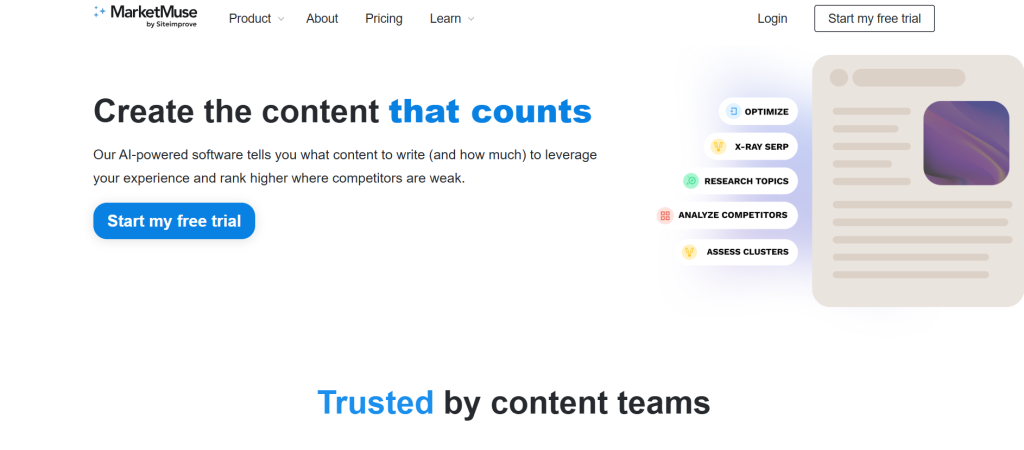
MarketMuse takes a different approach to content planning. Instead of starting with individual keywords, it analyzes your entire site’s topical coverage and identifies where you have authority gaps that prevent ranking.
Key SaaS-relevant features:
- Topic Modeling — AI-powered analysis of your site’s topical authority
- Content Briefs — Automatically generated briefs that include questions, subtopics, and competitive data
- Content Quality Score — Site-wide scoring of every existing page
- Competitive Content Analysis — Topic-level (not just keyword-level) competitive intelligence
Pricing: Starts at $149/month (Optimize); custom enterprise pricing available.
Best for: SaaS companies with large content libraries who need a strategic framework for content planning and topical authority building.
Platform Comparison at a Glance
Here’s a quick comparison of the key platforms covered above:
| Platform | Best For | Starting Price | AI Search Tracking | Technical SEO | Content Optimization |
| Semrush | All-in-one | $139.95/mo | ✅ (add-on) | ✅ | ✅ |
| Ahrefs | Backlinks & KW Research | $129/mo | ✅ (Brand Radar) | ✅ | ✅ (limited) |
| SE Ranking | Budget-friendly | ~$65/mo | ✅ (built-in) | ✅ | ✅ |
| Surfer SEO | Content optimization | $99/mo | ❌ | ❌ | ✅ |
| Clearscope | Enterprise content | $199/mo | ❌ | ❌ | ✅ |
| Screaming Frog | Technical audits | Free / £259/yr | ❌ | ✅ | ❌ |
| Google Search Console | Foundational data | Free | ❌ | ✅ | ❌ |
| MarketMuse | Content strategy | $149/mo | ❌ | ❌ | ✅ |
How to Build the Right SEO Tech Stack for Your SaaS Stage
The right SEO platform depends heavily on where your SaaS company is in its growth journey. Here’s a framework by stage:
🌱 Early-Stage SaaS (Pre-Series A)
At this stage, resources are limited and every dollar counts. Focus on getting the fundamentals right without overspending on enterprise tools.
Recommended stack:
- Google Search Console (free) — foundational performance data
- SE Ranking (~$65/mo) — all-in-one keyword, rank tracking, and competitor research
- Surfer SEO ($99/mo) — to ensure every piece of content is properly optimized before publishing
- Screaming Frog (free tier) — technical audits
Total estimated monthly spend: ~$164/month
🚀 Growth-Stage SaaS (Series A–B)
You’re publishing content at scale, building backlinks, and starting to invest in content operations. You need more data depth and team collaboration features.
Recommended stack:
- Semrush ($299/mo) — comprehensive SEO platform with team features
- Surfer SEO ($219/mo) — content optimization at scale
- Screaming Frog (£259/yr) — deep technical auditing
- Google Search Console (free) — always on
Total estimated monthly spend: ~$540/month
🏢 Enterprise SaaS (Series C+)
At this stage, SEO is a major revenue channel. You need enterprise-grade data, advanced AI visibility tracking, and deep integrations with your marketing stack.
Recommended stack:
- Semrush Business ($499/mo) + AI Visibility Toolkit ($99/mo) — full platform with AI search
- Ahrefs ($449/mo) — superior backlink data and competitive intelligence
- Clearscope ($199+/mo) — premium content quality at scale
- MarketMuse (custom) — strategic topical authority planning
- Screaming Frog (£259/yr) — technical auditing
Total estimated monthly spend: ~$1,300+/month
The Missing Piece: Platforms vs. Strategy
Here’s the hard truth that many SaaS companies discover after spending thousands on SEO tools: platforms don’t rank your website. Strategy does.
A Semrush subscription without a clear content plan, a link-building strategy, and technical SEO execution is just an expensive dashboard. The tools surface the data; you still need to know what to do with it.
This is where most SaaS teams hit a wall. The common challenges include:
- Keyword selection paralysis — There are millions of keyword opportunities. Which ones actually align with your ICP and buying intent?
- Content that ranks but doesn’t convert — Traffic is great; pipeline is better.
- Technical debt — SaaS products built fast accumulate technical SEO issues that silently kill rankings.
- Link building — This remains one of the hardest and most time-intensive SEO activities, and it can’t be fully automated.
- AI search readiness — As generative AI reshapes how buyers discover software, your content needs to be structured to appear in AI-generated answers, not just traditional blue-link results.
The solution? A specialized SaaS SEO partner who knows not just how to use the tools, but how to build the strategy behind them.

Key SaaS SEO Strategies That Always Work
Regardless of which platform you choose, here are the core strategic pillars that drive organic growth for SaaS companies right now.
Build Topical Authority, Not Just Rankings
Google increasingly rewards websites that demonstrate expertise across an entire topic area, not just individual keywords. For SaaS companies, this means building out comprehensive content clusters:
- Pillar pages — Long-form, authoritative guides on your core topic (e.g., “The Complete Guide to Customer Success Software”)
- Cluster content — Dozens of supporting articles that link back to the pillar and each other
- Glossary pages — Definitions of key industry terms that capture informational search intent
Target Competitor and Alternative Keywords
Some of the highest-converting keywords in SaaS are comparison and alternative searches:
- “[Competitor] alternatives”
- “[Competitor] vs [Your Product]”
- “Best [category] software”
These searches have high commercial intent, the user is actively evaluating options, which means they’re close to a buying decision.
Optimize for the Full Funnel
Map your keyword and content strategy to each stage of the buyer journey:
| Funnel Stage | Intent | Content Type | Example Keywords |
| Awareness | Informational | Blog posts, guides | “what is customer success” |
| Consideration | Comparative | Comparison pages, reviews | “best customer success software” |
| Decision | Transactional | Landing pages, case studies | “customer success software free trial” |
| Retention | Educational | Help docs, tutorials | “how to set up customer health scores” |
Prioritize Technical SEO From Day One
Technical SEO issues are silent killers. SaaS websites built on JavaScript frameworks (React, Vue, Next.js) are particularly vulnerable to crawlability problems. Key areas to address:
- Core Web Vitals — Google uses page experience signals as ranking factors
- Crawl budget management — Prevent Google from wasting crawl budget on app pages, dynamic parameters, or duplicate content
- Structured data (Schema markup) — Helps Google understand your content and display rich results in SERPs
- Internal linking — A strong internal link structure passes authority throughout your site and helps Google discover new content
Invest in Link Building
Backlinks remain one of the strongest ranking signals. For SaaS companies, effective link-building strategies include:
- Digital PR — Publish original research and data studies that journalists and bloggers cite
- Thought leadership — Guest posts on industry publications and podcasts
- Tool-led link building — Create free tools or calculators that attract natural backlinks
- Partner ecosystems — Integration partners, technology alliance pages, and co-marketing initiatives all generate high-quality backlinks
- HARO / journalist requests — Respond to journalist queries to earn mentions in high-authority publications
Prepare for AI-Driven Search
AI is fundamentally changing how buyers discover software. Google’s AI Overviews, ChatGPT, and Perplexity are increasingly the first touchpoints in a B2B research journey. To appear in these answers:
- Structure content with clear, direct answers to specific questions
- Use FAQ sections on key pages
- Include data, statistics, and original research that AI models prefer to cite
- Build topical authority signals that establish your brand as an expert source
- Optimize for E-E-A-T (Experience, Expertise, Authoritativeness, Trustworthiness)
Common SaaS SEO Mistakes to Avoid
Even with the best tools, many SaaS companies make the same strategic errors. Here are some common SaaS SEO mistakes to avoid:
- ❌ Targeting only high-volume keywords — High volume often means high competition. Long-tail keywords with specific intent frequently convert better.
- ❌ Ignoring the bottom of the funnel — Most SaaS content focuses on awareness-stage topics. Investing in decision-stage content (pricing pages, comparison guides, case studies) drives faster pipeline impact.
- ❌ Publishing without optimization — Content that isn’t structured for SEO from the start requires expensive rework later.
- ❌ Neglecting existing content — Updating and improving existing pages often delivers faster results than publishing new ones.
- ❌ Treating SEO as a one-time project — SEO is a compounding, ongoing investment. Companies that treat it as a campaign rather than a channel see their rankings decay over time.
- ❌ Ignoring AI search readiness — As noted, 13–20% of searches now show AI Overviews. Not optimizing for AI-generated answers means missing a growing share of search visibility.
🚀 Ready to Win Organic Search for Your SaaS? Work With Queen of Clicks
Choosing the right SEO platform is just the beginning. The real growth happens when data-driven strategy, SaaS-specific expertise, and relentless execution come together, and that’s exactly what Queen of Clicks delivers.
We are a specialized SaaS SEO agency built to help software companies like yours grow organic traffic, generate more demo requests and free trials, and build lasting authority in your category. We combine:
- 🔍 Deep keyword strategy tailored to your ICP, product, and buying funnel
- ⚙️ Technical SEO execution — from crawl audits to Core Web Vitals optimization
- ✍️ Content that converts — long-form articles, comparison pages, and thought leadership built to rank and drive pipeline
- 🤖 AI search optimization — structured to appear in Google AI Overviews, ChatGPT, and Perplexity answers
- 🔗 Authority building — through strategic link acquisition and digital PR
- 📊 Reporting that matters — tied to organic signups, demo requests, and MRR growth, not just vanity metrics
Whether you’re an early-stage startup building organic traction from scratch or a growth-stage SaaS brand competing in a crowded category, Queen of Clicks is your partner for long-term organic success.
👉Get Your Free SaaS SEO Consultation →
Or explore our SaaS SEO ROI Calculator to see the revenue potential waiting in your organic search channel.
Your competitors are investing in SEO right now. Let’s make sure you’re the one who wins.

Conclusion
The best platform for SEO for SaaS isn’t one-size-fits-all, it depends on your stage, your budget, your team’s capabilities, and your growth goals. For most SaaS companies:
- Semrush leads as the most comprehensive all-in-one platform
- Ahrefs is unmatched for backlink intelligence and keyword depth
- SE Ranking is the smartest choice for teams watching their spend
- Surfer SEO is essential for content-driven SaaS strategies
- Google Search Console is non-negotiable and free
But the most important investment you can make isn’t in software, it’s in strategy. The SaaS companies winning organic search aren’t just using better tools. They’re executing smarter, more consistent, and more intent-aligned SEO programs.
With the right platform, the right strategy, and the right partner, organic search becomes your most efficient and scalable acquisition channel, compounding in value every month, driving down your CAC, and building a moat that paid ads simply cannot replicate.
FAQs
How long does it take to see SEO results for a SaaS company?
SEO is a long-term investment. Most SaaS companies begin to see meaningful improvements in organic traffic within 4–6 months of consistent execution. However, significant pipeline impact, in the form of demo requests and trial sign-ups attributable to organic, typically becomes evident around the 7-month mark, which aligns with research showing that’s when SaaS companies tend to break even on their SEO investment. Highly competitive markets may take 12–18 months to show substantial results for the most difficult keywords.
Should a SaaS startup invest in SEO or paid ads first?
There’s no universally correct answer, but a common approach is to run targeted paid ads to validate messaging and generate early pipeline while simultaneously building your organic foundation. Paid ads provide immediate traffic but stop the moment you stop spending. SEO, while slower to ramp, delivers compounding returns over time. For most SaaS companies, a blended approach early on, with increasing investment shifting toward organic as the channel matures, produces the best long-term economics.
What is the difference between SaaS SEO and general SEO?
SaaS SEO differs from general SEO in several important ways. First, the sales cycle is longer and more complex, meaning content must address multiple buyer personas across different stages. Second, SaaS companies often operate in highly competitive, global categories where domain authority matters enormously. Third, the success metrics go beyond rankings and traffic, they must connect to free trial sign-ups, demo requests, and ultimately MRR. Finally, SaaS products are frequently built on JavaScript frameworks that introduce technical SEO challenges not present in simpler website types.
Is it better to build an in-house SEO team or hire a SaaS SEO agency?
Both models can work, and many high-growth SaaS companies use a hybrid approach. In-house teams have deeper product knowledge and can move quickly on content related to the product itself. However, building a fully capable in-house SEO function, with expertise in technical SEO, content strategy, link building, and AI search optimization, typically requires three to five senior hires and takes considerable time to ramp. A specialized SaaS SEO agency provides immediate access to a full-stack team, proven processes, and cross-client insights that an in-house team rarely develops as quickly. For most companies below Series C, a specialized agency delivers better ROI faster.
How important are backlinks for SaaS SEO specifically?
Backlinks remain one of the most powerful ranking signals in Google’s algorithm, and this is especially true in competitive SaaS categories where many companies are producing quality content. Without a strong backlink profile, even well-optimized content struggles to rank on the first page for commercial keywords. For SaaS companies, the most effective link-building strategies include original research reports, free tools and calculators that attract natural links, strategic guest publishing on industry publications, and digital PR campaigns. Quantity matters less than the authority and relevance of the linking domains.
What is Generative Engine Optimization (GEO) and why does it matter for SaaS?
Generative Engine Optimization (GEO), also called Answer Engine Optimization (AEO) or LLM Optimization, refers to the practice of structuring content so it appears in AI-generated answers from tools like ChatGPT, Perplexity, Google’s AI Overviews, and Gemini. This matters for SaaS companies because a growing share of B2B software research is now happening directly inside these AI interfaces. Buyers ask conversational questions, “What’s the best project management tool for remote teams?”, and receive AI-generated summaries. If your brand isn’t structured to be cited in those answers, you’re invisible to an increasingly large segment of potential buyers. GEO involves clear answer formatting, citing verifiable data, building strong E-E-A-T signals, and developing topical authority that AI models recognize.
How do I measure the ROI of SEO for my SaaS business?
Measuring SEO ROI for SaaS requires connecting organic traffic to downstream business outcomes, not just tracking rankings or page views. The framework looks like this: first, configure goal tracking in Google Analytics 4 to capture free trial sign-ups, demo form submissions, and any other conversion events. Next, use UTM parameters and attribution modeling to understand which organic pages contribute to these conversions. Then, assign revenue values to these conversions based on your historical trial-to-paid conversion rate and average contract value. Finally, compare the total revenue attributable to organic against your total SEO investment (tools + agency or team salaries) over a defined period. Benchmark: the industry average SEO ROI for SaaS companies is 702%, with a typical break-even point around seven months.