Enterprise SaaS SEO: The Complete Handbook on How to Master It
Enterprise SaaS SEO is the specialized practice of optimizing software-as-a-service websites that target enterprise clients, with the goal of driving highly qualified traffic, improving search visibility, and generating scalable leads. Unlike traditional SEO, SaaS SEO focuses on complex, multi-layered strategies that address technical infrastructure, content architecture, domain authority, and user experience at scale.
Organic search drives around 53% of total SaaS website traffic, making it the largest and most cost-efficient acquisition channel. Yet, despite its potential, mastering SEO at the enterprise level is far more complex, requiring alignment across content, technical infrastructure, product, and revenue teams.

Key Takeaways
- Enterprise SaaS SEO requires a long-term, scalable strategy focused on sustainable growth, not quick wins
- Targeting high-intent, non-branded keywords is essential for attracting qualified traffic
- High-quality, intent-driven content is the foundation for both rankings and conversions
- Technical SEO and site performance play a critical role in maintaining visibility at scale
What Is Enterprise SEO for SaaS
Enterprise SEO for SaaS is the practice of optimizing large-scale Software-as-a-Service platforms to attract highly qualified organic traffic and drive substantial revenue. It goes beyond typical SEO and focuses on the unique challenges and opportunities presented by massive websites, complex technical infrastructures, highly competitive mid-to-bottom-of-funnel keywords, and cross-departmental coordination within a large organization.
The Evolution of Enterprise SaaS SEO
The landscape of Enterprise SaaS SEO has undergone a profound evolution, moving far beyond traditional, tactical optimizations. Today, the discipline sits at the crucial intersection of Big Data analytics, complex engineering, and advanced conversion strategy. The core shift in focus has been radical:
- From Volume to Quality: The emphasis is no longer on maximizing raw organic traffic numbers, but on maximizing the efficiency and conversion quality of that traffic, ensuring every visitor is highly qualified.
- The AI Imperative: Modern enterprise strategy must now account for disruptive changes like the proliferation of Generative AI in search (SGE). This requires content to be rigorously optimized for EEAT (Experience, Expertise, Authoritativeness, and Trustworthiness) signals above all else, as AI models prioritize trusted, factually-grounded sources.
- Engineering Focus: Success demands deep integration with engineering teams to manage the scale and complexity of massive, dynamic SaaS platforms, focusing heavily on JavaScript rendering and Core Web Vitals across millions of URLs.
- Revenue Alignment: Success is no longer measured solely in rankings. The goal is to drive high-intent, bottom-of-funnel conversions, seamlessly integrating SEO insights directly into the product development, sales, and revenue operations workflows to directly impact MRR and LTV.
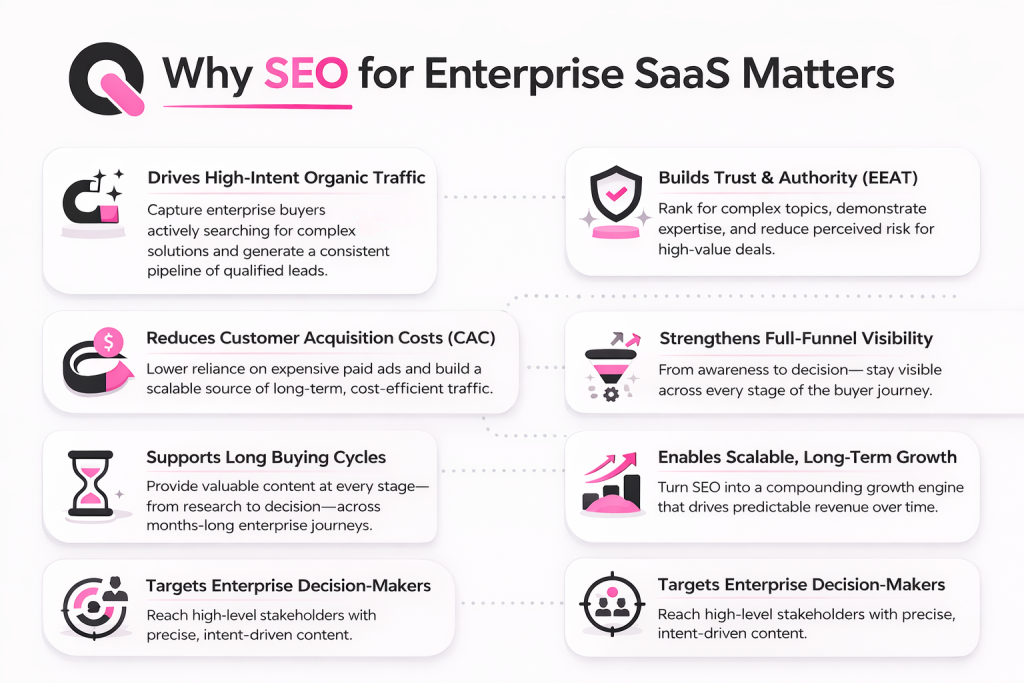
Why SEO for Enterprise SaaS Matters
For large-scale Software-as-a-Service organizations, Enterprise SEO is not merely a marketing tactic; it is a fundamental business strategy that guarantees sustainable, compounding growth and protects market share against aggressive competition. In the enterprise landscape, the stakes are higher, and the reliance on predictable lead generation is critical.
Why Is SEO for Enterprise SaaS Companies Important
For Enterprise SaaS companies, SEO is not an optional marketing expense; it is a critical infrastructure investment that dictates long-term financial health and market dominance. Due to the scale, complexity, and high-value nature of the customer acquisition, robust SEO practices are mandatory.
Drives Consistent, High-Intent Organic Traffic
Enterprise SEO ensures your platform is perpetually visible to high-value decision-makers at the exact moment they are actively researching complex solutions. This moves your acquisition model from reactive spending to proactive resource building.
- Targeting High-Value Keywords: Strategies focus on dominating specific, long-tail keywords that signal immediate commercial intent (e.g., “best large-scale API management platform,” “platform X vs. platform Y integration costs”).
- Guaranteed Pipeline: Successfully ranking for these terms guarantees a consistent, non-cyclical pipeline of leads directed straight into the mid- and bottom-of-the-funnel stages, ensuring stable sales forecasting.
Reduces Customer Acquisition Costs (CAC) at Scale
In the enterprise space, Paid Advertising (PPC, display) for high-value keywords is prohibitively expensive and leads to volatility. SEO offers the antidote to spiraling costs.
- Lower Blended CAC: Enterprise SEO provides a scalable, sustainable source of “earned” traffic. By ranking organically for critical terms, you reduce reliance on paid campaigns, dramatically lowering your blended Customer Acquisition Cost (CAC) and improving the overall efficiency of your marketing budget across millions of potential searches.
Supports Long, Research-Heavy SaaS Buying Cycles
Enterprise purchasing decisions are characterized by high cost, high risk, and lengthy timelines, often involving multiple stakeholders and months of research. SEO provides the necessary authoritative content at every step.
Builds Trust and Authority in Competitive Markets
seven-figure contracts and deep integration into a client’s business operations, trust is the single most valuable currency. Enterprise SEO is the primary mechanism for organically building this authority.
- Establishing Expertise (EEAT): By consistently ranking at the top of search results for complex technical queries, industry best practices, and detailed comparisons, your platform demonstrates undeniable Expertise, Authoritativeness, and Trustworthiness (EEAT). This third-party validation from Google is far more convincing to a buyer’s committee than branded advertising.
- Mitigating Perceived Risk: When a decision-maker searches for an essential topic and your brand reliably provides the best, most comprehensive answer, it signals reliability. This systematic visibility reduces the perceived risk associated with a massive vendor commitment, which is crucial for moving prospects through the lengthy enterprise sales cycle.
- Controlling the Narrative: SEO allows the enterprise to control the narrative around its products and the industry itself. By creating and ranking the definitive content for “alternatives to X” or “best practices for Y,” you shape the buyer’s evaluation criteria and position your solution favorably against competitors before the sales team even gets involved.
Enables Visibility Across Multiple Product Lines and Segments
The strategy must establish comprehensive expertise across the entire platform, not just the flagship product.
- Topical Authority: SEO creates deep Content Clusters around all core features, use cases, industry segments, and specialized solutions (e.g., vertical-specific templates). This validates your company as the authoritative expert across the entire domain.
Strengthens Brand Presence Across the Entire Funnel
SEO ensures continuous visibility and relevance throughout the entire buyer’s journey, building the familiarity and trust essential for large contracts.
- Awareness Stage: Informational content and thought leadership pieces capture interest early on.
- Evaluation Stage: Detailed comparison pages, ROI calculators, and technical documentation provide validation.
- Decision Stage: Optimized pricing pages and trial request forms convert high-intent traffic.
Improves User Experience Through Technical Optimization
Google explicitly rewards fast, accessible, and error-free sites. Rigorous technical SEO (optimizing Core Web Vitals, mobile performance, and logical site structure) improves the actual user experience, signaling high professionalism and brand quality to demanding enterprise users.
Enhances Discoverability in AI and Generative Search
The shift towards AI Overviews and Generative Search Engines (SGE) has fundamentally changed how content is consumed. Enterprise SEO is key to adapting.
- EEAT Focus: Strategies prioritize demonstrating EEAT (Experience, Expertise, Authoritativeness, and Trustworthiness). This is achieved through well-cited data, visible author profiles, peer-reviewed technical articles, and clear factual accuracy, ensuring your content is selected by AI models for inclusion in definitive answers.
Creates Sustainable, Long-Term Growth Beyond Paid Ads
SEO creates an enduring digital asset that compounds value over time. The foundational work in technical SEO, robust site architecture, and evergreen content continues to generate qualified leads and reinforce market positioning long after the initial investment, securing sustainable, long-term MRR growth.
Helps Capture Demand from Enterprise Decision-Makers
Enterprise SEO ensures that marketing efforts are hyper-focused on the actual economic buyers, technical evaluators, and key influencers.
- Targeted Content: By optimizing for highly specific, technical, and high-intent keywords, content is positioned directly in front of the individuals responsible for finalizing complex, high-value purchasing decisions.
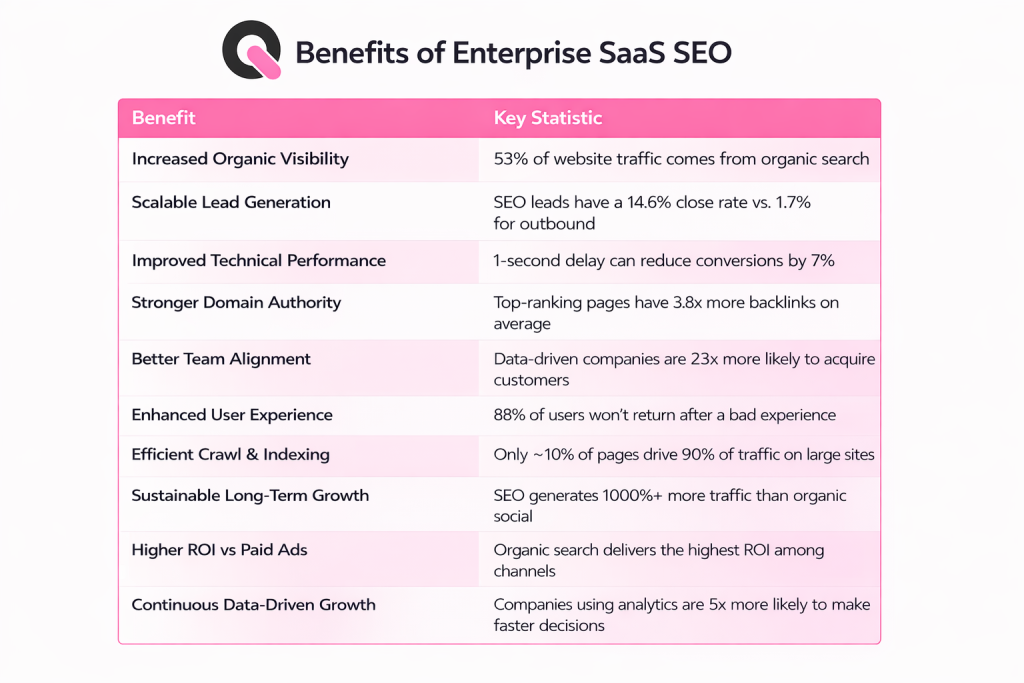
Benefits of Enterprise SaaS SEO
Implementing a rigorous Enterprise SEO strategy yields systemic benefits that extend far beyond simple traffic gains. For large-scale SaaS operations, these benefits translate directly into greater market share, operational efficiency, and predictable revenue growth.
Increased Organic Visibility Across High-Value SaaS Keywords
Enterprise SEO is focused on precision rather than volume. The strategy ensures your platform ranks prominently for the most critical, commercially viable terms that prospects use when they are ready to purchase a solution.
- Targeted Intent: Focus shifts to high-intent keywords such as comparison terms, integration names, and specific feature requirements (e.g., “CRM with API access” vs. “what is CRM”).
- Dominance in the SERPs: By achieving top rankings for these terms, your visibility matters most precisely when prospects are evaluating vendors and making purchasing decisions.
Scalable Lead Generation for Multiple Product Lines
A robust, unified enterprise SEO foundation ensures that strategic effort benefits the entire portfolio, not just individual products.
- Leveraging Domain Authority: Efforts to build authority on the main domain benefit sub-products, feature pages, and documentation hubs, creating a powerful, scalable engine.
- Systemic Growth: This strategy generates qualified leads across the entire product ecosystem, ensuring that new features or vertical-specific solutions launch with built-in organic visibility, avoiding the need for individual, disconnected marketing campaigns.
Improved Technical Performance for Large, Complex Websites
The technical demands of Enterprise SEO require continuous oversight, which inherently resolves underlying infrastructure issues detrimental to user experience and search engine efficiency.
Stronger Domain Authority and Competitive Positioning
Consistently publishing high-quality, EEAT-driven content and securing powerful backlinks elevates your entire domain’s authority.
- Building a Competitive Moat: High Domain Authority acts as a barrier to entry, making it significantly harder for smaller competitors to challenge your rankings for core, high-value keywords.
- Third-Party Validation: Ranking well is a form of third-party validation from Google, which is a powerful asset in high-stakes enterprise sales pitches.
Better Alignment Between SEO, Product, and Sales
Enterprise SEO forces organizational alignment by providing a central source of customer intent data.
- Informing the Product Roadmap: SEO data (e.g., high-search volume for a feature your product lacks) identifies market gaps and informs product development priorities.
- Empowering Sales: Sales teams gain access to high-ranking, authoritative content that validates the product’s claims and helps overcome objections during the final stages of the negotiation process.
Enhanced User Experience Across Thousands of Pages
The focus on technical quality is directly beneficial to the end-user. Prioritizing speed and mobile responsiveness across the large site ensures that users can quickly find documentation, pricing, or feature details, leading to lower frustration and higher engagement rates.
More Efficient Indexation and Crawl Budget Management
For sites with thousands or millions of pages, search engine efficiency is a critical bottleneck.
- Crawl Optimization: SEO ensures search bots spend their limited budget discovering and indexing the most revenue-critical pages, while ignoring low-value utility pages (like filtered archives or parameter URLs) via strategic use of robots.txt and canonical tags.
- Speed and Stability: Rigorous optimization of Core Web Vitals (LCP, INP, CLS) is applied consistently across the massive page inventory, ensuring a fast, stable experience that Google rewards.
Sustainable, Long-Term Customer Acquisition
Once established, this channel provides a reliable, steady, and predictable flow of high-quality leads that continues generating value with minimal marginal cost, securing the long-term health of the MRR pipeline.
Higher ROI Compared to Paid Channels
Due to the compounding effect and minimal recurring spend, the Customer Lifetime Value (CLV) to CAC ratio from organic search quickly surpasses and maintains a higher ROI than most volatile paid marketing efforts.
Continuous Growth Through Data-Driven Optimization
Enterprise SEO is a perpetual growth cycle driven by sophisticated, actionable data. By continuously analyzing site performance, monitoring competitor movements, and tracking shifts in user search intent, the SEO strategy can be quickly refined to capture emerging market opportunities and adapt to algorithmic changes, ensuring continuous growth momentum.
Enterprise SaaS SEO vs Traditional SEO
While the core principles of SEO remain the same, crawlability, relevance, and authority, the implementation, scale, and strategic objectives of enterprise SaaS SEO differ significantly from traditional SEO methods often applied to small businesses or standard e-commerce sites. The difference is between scaling a house and engineering a skyscraper.
Target Audience and Buyer Journey Length
| Feature | Enterprise SaaS SEO | Traditional SEO |
| Audience | Highly specific B2B decision-makers, technical evaluators, and procurement teams. | General consumers or small business owners. |
| Buying Cycle | Long, complex, involving multiple stakeholders (6-18 months). | Short, often instantaneous (e-commerce) or a few weeks (small services). |
| Trust Requirement | Extremely high; requires proof of security, integration, and stability. | Moderate; based on ratings and immediate return policy. |
Keyword Strategy and Search Intent Complexity
Enterprise SEO demands precision in keyword targeting because the cost of attracting unqualified traffic is too high.
- Complex Intent Mapping: Focuses on understanding multi-stage intent: not just informational, but the specific questions asked by CIOs, engineers, and financial teams (e.g., “SOC 2 compliance for global platform” vs. “simple website security”).
- High-Value Keywords: Targets keywords tied to six-figure contracts (e.g., specific vendor comparisons, API documentation, and integration names), which are often low-volume but extremely high-converting.
Content Depth and Multi-Layered Funnels
The content required to win enterprise trust must be exponentially deeper and more structured than standard blog posts.
- Topical Domination: Content strategy is built around Content Clusters and Pillars to dominate entire topics, establishing the platform as the definitive authority, not just a casual contributor.
- Funnel Mapping: Content must address every stage of the enterprise funnel simultaneously, often requiring detailed technical documentation, feature comparison pages, and ROI guides, all linked within a cohesive structure.
Technical Requirements and Site Architecture
The complexity of modern SaaS platforms imposes technical hurdles that standard SEO tools often fail to handle.
- JavaScript and Rendering: Requires advanced auditing capabilities to ensure complex, dynamically-rendered modern web apps are fully indexable.
- Crawl Management: Focuses intensely on Crawl Budget Optimization across millions of URLs to ensure search engine resources are spent only on the most critical, revenue-generating pages.
- Infrastructure: Audits often touch on CDNs, server log analysis, and database speed, requiring engineering collaboration.
Scale of Pages, Workflows, and Integrations
Enterprise sites involve volumes of content and functionality that demand scaled solutions.
- Content Governance: Requires robust workflow management to maintain quality, refresh hundreds of thousands of pages, and prevent duplicate or thin content from accumulating across the domain, documentation, and community forums.
- Integration Optimization: SEO must map and optimize content for every integration and feature set, treating each as a unique lead opportunity.
Cross-Functional Alignment With Product and Sales
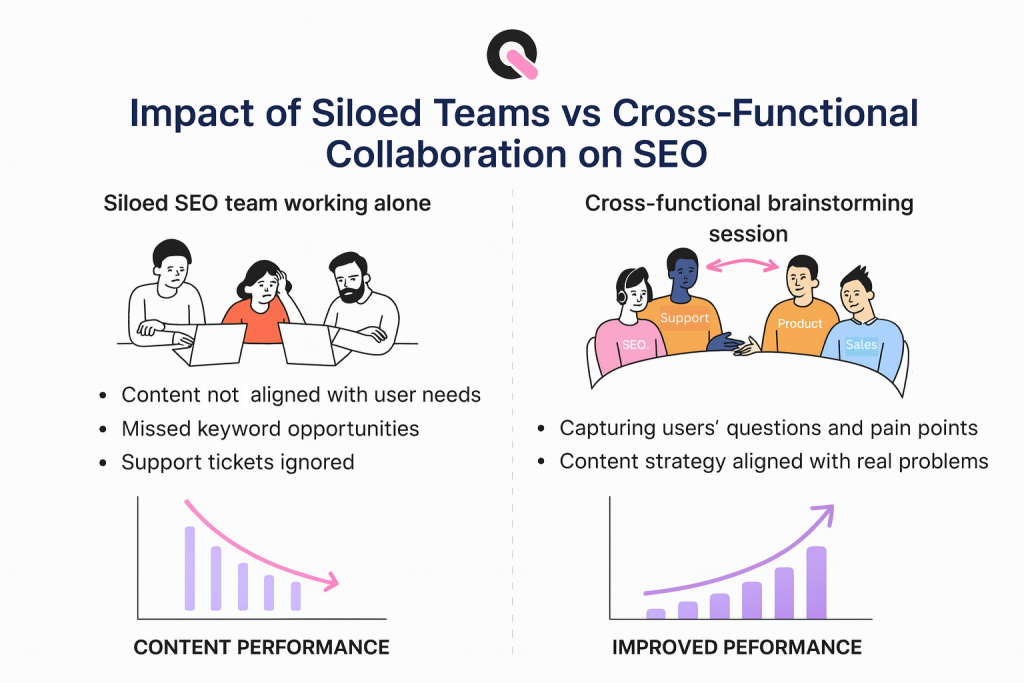
In an enterprise environment, SEO cannot operate in a silo; its success is measured by its impact on the wider organization.
- Strategic Collaboration: Requires constant, formal alignment with the Product Team (informing roadmaps based on search demand) and the Sales Team (providing authoritative content to close high-value deals).
- Shared KPIs: Success metrics often move beyond traffic and rankings to shared business goals like Marketing Qualified Leads (MQLs), Sales Qualified Leads (SQLs), and MRR attribution.
Domain Authority and Competition
The bar for competition is much higher in the enterprise space, where competitors are often market leaders with decades of authority.
- Authority Building: Strategies focus on high-impact, scalable authority acquisition (e.g., proprietary research, data reports) to compete against established domain authorities.
- Competitive Moat: The goal is not just to rank, but to build a Domain Authority so strong it becomes a sustainable competitive moat, making it cost-prohibitive for smaller companies to challenge your top rankings.
Measurement, Attribution, and Success Metrics
Measurement is linked directly to financial outcomes, requiring sophisticated tracking.
- Attribution Modeling: Requires complex, multi-touch attribution modeling to accurately track organic traffic from the first click through to the final contract signature in the CRM.
- Business Metrics: Success is defined by revenue-focused metrics like Organic Lead Velocity, Conversion Rate by Funnel Stage, and LTV from the Organic Channel, rather than just session counts or simple bounce rates.
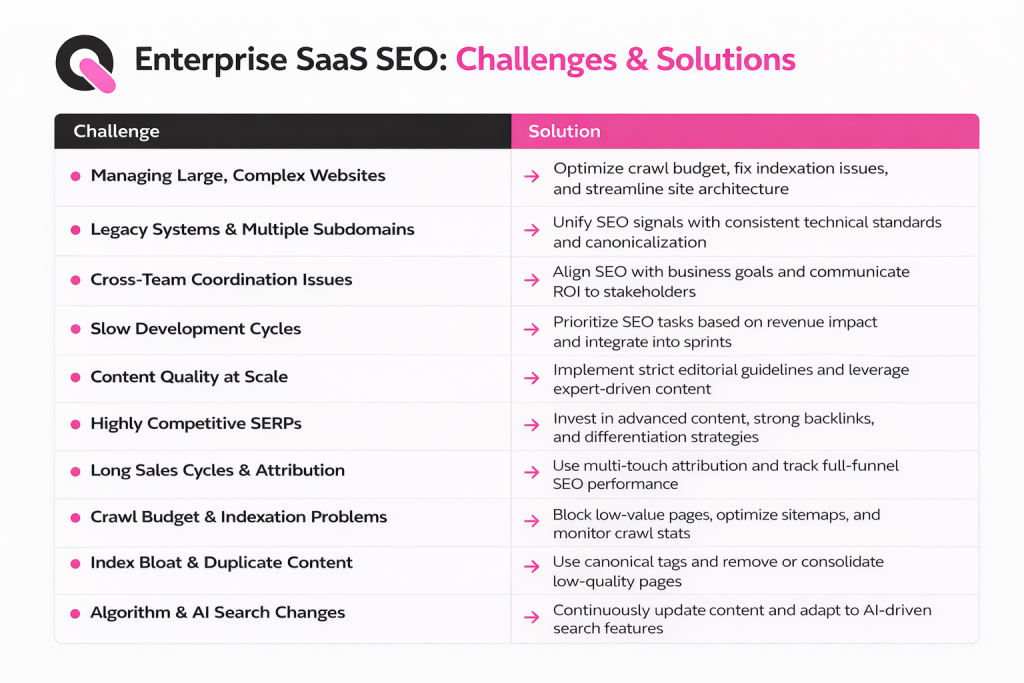
Challenges of Enterprise SaaS SEO
While the potential rewards of Enterprise SaaS SEO are massive, the journey is fraught with significant organizational, technical, and competitive challenges that standard SEO practices rarely encounter. Successfully navigating these hurdles requires both advanced technical skill and strong internal diplomacy.
Managing Large, Complex Website Structures
The sheer size and technical complexity of enterprise platforms are the primary sources of difficulty, making every technical fix a large-scale project.
- Ensuring Proper Indexation and Crawl Budget Allocation: With potentially millions of URLs (including user profiles, filters, and documentation), ensuring Google efficiently crawls and indexes only the most critical, revenue-generating pages is a constant battle against crawl waste and index bloat.
- Legacy Systems and Sub-domains: Enterprise sites often run on fragmented infrastructure, including legacy platforms, multiple sub-domains, and third-party hosted content (like help centers), complicating unified technical implementation and increasing the risk of inconsistent SEO signals.
Coordinating SEO Across Multiple Teams and Stakeholders
The SEO strategy must be negotiated, approved, and implemented by separate departments, Engineers, Product Managers, Content Teams, and Legal, all of whom have competing priorities and timelines. Gaining buy-in for technical changes often requires translating SEO needs into direct business ROI.
Handling Slow Development Cycles and Limited Engineering Resources
Technical SEO fixes often compete with core product feature development for limited engineering bandwidth. SEO requests must be meticulously documented, prioritized by potential revenue impact, and fit into long, formal development sprints, slowing down implementation.
Maintaining Consistent Content Quality at Scale
Producing hundreds of high-quality, authoritative pieces (documentation, guides, comparisons) consistently requires massive editorial oversight, rigorous fact-checking, and constant updating. A lapse in quality control can quickly lead to widespread ranking drops due to low-value content dilution.
Identifying and filling all the necessary content clusters required to achieve true Topical Authority is an immense, ongoing project that demands significant investment in specialized writers and SMEs (Subject Matter Experts).
Competing in Highly Saturated and Competitive SERPs
Ranking for six-figure keywords means competing against publicly-traded competitors with multi-million dollar SEO budgets and decades of accumulated Domain Authority. Strategies must be aggressive, precise, and highly innovative to gain an edge.
Securing links from top-tier, authoritative industry publications and partners, essential for competing at this level, requires sophisticated, high-effort PR and data-driven outreach campaigns.
Navigating Long Sales Cycles and Attribution Difficulties
Due to the 6 to 18-month sales cycles, correlating an initial organic search click to a final contract signature requires complex, multi-touch attribution modeling and integration with sophisticated CRM systems, often masking the true ROI of the channel.
Demonstrating the financial necessity of informational content (which doesn’t convert immediately) is challenging when stakeholders demand immediate, tangible results linked to bottom-of-funnel actions.
Ensuring Proper Indexation and Crawl Budget Allocation
For sites with thousands or millions of URLs, Enterprise SEO must constantly monitor and optimize how Google discovers and ranks pages. This is the difference between Google seeing your entire product catalog and getting lost in irrelevant archives.
- Crawl Budget Management: This refers to the time and resources Googlebot spends crawling a site. Enterprise SEO must ensure this budget is maximized by:
- Blocking Low-Value Pages: Utilizing the robots.txt file to disallow crawling of dynamic filter pages, parameter URLs, internal search results, and staging environments that do not provide value to searchers.
- Prioritizing High-Value Content: Ensuring the XML sitemap only includes URLs intended for ranking (e.g., product pages, core features, pillar content) and is regularly submitted to Google Search Console (GSC).
- Preventing Index Bloat: The audit must aggressively identify and manage “index bloat”, the indexing of low-quality or duplicate pages (like internal tags, archived user profiles, or thin landing pages) that dilute the site’s overall quality score.
- Canonicalization: Implementing correct canonical tags is crucial to tell Google which version of duplicate content is the authoritative source, especially common on SaaS sites due to similar feature documentation or template pages.
- Monitoring Crawl Stats: Enterprise SEO uses log file analysis and GSC’s Crawl Stats report to track Googlebot’s activity. This ensures that when new, critical feature pages are launched, Google discovers and indexes them immediately, rather than weeks later. This vigilance directly impacts time-to-market for new organic revenue opportunities.
Adapting to Constant Algorithm and AI Search Changes
Large sites are often the hardest hit by Core Algorithm Updates. Furthermore, adapting content for new features like AI Overviews and Generative Search requires continuous monitoring and rapid, site-wide structural and content adjustments to protect visibility.
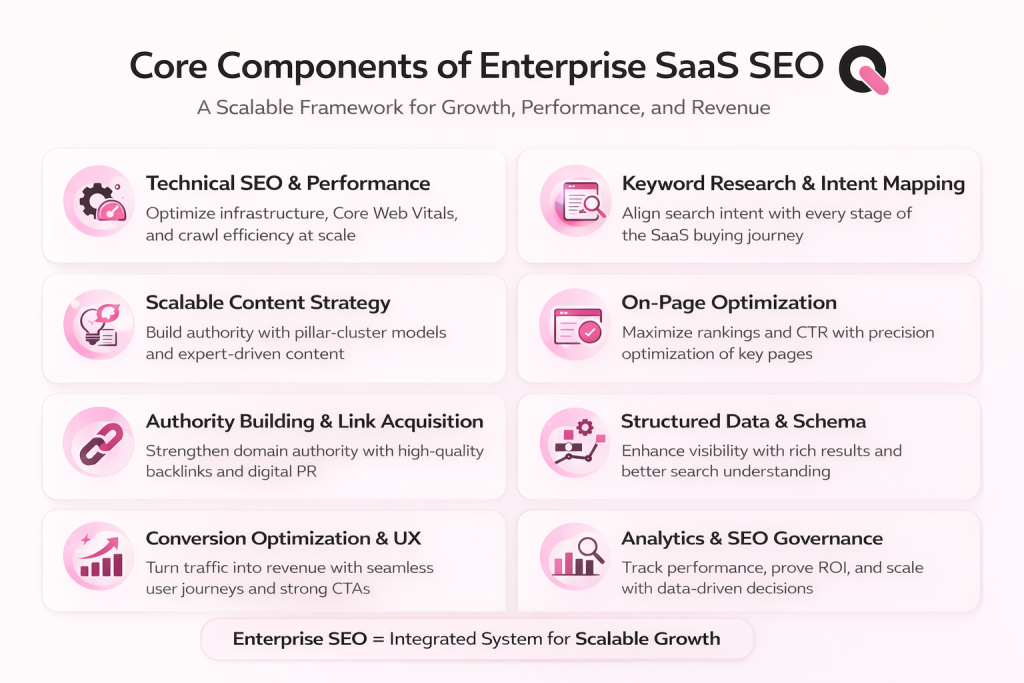
Components of Enterprise SaaS SEO
Enterprise SaaS SEO is a multifaceted discipline that cannot be achieved through a single tactic. It is built upon several deeply integrated, high-level components that work in harmony to address the immense scale and complexity of the platform while directly driving revenue goals.
Technical SEO and Site Performance
Technical SEO forms the non-negotiable bedrock of any successful enterprise strategy. Given the heavy reliance on modern frameworks, complex databases, and vast numbers of pages, technical errors can rapidly lead to catastrophic performance drops.
- Infrastructure Audit and Optimization: This component involves deep analysis of the hosting environment, Content Delivery Network (CDN) setup, and server logs. The goal is to maximize server response time and ensure resources are delivered efficiently across the globe. This often requires close collaboration with DevOps teams to handle issues related to complex caching layers and load balancing.
- Core Web Vitals (CWV) at Scale: For enterprise sites, ensuring every template and critical landing page meets Google’s standards for Largest Contentful Paint (LCP), Interaction to Next Paint (INP), and Cumulative Layout Shift (CLS) is paramount. This requires systematic testing and optimization of resource loading, specifically managing JavaScript bundles and cascading style sheets (CSS) across the entire platform.
- Crawl Budget and Indexation Management: As detailed earlier, controlling how Googlebot spends its time is vital. This involves continuous monitoring via log file analysis and GSC to confirm that the platform is not wasting crawl capacity on non-indexable, low-value pages, thereby ensuring critical feature and pricing pages are discovered and indexed quickly.
Advanced Keyword Research and Intent Mapping
In the enterprise space, keyword research evolves from a simple list of terms into a strategic map that connects user intent directly to the revenue funnel.
- Semantic and Topic Modeling: Research goes beyond primary keywords to identify entire networks of related concepts, synonyms, and long-tail questions (latent semantic indexing or LSI). This forms the basis for Topical Authority, allowing the platform to rank for broad, competitive topics by providing comprehensive coverage.
- Funnel-Specific Intent Mapping: Every identified keyword is meticulously categorized by its associated buying stage: Informational (early research), Commercial Investigation (comparison and review), and Transactional (pricing and demo). This rigorous mapping ensures that content is created to perfectly match the user’s intent at their specific point in the long sales cycle, maximizing conversion potential.
- Competitor Keyword Gap Analysis: Advanced tooling is used to compare the audited site’s ranking profile against 5-10 direct and adjacent competitors, identifying highly profitable keywords where competitors rank but the platform currently lacks content or visibility.
Scalable Content Strategy and Production
Enterprise SEO requires a system for producing and managing content that is authoritative, accurate, and sustainable over time.
- Pillar and Cluster Architecture: The content strategy is built upon an organized hub-and-spoke model. Pillar Pages cover broad, high-level topics, while numerous Cluster Pages provide deep-dive answers to specific questions, all internally linked to reinforce the Pillar’s authority. This systematic structure helps the site dominate entire topical areas.
- EEAT and Subject Matter Expert (SME) Integration: To meet Google’s stringent quality standards, particularly in sensitive technical or financial niches, content must be vetted by verified SMEs. This includes prominently displaying author biographies, citing external research, and ensuring factual accuracy, bolstering the Trustworthiness and Expertise signals.
- Content Governance and Maintenance: Due to the massive volume, processes must be in place to regularly audit, refresh, and prune outdated, low-performing, or technically obsolete content. This maintenance ensures the site’s overall quality score remains high and prevents content decay.
On-Page Optimization for High-Value Pages
While simple in concept, on-page optimization at the enterprise level is applied with extreme precision to yield significant ranking gains.
- Conversion-Driven Meta Optimization: Title tags and meta descriptions for high-value pages (e.g., pricing, feature guides) are treated as mini-advertisements, optimized not just for keywords but for click-through rate (CTR) in the SERPs, driving maximum engagement.
- Structured H-Tag Hierarchy: The use of H1, H2, H3, and H4 tags is audited to ensure logical, seamless structure, which is crucial for both user readability and for AI models that rely on clear content segmentation to extract answers.
- Internal Linking Strategy: This goes beyond simple link placement. It involves an audit of link equity flow, ensuring the highest authority pages (those with strong backlinks) pass maximum weight to the most important money pages (trial sign-up, pricing, key features) using descriptive, contextual anchor text.
Authority Building and Strategic Link Acquisition
Competing with entrenched market leaders requires a proactive and strategic approach to building domain authority.
- Proprietary Data and Research: The most effective strategy involves leveraging internal resources to publish unique, high-value data, research reports, or industry benchmarks. This content naturally attracts high-quality, relevant links from leading publications and industry blogs.
- Digital PR and Linkable Assets: Strategies focus on creating assets (tools, calculators, interactive maps) that are inherently valuable and easily cited, forming the basis for proactive outreach to top-tier industry journalists and webmasters.
- Backlink Profile Audit and Disavow: Continuous monitoring is necessary to identify and neutralize toxic, low-quality, or spammy links, which, if left unchecked, can signal manipulation and incur algorithmic penalties.
Structured Data and Schema Implementation
Schema is the language that allows Enterprise platforms to communicate their highly specific data directly to search engines.
- Product and Software Schema: Implementation of detailed SoftwareApplication and Product schema is paramount, including essential information like operating systems, ratings, pricing, and key features. This enhances visibility for Rich Results, such as starred reviews or pricing snippets.
- FAQ and How-To Schema: Applied to documentation and customer support articles to maximize eligibility for high-visibility SERP features like FAQ toggles and image carousels, driving greater CTR.
- Organizational Schema: Ensuring correct implementation of Organization schema validates the business’s identity and provides foundational trust signals to search engines.
Conversion Optimization and UX Alignment
The goal of Enterprise SEO is not just traffic, but qualified conversions. This component ensures the SEO strategy is tightly integrated with user experience.
- Funnel Analysis: Using analytics tools (GA4), the audit tracks the user’s path from the organic landing page through the final goal conversion (demo, trial sign-up). Bottlenecks, where users drop off, are identified and prioritized for technical or design fixes.
- Landing Page Experience: Optimization ensures that high-ranking pages immediately deliver on the search intent, offer clear, benefit-driven value propositions, and feature prominent, friction-less Calls-to-Action (CTAs) that are perfectly positioned within the content.
Analytics, Reporting, and SEO Governance
This final component is about managing the continuous optimization loop and proving the channel’s financial value to stakeholders.
- Attribution Modeling and CRM Integration: Requires sophisticated tracking to connect the initial organic click with the final contract value stored in the CRM, accurately quantifying the LTV and MRR driven by the SEO channel over the long sales cycle.
- Revenue-Focused Reporting: Reports shift away from vanity metrics (rankings, impressions) to focus exclusively on business KPIs: Organic MQLs/SQLs, Conversion Rate by Keyword Cluster, and Organic Revenue Growth.
- SEO Governance and Documentation: Establishing clear, written policies and living documentation ensures that all future development and content creation adheres to SEO best practices, preventing accidental technical regressions or content dilution.
How to Do Enterprise SEO for SaaS
Executing Enterprise SEO for a SaaS company requires a systematic, multi-layered approach that addresses both massive technical scale and complex organizational alignment. It moves beyond simple optimization to integrate SEO directly into the core business strategy.
Conduct a Comprehensive Technical SEO Audit
The foundation of enterprise success is technical excellence. A comprehensive SaaS SEO audit identifies and resolves the structural issues that could throttle the performance of millions of pages.
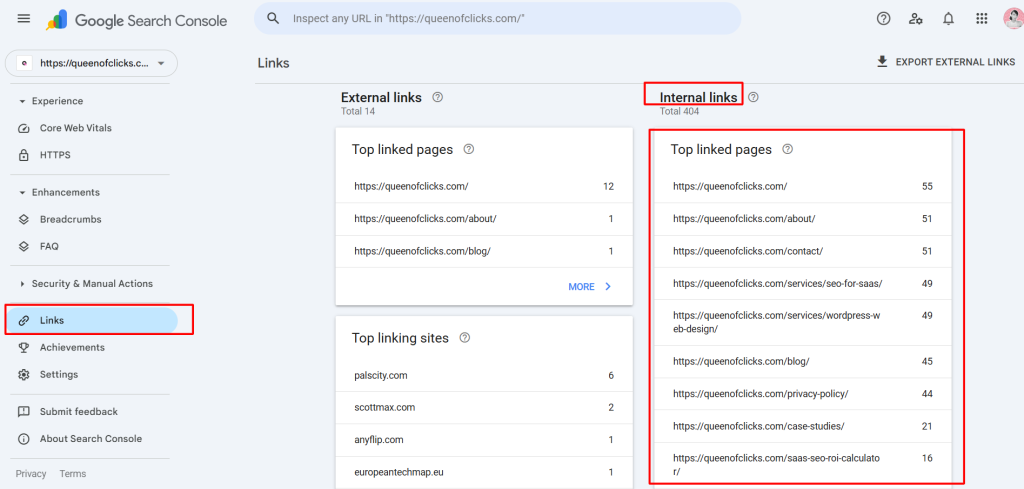
Analyze Site Architecture and Internal Linking
For large sites, architecture is paramount for managing scale and link equity. The audit must ensure a flat, logical structure where critical pages are accessible within three clicks of the homepage.
The strategy focuses on establishing clear topical hierarchies, ensuring that related pages link to one another (content clusters), and that high-authority pages pass maximum link equity to the most important conversion-driving pages (e.g., pricing, features). This process validates the site’s expertise on a subject to search engines.
Improve Core Web Vitals and Page Speed
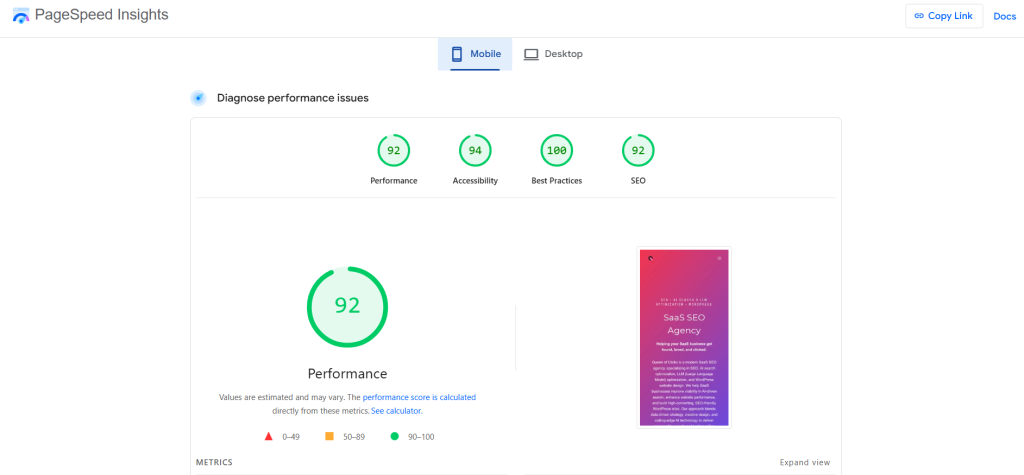
Performance issues must be tackled systematically across all critical page templates (homepage, product page, blog post).
The focus is on optimizing resource delivery, specifically managing and deferring JavaScript rendering and large CSS files, to ensure exceptional Largest Contentful Paint (LCP) and Interaction to Next Paint (INP) scores, which are non-negotiable for enterprise visibility and user experience.
Fix Indexation, Redirects, and Crawl Issues
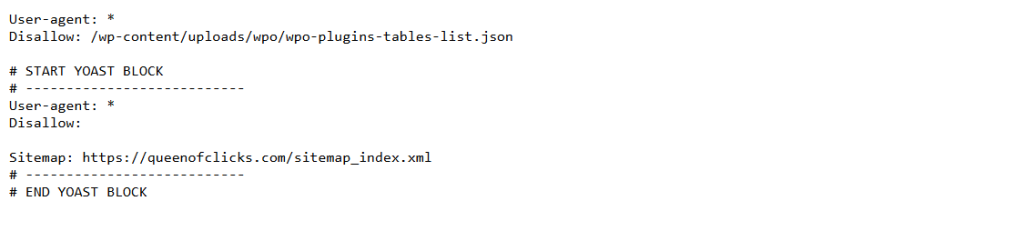
Controlling how search engines access and index the platform is essential for conserving crawl resources and maintaining ranking stability.
- Crawl Budget Optimization: This involves rigorous analysis of log files to identify where Googlebot is wasting time (e.g., archived tags, parameter URLs) and using robots.txt (yourdomain.com/robots.txt) and parameter handling tools to redirect crawl capacity toward high-value content.
- Redirect Chains and Broken Links: Fixing long redirect chains (302 or multiple 301 redirects) and repairing broken internal and external links is critical for retaining link equity and improving site authority.
Build an Enterprise-Level Keyword Strategy
Keyword research moves from targeting individual terms to mapping entire customer problems and their associated solutions across the long sales cycle.
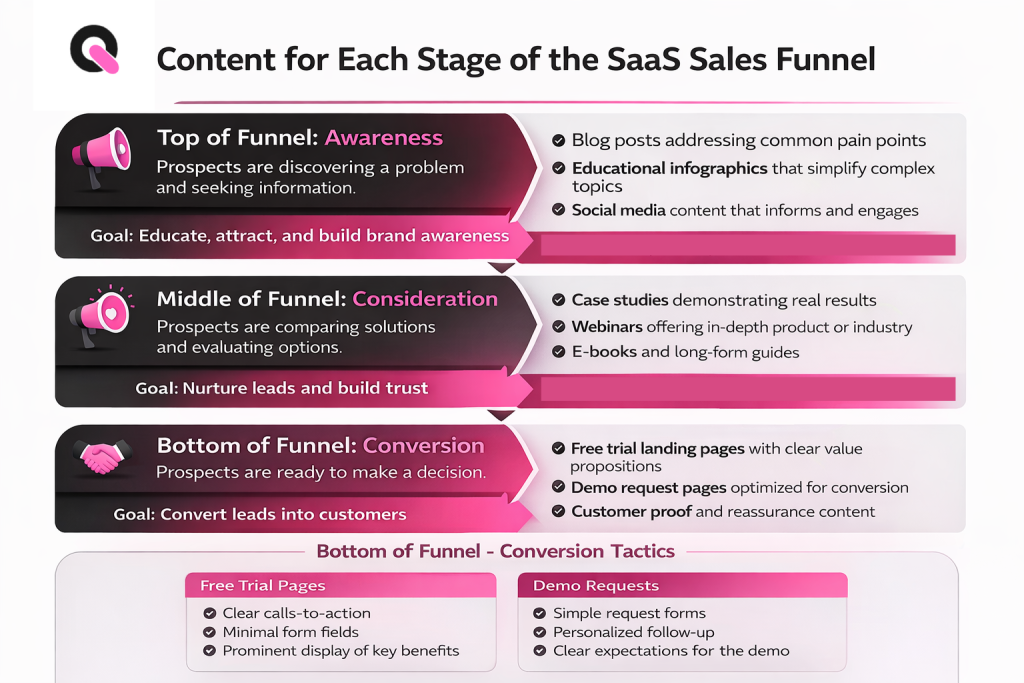
Map Keywords to the Full SaaS Funnel
Keywords are categorized not just by search volume, but by the user’s readiness to purchase, ensuring content investment yields maximum conversion potential.
- Top-of-Funnel (ToFu): Informational searches (e.g., “what is API governance”).
- Middle-of-Funnel (MoFu): Commercial investigation (e.g., “API governance tools comparison”).
- Bottom-of-Funnel (BoFu): Transactional intent (e.g., “[Vendor] pricing,” “best alternative to [Competitor]”).
Identify Product-Led, Feature-Led, and Solution-Led Terms
The strategy must address all facets of the product and its applications to capture all relevant searches.
- Product-Led: Branded terms and related specific queries (e.g., “[Product Name] features”).
- Feature-Led: Specific capabilities (e.g., “real-time data synchronization software”).
- Solution-Led: Industry and use-case applications (e.g., “CRM for enterprise banking”).
Prioritize High-Intent and High-Value Pages
Investment is disproportionately allocated to pages targeting keywords with the highest potential MRR impact, even if the search volume is relatively low. This ensures SEO resources are always focused on generating qualified leads, not just passive traffic.
Develop a Scalable Content Framework
The content framework must be engineered to produce and maintain vast amounts of authoritative information required to dominate entire topics.
Create Product, Feature, and Industry Pages
These pages form the conversion core of the site. They must be highly optimized, technically accurate, and designed to address competitive queries directly.
- Feature Pages: Should be optimized for specific technical queries that indicate deep user need.
- Industry Pages: Must clearly articulate the product’s value proposition within a specific vertical (e.g., “HR software for healthcare”) to capture specialized B2B traffic.
Build Resource Hubs, Guides, and Comparison Content
This content establishes the brand’s expertise and attracts high-intent MoFu traffic.
- Resource Hubs (Pillars): Massive, authoritative pieces that act as the centerpiece for an entire topic cluster.
- Comparison Content: Strategically written articles (e.g., “Why Our Product is the Best Alternative to X”) are vital for capturing leads actively evaluating competitors.
Implement a Content Operations Workflow
To maintain quality and scale, the process must be formalized. This includes creating detailed content briefs based on competitive analysis, integrating Subject Matter Expert (SME) review for EEAT, and establishing a regular content decay audit cycle to ensure all published material remains fresh and accurate.
Optimize Key Landing Pages for Conversions
SEO success is measured by conversions, requiring optimization of the final landing pages beyond simple keyword inclusion.
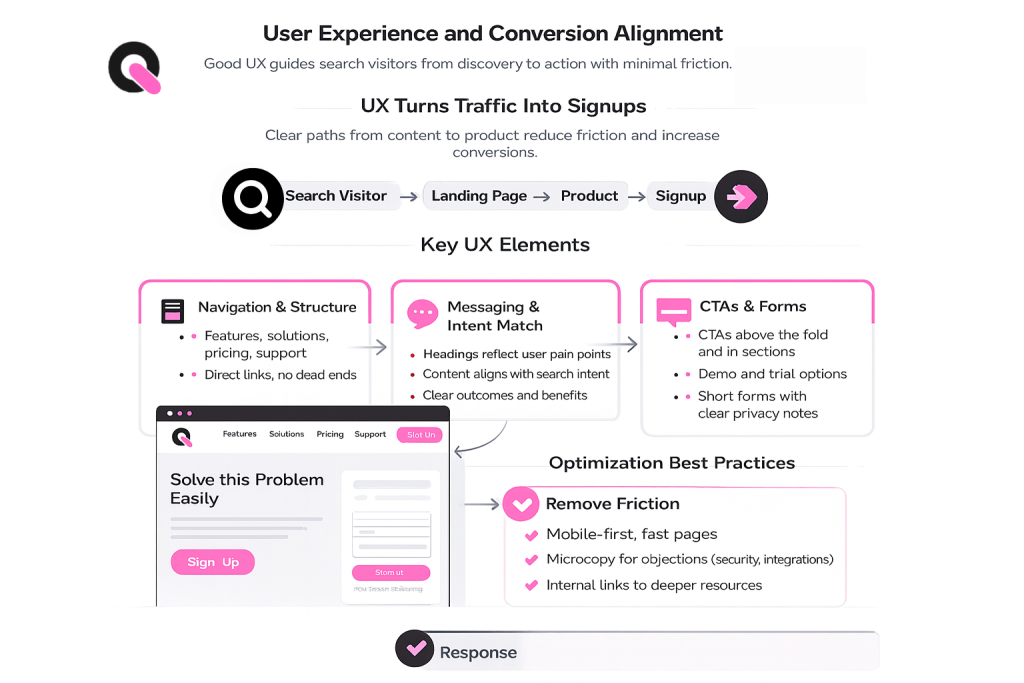
Use Clear CTAs and Product Positioning
Every high-value landing page must feature immediate, benefit-driven Calls-to-Action (CTAs) that are strategically placed. Product positioning must be immediately evident, addressing the visitor’s pain point within seconds of landing.
Improve UX, Readability, and Feature Messaging
The design and content structure must guide the user smoothly toward the conversion goal. This includes using scannable formatting (bullet points, short paragraphs), ensuring technical documentation is easily searchable, and validating that feature messaging aligns perfectly with the intent signaled by the landing keyword.
Strengthen Domain Authority With Strategic Link Building
Competing with established enterprise players requires a systematic, high-impact approach to authority building.
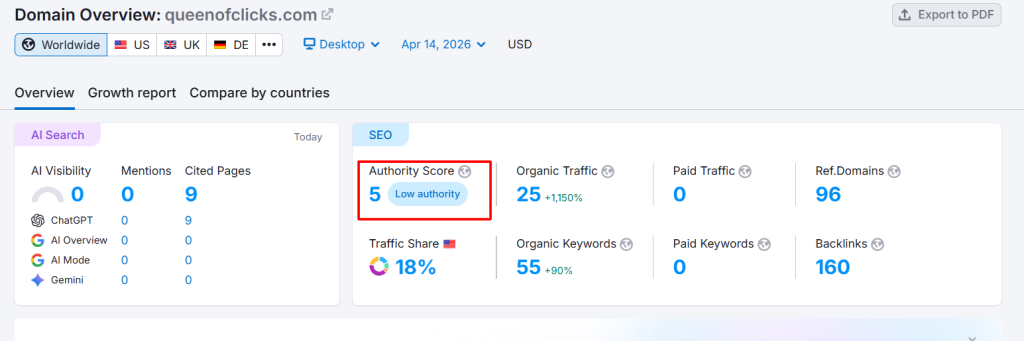
Target High-Authority SaaS and Tech Publications
Focus outreach efforts exclusively on securing links from top-tier, relevant industry domains (e.g., major tech blogs, respected B2B news sites, industry analyst firms) as these links carry the most authority.
Leverage Partnerships, Integrations, and PR
This means:
- Integrations: Systematically turning every product integration and partnership announcement into a link-building opportunity.
- Digital PR: Creating and promoting proprietary research, industry reports, and unique data that naturally attracts organic citations and high-quality backlinks.
Build Internal Advocacy for Linkable Assets
SEO teams must collaborate with Product and Content teams to develop resources, such as free tools, calculators, or comprehensive benchmark reports, that are inherently useful and designed specifically to be cited and linked to by third parties.
Implement Structured Data and Schema Markup
Schema is the technical language used to communicate the complexity of the SaaS platform directly to search engines, enhancing visibility for rich results.
Add Product, FAQ, and How-To Schemas
Systematically apply appropriate schema across the entire index:
- SoftwareApplication and Product Schema: Crucial for feature and pricing pages, detailing compatibility, ratings, and price points.
- FAQ and HowTo Schema: Applied to support articles and documentation to secure visibility in high-value Question and Answer SERP features.
Optimize for Rich Snippets and AI Search
Correct schema implementation maximizes the chances of securing Rich Snippets (star ratings, pricing tables) and enhances the content’s eligibility to be extracted and used by Generative AI search features, ensuring visibility in the evolving SERP landscape.
Align SEO With Product, Sales, and Engineering
For Enterprise SEO to succeed, it must be integrated into the company’s operational rhythm; it cannot function as an isolated marketing task.
Coordinate Roadmaps and Release Cycles
SEO requests (e.g., implementing technical fixes, updating internal linking) must be formally integrated into the Engineering and Product development roadmaps. This coordination ensures technical debt is addressed proactively and new product features launch with optimized content and URL structures from day one.
Create Shared Documentation and SEO Playbooks
Establish centralized, easy-to-access documentation (an “SEO Playbook”) detailing best practices, technical requirements, and keyword strategy for all teams. This ensures content creators, engineers, and product managers are all operating from the same SEO guidelines, maintaining consistency at scale.
Establish Ongoing Analytics, Monitoring, and Reporting
Continuous monitoring is required to track performance against business goals and rapidly adapt to changes in a volatile market.
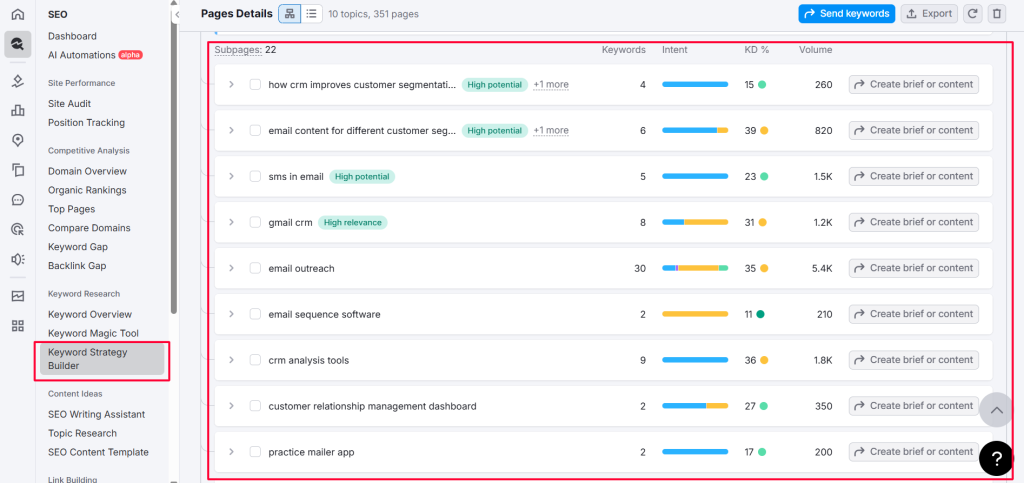
Track Keyword Clusters and Topic Performance
Reporting focuses on the performance of entire topic clusters rather than individual keywords. This measures the success of the comprehensive content strategy and overall domain authority for a given vertical.
Measure Pipeline, MQLs, and ARR Influence
The primary focus of reporting must be on revenue-driven metrics: tracking the volume of Marketing Qualified Leads (MQLs) and Sales Qualified Leads (SQLs) generated by organic search, and demonstrating the channel’s direct influence on Annual Recurring Revenue (ARR) via multi-touch attribution models.
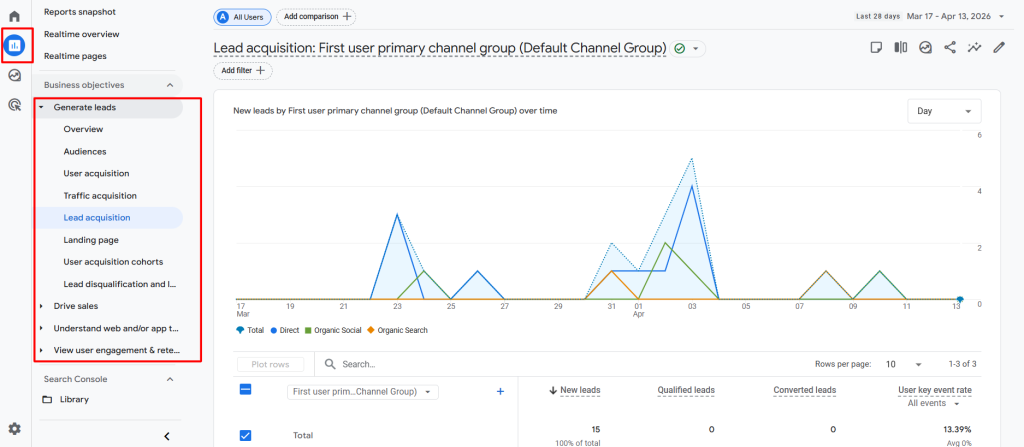
Use Dashboards for Team-Wide Visibility
SEO data should be translated into clear, visual dashboards accessible to all stakeholders (e.g., “Technical Health Status” for engineers, “Top Converting Keywords” for sales). This transparency fosters accountability and reinforces the strategic importance of SEO across the organization.
Top SEO Tools for Enterprise SaaS
Managing the scale and complexity of enterprise SaaS SEO requires robust, high-performance SaaS SEO tools that can handle millions of data points and integrate seamlessly into established workflows. The platforms listed below are essential for executing the technical, content, and authority-building components of an enterprise strategy.
Technical SEO and Crawling Tools
These tools are crucial for simulating search engine behavior and identifying technical bottlenecks across massive website infrastructures.
Screaming Frog SEO Spider
A powerful desktop-based site crawler that acts as a search engine simulator. It fetches key elements to analyze the technical health of any size website. While desktop-based, it remains a standard enterprise tool due to its flexibility and depth.
Features:
- Crawl large websites: Can efficiently crawl millions of URLs to gather comprehensive data.
- Identify broken links, redirects, and duplicate content: Provides quick identification of 4xx and 5xx errors, analyzes redirect chains, and flags pages with duplicate titles, descriptions, and content.
- Custom Extraction: Allows scraping of specific data (like Schema or unique IDs) using XPath, CSS Path, or Regex.
Sitebulb
A website auditing tool known for its visual reports and clear, prioritized issue detection. It translates complex technical data into actionable recommendations, making it easier for non-SEO teams (like developers) to understand required fixes.
Features:
- Visual site auditing: Uses visualizations and charts to explain site structure and issues.
- Technical issue detection for complex sites: Provides detailed reports on indexability, site speed, internal link depth, and content quality.
- Hint System: Uses proprietary logic to score and prioritize issues based on their potential impact.
DeepCrawl
A cloud-based, enterprise-level site auditing platform built specifically to manage huge, complex digital properties and integrate with internal data sources. It is favored for its flexibility and ability to handle fragmented site architectures (subdomains, international versions).
Features:
- Enterprise-level site audits: Handles immense scale and provides historical data tracking of technical health.
- Detailed crawl insights and recommendations: Integrates with Google Search Console, Analytics, and log files for a holistic view of technical performance.
- Customizable QA & Validation: Allows setting custom rules to validate code pushes and technical changes before and after deployment.
Keyword Research and Intent Analysis Platforms
These platforms provide the data necessary to map strategic content to high-value customer intent across the entire buying cycle.
Ahrefs
Widely regarded for its industry-leading backlink analysis, Ahrefs is also an indispensable tool for highly granular keyword research, competitor analysis, and content gap identification.
Features:
- Discover high-value keywords: Provides extensive data on keyword difficulty, traffic potential, and search volume.
- SERP analysis: Offers detailed insights into the top-ranking pages, including traffic and backlink metrics.
- Competitor gaps: Identifies keywords that competitors rank for but the audited site does not, crucial for content cluster planning.
SEMrush
A comprehensive, all-in-one marketing suite that excels in competitive intelligence, providing expansive data on both organic and paid search performance, making it ideal for holistic Enterprise strategy.
Features:
- Keyword research and intent analysis: Offers clear intent categorization (Informational, Navigational, Commercial, Transactional) for superior content mapping.
- Competitive keyword mapping: Provides extensive reports on competitor ranking positions and market share for various topics.
- Site Audit Tool: Includes a technical audit tool that often provides clearer, more digestible fix recommendations for developers than raw crawler data.
Moz Pro
Known for its authoritative Domain Authority (DA) metric, Moz Pro provides a suite of tools focused on link analysis, competitive analysis, and strategic keyword exploration, focusing on long-term authority building.
Features:
- Keyword explorer: Provides difficulty scores and traffic estimates, focusing on search opportunity and keyword volume.
- SERP analysis: Offers detailed snapshots of ranking pages to inform on-page optimization strategy.
- Link Explorer: Helps manage backlink profiles and analyze the link-building performance of competitors.
Rank Tracking and Visibility Monitoring Tools
Enterprise teams require solutions that can track thousands of high-value keywords across multiple geographies and provide robust reporting for stakeholders.
BrightEdge
A prominent enterprise SEO platform that provides advanced rank tracking, content performance analysis, and detailed executive-level reporting, often favored by large corporations for its integrated, customizable dashboards.
Features:
- Enterprise SEO platform for rank tracking: Monitors massive keyword portfolios across different segments and geographic regions.
- Content performance: Correlates content efforts with organic conversions and revenue metrics.
- Forecasting: Offers predictive insights into keyword ranking changes and potential traffic impact.
Conductor
A cloud-based platform built for large organizations, focusing on measuring content impact, proving ROI, and organizing content strategy around high-value topics and user intent.
Features:
- Tracks keyword visibility: Provides a comprehensive view of how content is performing across specific topics and funnels.
- Measures content impact at scale: Integrates content data with business metrics (MQLs, revenue).
- Workflow Integration: Helps align SEO strategy directly with content creation and product marketing teams.
AuthorityLabs
A simpler, specialized rank tracking tool focused purely on monitoring keyword rankings with accuracy and providing scheduled reporting, often used to complement deeper technical platforms.
Features:
- Monitors rankings for large keyword portfolios: Provides daily or weekly tracking updates for high volume of keywords.
- Reporting: Offers automated reporting and white-label options for reporting results to clients or internal stakeholders.
Content Optimization and On-Page SEO Tools
These platforms use AI and machine learning to ensure content meets the depth and topical breadth required to rank highly in competitive enterprise SERPs.
Surfer SEO
A tool that analyzes top-ranking content (the first page of Google) for a target keyword and provides data-driven, actionable recommendations for on-page optimization, word count, keyword density, and heading structure.
Features:
- On-page optimization recommendations: Offers a live score indicating content quality and comprehensiveness compared to competitors.
- SERP analysis: Breaks down the structural elements (headings, image count, word count) of top-performing pages.
- Content Editor: A collaborative interface for writers and editors to optimize content in real-time.
MarketMuse
An AI-driven platform focused on content planning, inventory analysis, and identifying Topical Authority gaps. It helps enterprises map out the exact content clusters needed to dominate an entire subject area.
Features:
- Content planning: Identifies thousands of potential content topics and their required depth for dominance.
- Optimization using AI-driven insights: Scores existing content and recommends necessary improvements for topical completeness.
- Inventory Analysis: Audits existing content to find decay, consolidation opportunities, and immediate gaps.
Clearscope
A popular content optimization tool that uses semantic analysis to ensure content aligns perfectly with search intent, providing a streamlined process for creating EEAT-compliant articles and guides.
Features:
- Ensures content aligns with target keywords and search intent: Provides a list of essential terms and phrases needed to achieve topical coverage.
- Grading System: Scores content for readability and comprehensiveness against established top-ranking benchmarks.
- Ease of Use: Highly favored by content teams for its simple, focused interface.
Backlink Analysis and Authority Tracking Platforms
Maintaining a clean, powerful backlink profile is fundamental to competing with high Domain Authority competitors.
Majestic
A dedicated link intelligence tool known for its proprietary metrics like Trust Flow and Citation Flow, which help SEOs assess the quality and credibility of a site’s backlink profile, crucial for enterprise due diligence.
Features:
- Backlink analysis: Provides a vast index of link data for historical and current analysis.
- Trust Flow metrics: A key metric for assessing the quality and authority of linking domains.
- Link Context: Identifies where a link originates on a page and the surrounding text to determine relevance.
Ahrefs Backlink Explorer
Provides one of the largest live backlink indexes in the industry, making it indispensable for competitive analysis and real-time link monitoring.
Features:
- Monitor backlinks: Provides alerts for new and lost backlinks.
- Competitor link profiles: Allows deep analysis of competitors’ most powerful link sources (Link Intersect).
- Link gaps: Identifies high-authority sites that link to competitors but not to the audited platform, driving outreach strategy.
SEMrush Link Building Tool
Integrates link analysis directly with a robust outreach management system, helping enterprise teams discover, qualify, and track link acquisition opportunities efficiently.
Features:
- Discover backlink opportunities: Suggests qualified targets based on competitor analysis and relevant keywords.
- Track link acquisition: Provides a comprehensive workflow for managing outreach campaigns and monitoring successful link placement.
Analytics, Dashboards, and Reporting Solutions
Enterprise SEO requires flawless data tracking and clear reporting to prove ROI and align with high-level financial stakeholders.
Google Analytics 4(GA4)
Google’s event-based tracking platform, which is essential for measuring user behavior and organic channel performance, particularly focusing on conversion events relevant to SaaS (sign-ups, demo requests, feature usage).
Features:
- Track organic traffic, user behavior, and conversion paths: Provides granular data on how users navigate the site and convert after landing from organic search.
- Event-based tracking: Allows highly specific measurement of SaaS actions (e.g., button clicks, form submissions).
- Attribution Modeling: Essential for understanding the multi-touch path of a user from the initial organic click to the final sale.
Google Search Console
The definitive source for understanding how Google views and interacts with a website. It is non-negotiable for identifying indexing, crawling, and Core Web Vitals issues directly from Google’s perspective.
Features:
- Monitor indexing, search performance, and technical issues: Provides critical data on page index status, crawl stats, and mobile usability.
- Performance Report: Shows the exact queries, clicks, and impressions your site receives, essential for keyword cluster analysis.
- Core Web Vitals Report: Provides site-wide data on speed and user experience metrics.
Databox
A data aggregation platform used to create custom, executive-friendly dashboards by pulling data from various sources (GA4, GSC, CRM, Ahrefs, SEMrush) into a unified, visual report.
Features:
- Custom dashboards to visualize SEO KPIs and enterprise metrics: Allows for tailored reporting that directly answers stakeholder questions about ROI.
- Data Aggregation: Centralizes fragmented SEO data, streamlining the reporting process.
- Scorecards and Alerts: Provides automated updates on critical performance changes.
How to Measure Enterprise SaaS SEO Metrics
Measuring Enterprise SaaS SEO requires moving beyond vanity metrics like general traffic volume. Success must be quantified using metrics that directly correlate with the business’s bottom line: pipeline health, customer acquisition cost (CAC), and Annual Recurring Revenue (ARR). Measurement must be holistic, covering technical performance, content effectiveness, and financial impact.
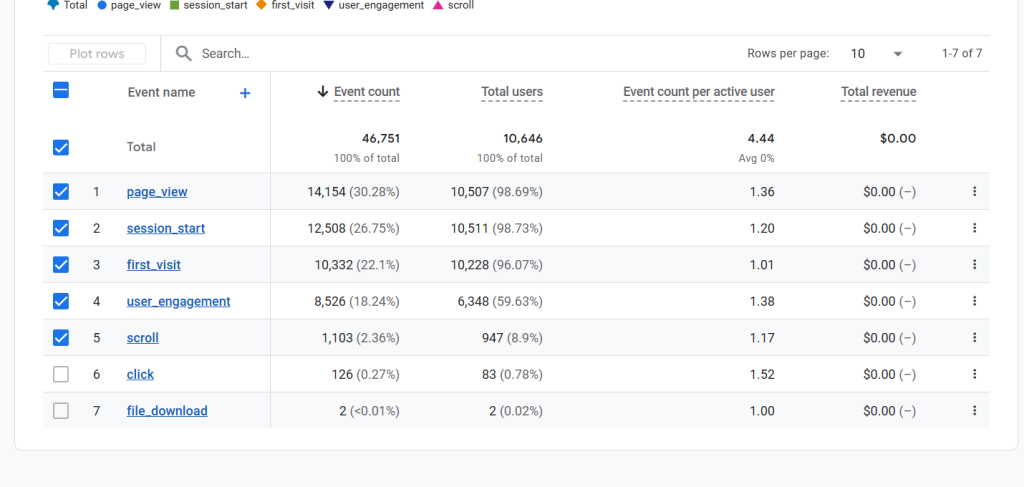
Organic Traffic and User Engagement
Tracking raw organic traffic is the starting point, but enterprise measurement focuses on the quality and behavior of those visitors, not just the quantity.
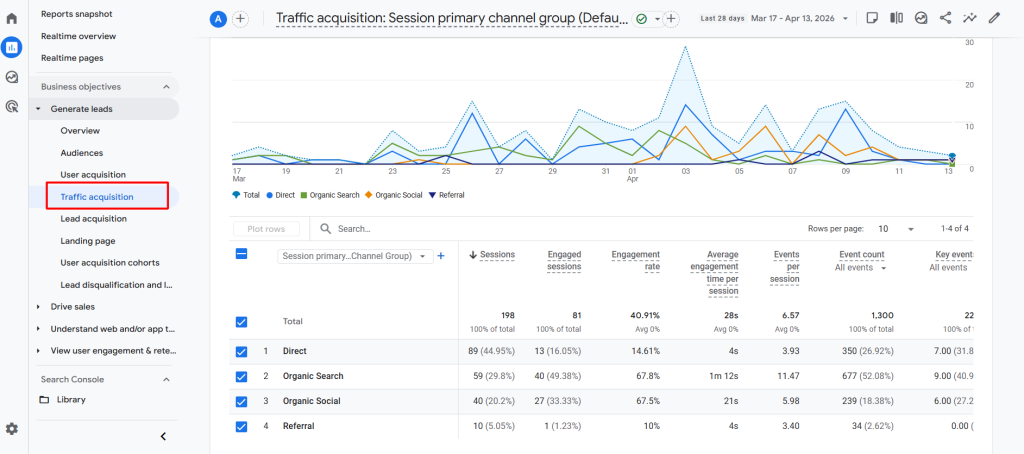
- Segmented Organic Sessions: The primary metric is Total Organic Sessions, segmented by crucial dimensions like device type (mobile vs. desktop), geography, and, most importantly, landing page intent (e.g., sessions landing on pricing pages vs. blog posts). This segmentation reveals where high-intent users are entering the site.
- User Engagement Metrics: Key behavioral signals tracked in Google Analytics 4 (GA4) include Engagement Rate (the percentage of sessions that were active for 10+ seconds, had a conversion event, or two or more screen/page views) and Average Session Duration. A high engagement rate, particularly on technical documentation or feature comparison pages, signals that the content is effectively supporting the user’s research.
- Segmented Bounce Rate: While simple bounce rate is less emphasized in GA4, monitoring Bounces/Exits specifically on high-value, transactional pages (like trial sign-up forms) remains critical. A sudden increase here points to a technical or UX bottleneck that must be immediately addressed.
Keyword Rankings and Search Visibility
For enterprises, tracking rankings involves monitoring massive keyword portfolios and analyzing visibility across strategic topic groups rather than individual terms.
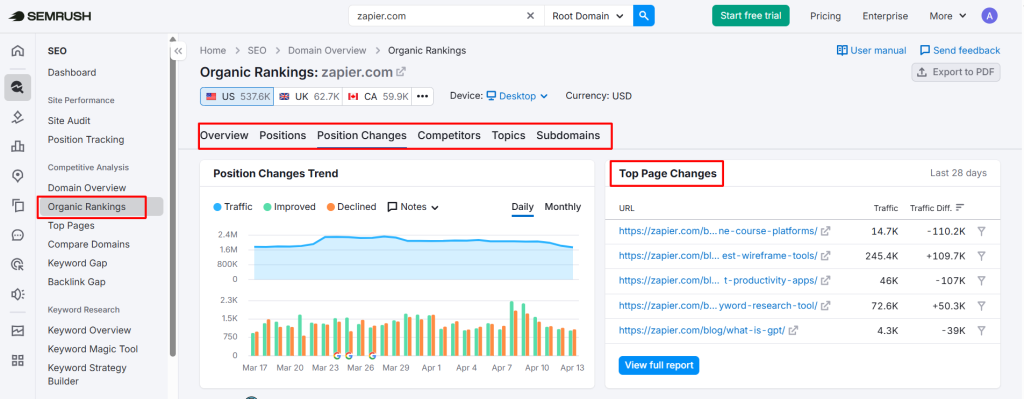
- Keyword Cluster Performance: Instead of focusing on the ranking position of a single keyword, enterprise measurement tracks the average ranking position and cumulative traffic potential of entire topic clusters (e.g., all keywords related to “API Governance”). This validates the effectiveness of the Topical Authority strategy.
- Share of Voice (SoV): This measures the percentage of all potential organic clicks within a defined set of high-value keywords that your site actually receives. If the total monthly search volume for your top 100 keywords is 100,000 searches, and you receive 30,000 clicks, your SoV is 30%. Tracking SoV against top competitors provides a clear picture of market dominance.
- Impressions and Click-Through Rate (CTR) from GSC: Analyzing the Impressions and CTR of high-intent queries directly in Google Search Console (GSC) is crucial. A low CTR for a page ranking in positions 1-3 often indicates a poorly optimized title tag or meta description, which is a low-effort, high-impact fix.
Lead Generation and Conversion Metrics
This is where SEO metrics directly translate into business value, moving from clicks to qualified pipeline contributions.
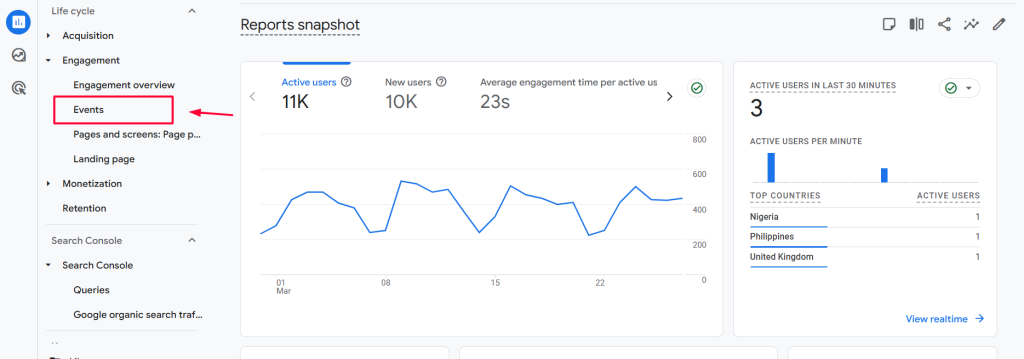
- Marketing Qualified Leads (MQLs) from Organic: The most vital metric is the count of leads generated directly from the organic channel that meet the sales team’s qualification criteria. This is tracked via goal completion events in GA4 and pushed into the CRM (Customer Relationship Management) system.
- Conversion Rate by Funnel Stage: Measurement tracks the conversion rate from the initial session to several key milestones: Session to MQL, MQL to Sales Accepted Lead (SAL), and SAL to Closed-Won (the final sale). Tracking these rates by landing page reveals which content clusters are most effective at generating viable leads.
- Micro-Conversions: Tracking smaller, high-intent actions, such as documentation downloads, pricing page views, comparison tool usage, and chatbot interactions, helps measure engagement on non-direct conversion pages and score lead quality before they become official MQLs.
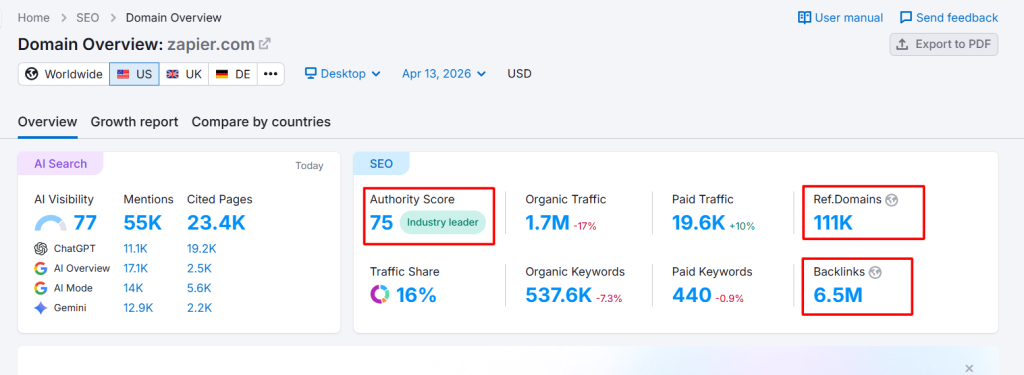
Domain Authority and Backlink Profile
Authority metrics assess the overall strength, credibility, and competitive positioning of the domain, which are crucial for long-term stability.
- Domain Rating (DR) / Domain Authority (DA): Tracking industry-standard authority metrics (like DR from Ahrefs or DA from Moz) provides a quick, high-level comparison against competitors. Consistent, upward movement signals success in authority-building efforts.
- Referring Domains (RDs): The total number of unique domains linking back to your site is a powerful measure of authority. The metric is segmented to focus on the quality and relevance of the RDs (e.g., only tracking links from .edu or high-authority SaaS publications).
- Toxic Backlink Score: Continuous monitoring of the backlink profile for spammy or low-quality links is essential. The Toxic Score (or equivalent metric in tools like SEMrush) must be actively managed to prevent algorithmic penalties and protect the domain’s trust signals.
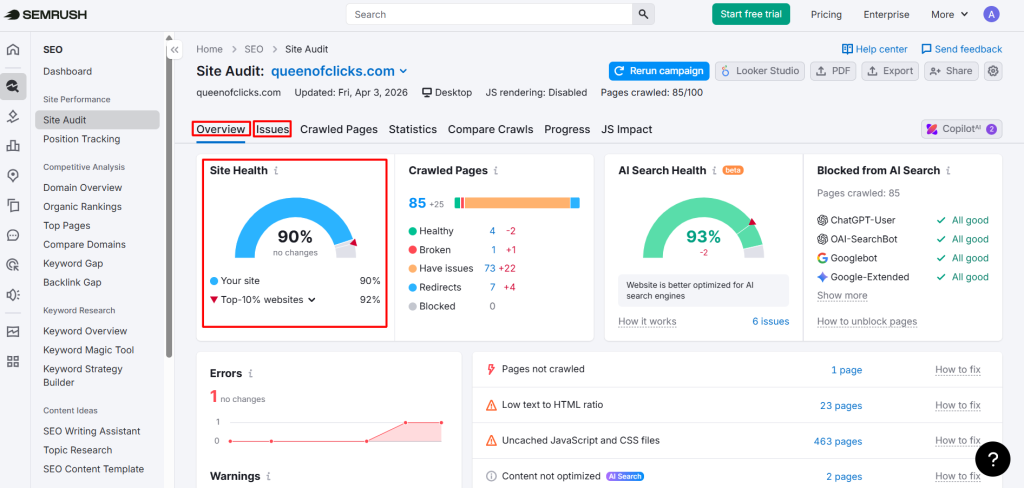
Technical SEO Performance
Technical metrics measure the health and efficiency of the website’s massive infrastructure, directly impacting crawl efficiency and user experience.
- Core Web Vitals (CWV) Compliance: Monitoring the percentage of pages that pass Google’s CWV thresholds (Good URL count in GSC) is mandatory. Enterprise reporting must be segmented by template type (e.g., product page vs. blog post) to pinpoint engineering bottlenecks.
- Crawl Stats and Errors (from GSC/Log Files): Tracking the daily crawled pages and ensuring it aligns with content updates validates crawl budget allocation. Monitoring GSC’s Coverage Report for errors (e.g., “Server Error 5xx”) and warnings (e.g., “Indexed, though blocked by robots.txt”) is the first line of defense against site-wide ranking drops.
- Indexation Rate: Tracking the percentage of desired pages that are actually indexed by Google versus the total number of pages submitted in the sitemap. A widening gap signals significant indexation issues that are hiding content from search results.
Content Performance and Topic Authority
These metrics assess the financial viability and market dominance of the content investment.
- Content ROI: Measuring the revenue (or qualified leads) generated per piece of content. This calculates the lifetime value contribution of specific articles or guides and guides future content investment decisions.
- Content Decay: Systematically tracking the historical performance (traffic, rankings) of older content. Pages showing a steady decline in traffic signal the need for a content refresh or consolidation, ensuring the resource library remains perpetually valuable.
- Time to First MQL: Measures the time elapsed between publishing a new content asset (e.g., a Pillar Page) and it generating its first qualified lead. This validates the efficiency of the content production pipeline and speed-to-market.
ROI and Revenue Influence
The ultimate goal of Enterprise SEO is to justify its substantial investment by proving direct financial impact.
- SEO’s Share of ARR/MRR: The most critical metric tracks the total Annual Recurring Revenue (ARR) or Monthly Recurring Revenue (MRR) directly attributed to customers whose acquisition path began with an organic search click. This requires sophisticated integration between the CRM and the analytics platform.
- Return on Investment (ROI): Calculated as (Revenue from Organic – Cost of SEO Program) / Cost of SEO Program. This must be calculated regularly to demonstrate the sustained value and high return generated by the channel compared to highly variable paid channels.
- Organic Cost Per Acquisition (CPA): While organic traffic is “free,” the CPA calculates the total investment (salaries, tools, content creation) divided by the number of new customers acquired organically. This provides a direct, highly favorable comparison against Paid CPA.
Competitive Benchmarking
Competitive metrics provide the external context needed to inform strategy and identify market opportunities.
- Competitor Share of Voice: Tracking the SoV not just for your own site, but for your top 3-5 competitors. This reveals who is gaining or losing market share within your target keyword clusters and signals where competitive content opportunities or threats exist.
- Competitor Link Velocity: Monitoring the rate at which top competitors are acquiring high-authority backlinks. If a competitor suddenly increases their link velocity, it signals an aggressive link-building campaign that your strategy must counteract.
- Topical Gap Score: A recurring metric that quantifies the difference between your content clusters and those of your competitors, identifying the highest-priority topics your platform is currently neglecting.
Examples of Successful Enterprise SaaS SEO Strategies
Enterprise SaaS companies win in SEO through scalable, strategic approaches, not luck. Below, we’ll look at real examples of strategies that drive consistent growth and results.
Zapier
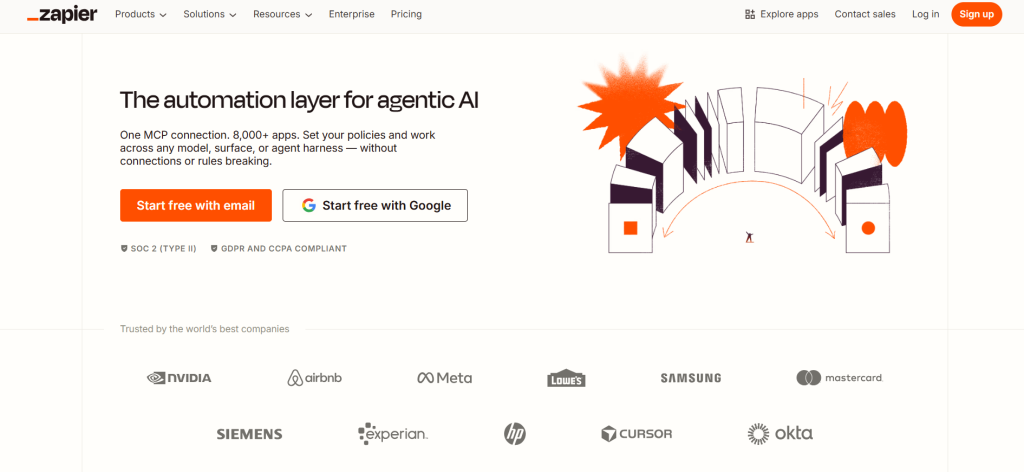
- Scaled by building thousands of landing pages, for each app, each app-to-app integration, and workflows.
- Partners (other apps) contributed content and linked back to Zapier’s site, helping authority and organic reach.
- They used context-specific CTAs on landing pages so that visitors coming for a particular integration could sign up immediately.
- Result: A massive content footprint; many of their pages rank well, and SEO is a big driver of their signups.
Adobe

- Very large site (~94,000+ pages) with many feature/solution pages.
- They created separate landing pages for each feature, which helped them rank for very specific, relevant terms.
- Over time, their organic traffic grew significantly.
- They manage SEO at scale, using technical auditing and processes built for a large enterprise site.
Salesforce
- Uses diverse content formats, reports, webinars, guided tours, events, not just blog posts. This helps them attract a wide range of visitors.
- They invest in authority via press releases, thought leadership, and large resources, boosting their domain reputation.
- Improved site navigation and structure help users (and search engines) find what they need.
Zendesk
- Website structure is well organized by product solution and user role, which helps different personas find exactly what they need.
- Their site is fast, with good UX, important for SEO performance and user retention.
- They simplify their sitemap and internal linking, making it easier to scale and optimize.
Monday.com
- Produced 1,000 SEO-optimized articles in one year, scaling content aggressively.
- They built a content operations system (hired many writers, used documentation) to maintain quality at scale.
- As a result, their organic traffic jumped significantly.
Typeform

- Focused on bottom-of-funnel (BOFU) content, like product templates and comparison pages.
- This SEO-led content contributed directly to increased revenue, showing that organic can drive real ROI, not just traffic.
Hotjar
- Used topic clustering to group related content, increasing SEO relevance and depth.
- Focused also on backlink building to improve domain authority.
- Their SEO helped them grow traffic by ~50% over two years.
Dropbox Sign
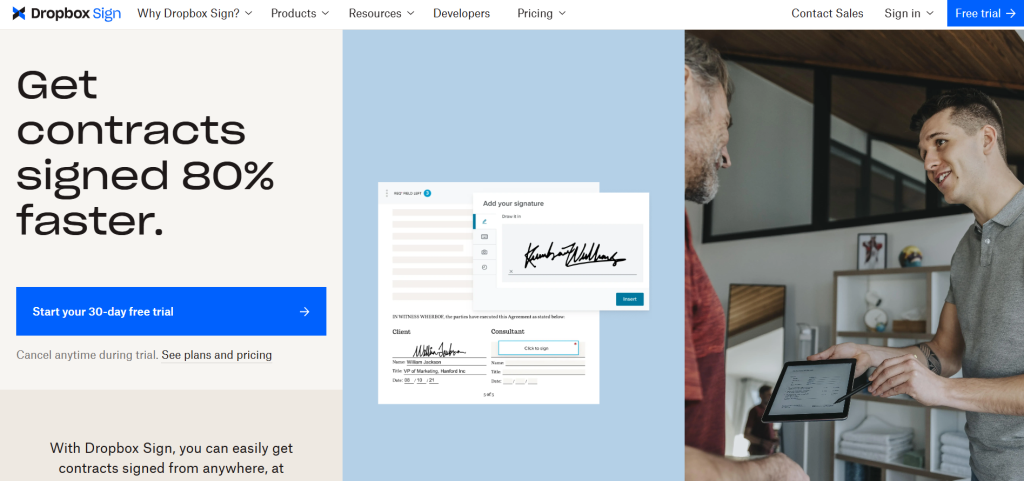
- Grew via content marketing aligned with product goals (sign-up, awareness) before acquisition.
- After acquisition by Dropbox, they leveraged Dropbox’s integrations to tap into new audiences.
- Clear goal-setting (e.g. “increase signups”) guided the SEO efforts.
ClickHouse

- Identified competitor-alternative keywords rather than just chasing broad terms.
- Optimized content for high intent: refreshed existing content, added in-depth guides, improved internal linking.
- Technical SEO improvements (site speed, structured data) + backlink strategy boosted organic users and sign-ups significantly.
Cleanvoice
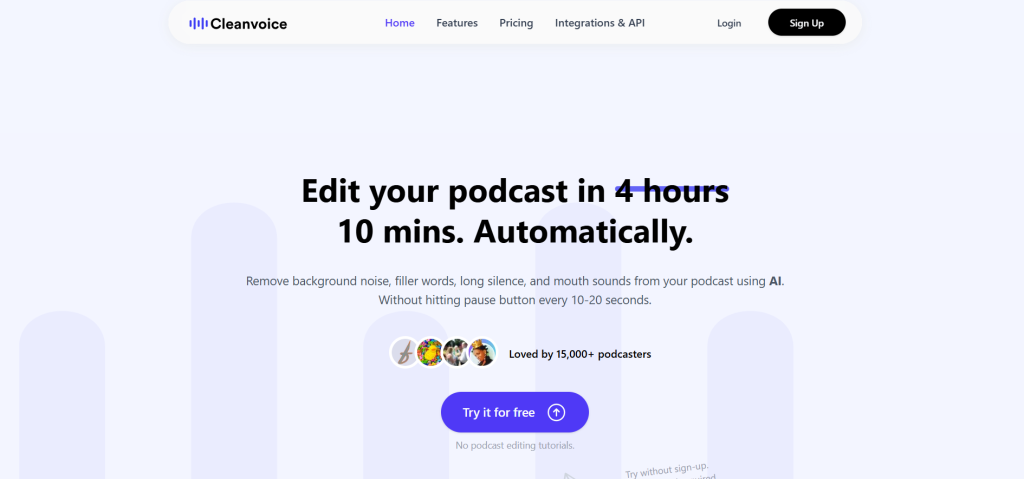
- Focused on high-intent blog content + authoritative backlinks.
- In 3 months, Cleanvoice saw over 1 million impressions and ~82,000 clicks from Google.
- This traffic translated into a 300% increase in monthly recurring revenue (MRR).
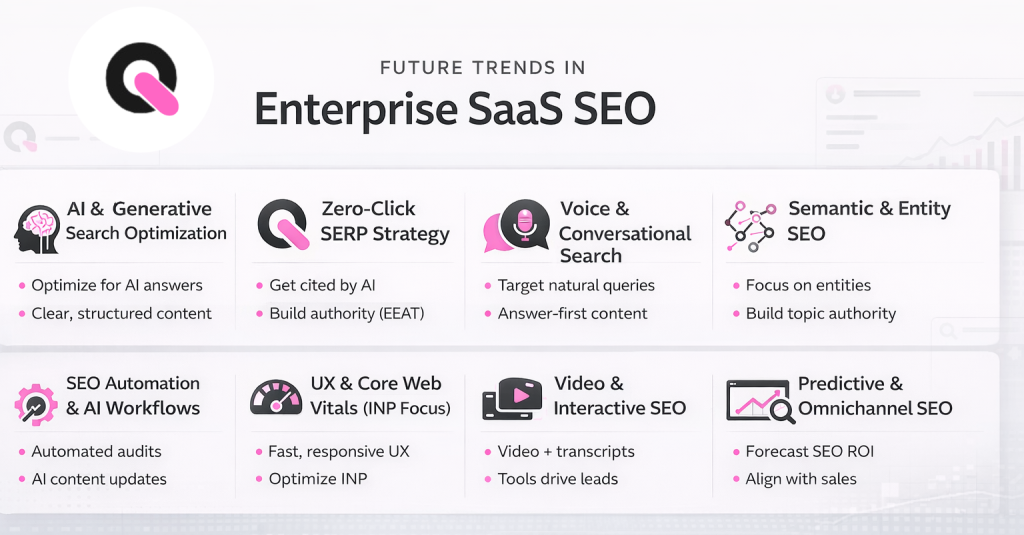
Future Trends in Enterprise SaaS SEO
The future of Enterprise SaaS SEO is defined by rapid technological advancements, particularly in Artificial Intelligence and Generative Search. The focus will shift from simple optimization to deep, data-driven integration, where SEO becomes a critical input for product development and executive decision-making.
AI-Powered and Generative Search Optimization
The rise of Google’s Search Generative Experience (SGE) and other AI-driven summarization tools fundamentally changes how users consume information and how visibility is achieved.
- Optimization for Snippet Extraction and Synthesis: Content will need to be optimized for AI to accurately extract and synthesize information. This means adopting ultra-clear, concise summaries at the start of sections, using definitive language, and providing clear, labeled data points that AI can reliably pull into a generated answer. Content must be factually impeccable to satisfy the AI’s need for high Trustworthiness.
- Defending the Zero-Click SERP: As AI answers reduce clicks to traditional websites, Enterprise SEO must secure visibility by ensuring the platform is cited as the source in the generated answer. This requires strengthening EEAT (Experience, Expertise, Authoritativeness, and Trustworthiness) signals and focusing content on proprietary data or unique product insights that AI models cannot easily synthesize from general web sources.
Voice and Conversational Search Integration
As devices and interfaces increasingly rely on natural language queries, optimizing for conversational search becomes essential for future discoverability.
- Natural Language Query Modeling: Keyword research will focus on long-tail, conversational queries that mimic how a user speaks to a voice assistant (e.g., “What’s the best SaaS tool for managing global supply chain compliance in Q4?”). Content must be structured to directly answer these questions, often starting with the answer immediately.
- Featured Snippet Domination: Voice search relies heavily on securing Featured Snippets (Position Zero) as the singular answer source. The strategy will prioritize structuring content with clear question-and-answer formats and using clear paragraph structures that are easily understandable by voice-reading algorithms.
Advanced Intent and Semantic Search Targeting
Search engine understanding of user intent is becoming increasingly sophisticated, moving away from simple keyword matches to complex semantic understanding of user needs.
- Entity-Based SEO: The focus will shift from matching keywords to matching Entities (specific concepts, people, products, or organizations) recognized by Google’s Knowledge Graph. Enterprise content must clearly define the entities it discusses (e.g., specific APIs, industry standards, or product modules) and link them logically to establish a clear, structured knowledge base.
- Predictive Intent Modeling: Future strategies will leverage predictive analytics to anticipate emerging user needs and changes in market terminology. By analyzing trending search patterns and market shifts, the platform can create authoritative content before competitors, securing early-mover advantage in new topical territories.
Automation in Technical SEO and Content Production
The scale of enterprise sites makes manual auditing and content upkeep unsustainable. Automation is the key to maintaining efficiency and agility.
- Automated Technical Monitoring and Remediation: Integration of specialized tools (like DeepCrawl) directly into the Continuous Integration/Continuous Deployment (CI/CD) pipeline will allow for automated pre-deployment crawl analysis. This catches technical errors (like bad redirects or schema failures) before they impact the live site, minimizing the risk of catastrophic site-wide ranking drops.
- AI-Assisted Content Maintenance: AI will be used to automatically analyze large content inventories, flagging pages for content decay and suggesting specific update recommendations (e.g., updating statistics, adding new internal links, or consolidating redundant sections). This reduces the manual workload of content governance and ensures the vast content library remains perpetually relevant.
Enhanced UX and Core Web Vitals Focus
User experience (UX) metrics are evolving into critical ranking factors, making superior speed and stability non-negotiable for competitive advantage.
- Interaction to Next Paint (INP) Deep Dive: As INP (a measure of page responsiveness) becomes a crucial Core Web Vital, Enterprise SEO will heavily focus on optimizing complex, interactive SaaS interfaces (like dashboards and app-like experiences) to ensure immediate responsiveness upon user input. This requires deep collaboration with front-end engineering teams.
- Accessibility (A11y) as a Ranking Factor: Compliance with Web Content Accessibility Guidelines (WCAG) will move from a compliance issue to a competitive ranking factor. Ensuring keyboard navigation, alt text, and appropriate ARIA attributes are used across thousands of pages will become a baseline requirement for enterprise sites.
Video, Interactive, and Multimedia SEO
To meet the diverse consumption habits of enterprise buyers, SEO must expand beyond text-based content into richer media formats.
- Video Optimization for Enterprise Search: Optimizing long-form, educational videos (e.g., platform tutorials, deep-dive feature walkthroughs) requires structured video schema and clear transcription. This ensures the content is indexable and surfaces in video SERP features, often providing high-quality, mid-funnel traffic.
- Interactive Content for Lead Capture: Tools like configurators, ROI calculators, and interactive demos are highly linkable and generate high-intent leads. SEO ensures these assets are technically crawlable (not hidden behind un-indexed JavaScript) and optimized to rank for their specific function.
Predictive Analytics for Keyword and Content Strategy
Future SEO decision-making will be driven by modeling potential outcomes rather than reacting to historical data.
- Forecasting ROI and Traffic Potential: Advanced modeling will be used to predict the true revenue potential of a new keyword cluster before content creation begins. This allows for superior resource allocation, ensuring the content team always works on the highest-yield projects.
- Algorithm Change Modeling: Enterprises will use machine learning to analyze the impact of past algorithm updates on their specific site profile. This allows them to proactively stress-test their site architecture and content quality against simulated future algorithm shifts, building a more resilient platform.
Cross-Channel and Omnichannel SEO Alignment
The organic channel will become fully integrated with all other marketing and sales efforts to create a seamless customer experience.
- SEO-to-CRM Feedback Loops: Automated feedback systems will funnel insights from the organic channel (e.g., the top-converting keyword for a specific lead) directly into the CRM. This allows sales reps to personalize outreach based on the prospect’s initial search intent.
- Omnichannel Content Strategy: SEO content will be designed for multi-use deployment, ensuring that a single piece of authoritative content can be easily repurposed across organic search, social media snippets, email nurture campaigns, and sales enablement decks, maximizing the ROI of every content investment.
🚀 Elevate Your SaaS SEO Game with Queen of Clicks
Scaling SEO in the SaaS space demands a strategic, data-driven approach built for long-term growth. At Queen of Clicks, we help SaaS companies turn organic search into a predictable revenue channel by combining deep industry insight with proven SEO frameworks.
Here’s how we help SaaS businesses scale:
- Strategic keyword targeting: We identify high-intent, revenue-driving keywords tailored to your product and audience
- Content that converts: From blog posts to landing pages, we create content designed to rank and drive sign-ups
- Technical SEO optimization: We ensure your site is fast, crawlable, and built for search engine performance
- Scalable link building: We grow your authority with high-quality backlinks that compound over time
- Continuous growth tracking: We monitor performance and refine strategies to maximize ROI
With the right strategy in place, SEO becomes more than traffic; it becomes your most reliable growth engine.
Conclusion
Enterprise SaaS SEO is about building a scalable, long-term growth engine that compounds over time. Success comes from aligning strategic keyword targeting with high-quality, intent-driven content, strong technical foundations, and consistent optimization. As competition increases, SaaS companies that invest in data-driven decisions and continuously refine their approach are the ones that stand out.
By focusing on delivering real value at every stage of the buyer journey, you can turn organic search into a predictable and sustainable source of traffic, leads, and revenue. With the right strategy in place, SEO becomes not just a marketing channel, but a core driver of long-term business growth.
FAQs
Should enterprise SaaS companies prioritize branded or non-branded keywords?
Both matter, but non-branded keywords are key for growth. They help you reach new audiences who are actively searching for solutions you offer.
Is it better to focus on blog content or landing pages?
You need both. Blog content drives traffic at the top of the funnel, while optimized landing pages convert that traffic into leads and customers.
How often should enterprise SaaS companies update existing content?
High-performing content should be reviewed and updated every 3–6 months to maintain rankings and stay competitive.
How can SaaS companies scale content without losing quality?
By building clear content frameworks, using detailed briefs, and maintaining strong editorial guidelines, you can scale while keeping consistency and quality high.
Does SEO work for niche SaaS products?
Yes, often even better. Niche SaaS can dominate highly specific keywords with lower competition and attract more qualified leads.
How do you measure the success of enterprise SaaS SEO?
Success is measured through organic traffic growth, keyword rankings, conversions, customer acquisition cost (CAC), and overall revenue driven by organic search.