
Best Automated SEO Tools: Top 10 Picks To Save Time And Boost Rankings
If you have ever spent a Sunday night manually checking backlinks or crawling through a spreadsheet of keyword rankings, you already know why automated SEO tools exist. SEO used to mean hours of manual digging. Now, the right software can crawl your entire site, flag technical errors, track rankings across markets, and even draft content briefs while you focus on strategy instead of busywork.
But “automated” does not mean “set it and forget it.” The best tools still need a human behind them who knows how to read the data and act on it. That is where a lot of businesses get stuck. They buy a tool, get a dashboard full of numbers, and have no idea what to do next.
In this guide, we will walk through the best automated SEO tools available right now, what each one actually does well, and how to pick the right one for your business. We will also cover a few mistakes to avoid, because automation can just as easily amplify bad decisions as it can speed up good ones.

Key Takeaways
- Automated SEO tools save hours of manual work by streamlining keyword research, technical audits, rank tracking, and content optimization, allowing marketers to focus on strategy instead.
- The best automated SEO tool depends on your business goals, team expertise, existing tech stack, and budget rather than choosing the most popular platform.
- SEO automation is most effective when combined with human expertise, as tools provide data but cannot replace strategic decision-making or quality content creation.
- Different SEO tools excel at different tasks, from technical audits and backlink analysis to AI-powered content optimization, so many businesses benefit from using more than one platform.
- Queen of Clicks helps SaaS companies turn SEO data into real visibility by combining technical SEO, content strategy, and AI search optimization to increase brand mentions across Google and AI search engines like ChatGPT and Perplexity.
Why Automated SEO Tools Matter More Than Ever
Search itself is changing fast. Google is not the only place people look for answers anymore, and AI-powered search experiences are reshaping how content gets discovered. According to Demand Sage’s AI SEO statistics report, the AI SEO tools market is projected to grow from around $1.2 billion in 2024 to roughly $4.5 billion by 2033, which tells you how quickly businesses are leaning on software to keep up with the pace of search.
Manually tracking rankings, auditing site health, and researching keywords across dozens of pages simply is not realistic anymore, especially for lean marketing teams. Automated SEO tools close that gap. They give you the data in minutes instead of days, so your team can spend its time on the parts that actually require a human brain: strategy, storytelling, and understanding what your customers are searching for and why.
What To Look For In An Automated SEO Tool
Not every tool fits every business, and picking based on brand name alone is a common mistake. Before you commit to a subscription, think about these factors:
- Your main goal. Are you trying to fix technical issues, build content, track rankings, or all three?
- Team size and skill level. Some tools are built for beginners, others assume you already know SEO inside and out.
- Integration with your existing stack. Check whether it connects with your CMS, analytics platform, or reporting tools.
- Data accuracy. Ranking and volume data can vary between tools, so consistency matters more than raw numbers.
- Budget. Enterprise-grade platforms can run into the hundreds of dollars a month, while smaller tools cover the basics for far less.
Keep these in mind as you go through the list below, because the “best” tool is really just the one that fits how your team actually works.
Top 10 Best Automated SEO Tools
Here are ten of the most reliable automated SEO tools on the market today, covering everything from SEO audits to creating optimized SEO content.
1. Semrush
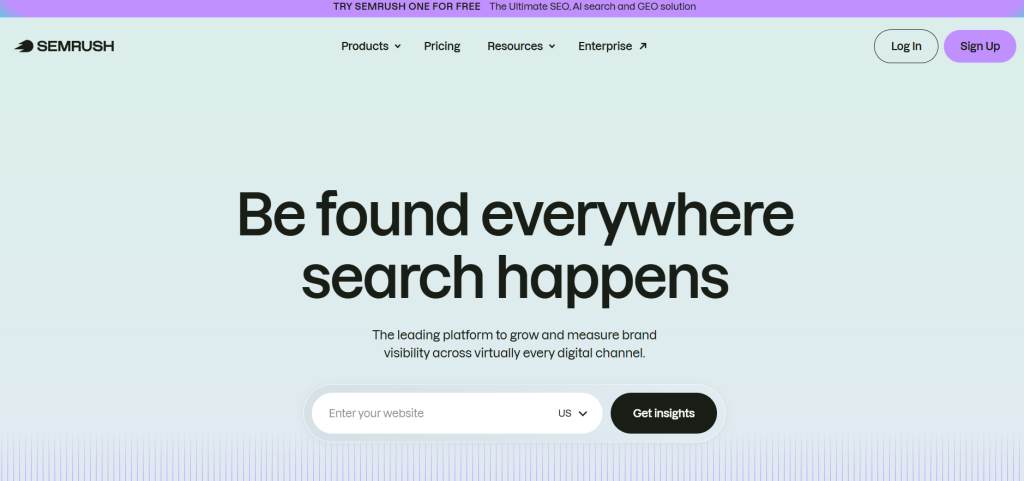
Semrush is one of the most well-rounded SEO platforms out there, covering keyword research, site audits, backlink analysis, and competitor tracking all in one place. It is a solid pick for teams that want a single dashboard instead of juggling five different tools.
Key features:
- Automated site audits that flag crawlability and technical issues
- Keyword gap analysis to compare your rankings against competitors
- Position tracking across desktop and mobile, updated daily
- Backlink analytics with toxic link detection
- Content templates built from top-ranking pages for a given keyword
2. Ahrefs
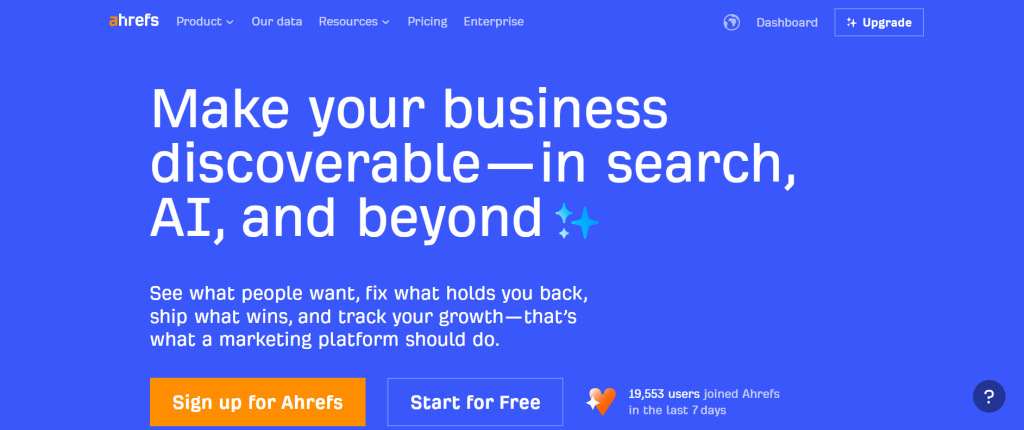
Ahrefs built its reputation on backlink data, and it is still one of the most trusted sources for understanding link profiles. Beyond links, it has grown into a full SEO suite with strong keyword research and content gap tools.
Key features:
- Site Explorer for deep backlink and referring domain analysis
- Content Gap tool to find keywords competitors rank for that you do not
- Rank Tracker with historical trend data
- Site Audit for crawl errors, redirects, and indexing issues
- Keywords Explorer with click-through rate estimates by keyword
3. Surfer SEO

Surfer SEO focuses specifically on content optimization, comparing your draft against top-ranking pages and giving you a live score as you write. It is a favorite among content teams who want data-backed guidance without guessing at word counts or keyword density.
Key features:
- Content Editor with real-time optimization scoring
- SERP Analyzer that benchmarks your page against top competitors
- Automated content briefs generated from live search data
- Audit tool to improve the score of existing published pages
- Integration with Google Docs and WordPress for a smoother writing flow
4. Screaming Frog SEO Spider
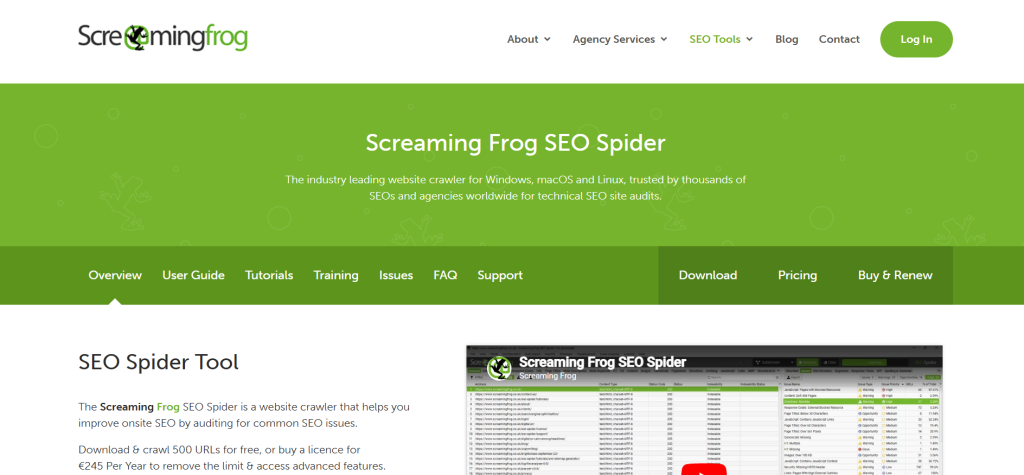
Screaming Frog SEO Spider is the go-to tool for technical SEO audits. It crawls your site the way a search engine would, surfacing broken links, duplicate content, missing metadata, and other issues that quietly hurt rankings.
Key features:
- Full site crawls that mimic search engine bots
- Broken link and redirect chain detection
- Duplicate title tag and meta description reports
- XML sitemap generation
- Integration with Google Analytics and Search Console for combined reporting
5. Moz Pro
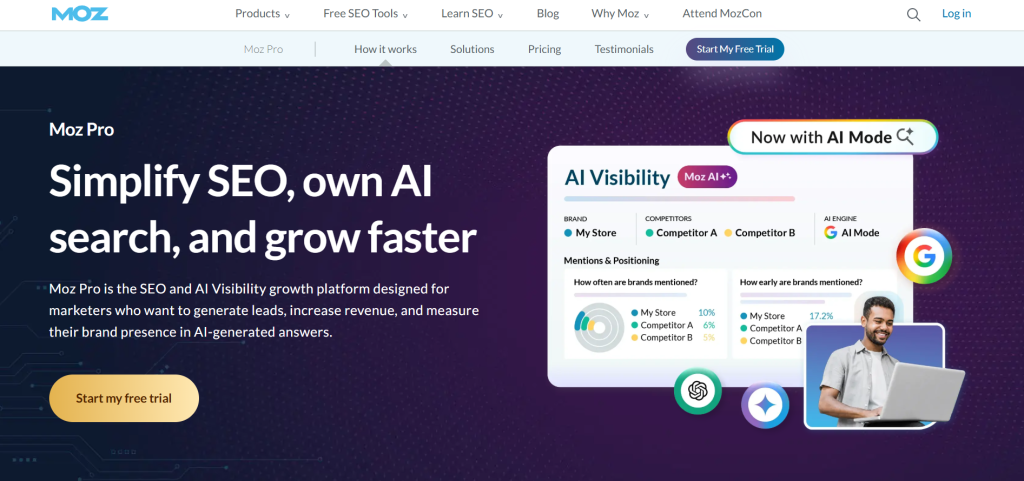
Moz Pro is known for being approachable, which makes it a strong choice for teams newer to SEO. Its Domain Authority metric has become an industry shorthand for measuring site strength, even outside of Moz’s own tools.
Key features:
- Keyword research with difficulty and opportunity scoring
- On-page optimization recommendations for individual pages
- Automated rank tracking with local search visibility
- Link intersect tool to find easy backlink opportunities
- Site crawl reports with prioritized fixes
6. SE Ranking
SE Ranking is a budget-friendly platform that does not skimp on features, offering rank tracking, audits, and competitor research at a price point smaller teams can actually afford.
Key features:
- Daily rank tracking across multiple search engines and locations
- White-label reporting for agencies managing multiple clients
- Website audit tool with a health score
- Backlink monitoring with new and lost link alerts
- Keyword grouping to organize research by topic cluster
7. Serpstat
Serpstat combines keyword research, rank tracking, and competitor analysis into one workspace, with a particular strength in visualizing how your visibility compares to competitors over time.
Key features:
- Keyword clustering to group related search terms automatically
- Competitor research showing shared and gap keywords
- Site audit with issue prioritization by impact
- Backlink analysis with anchor text breakdowns
- API access for teams that want to build custom reporting
8. MarketMuse
MarketMuse leans heavily on AI to help teams plan content at scale, identifying topic clusters and content gaps before a single word gets written. It is particularly useful for larger content operations trying to build topical authority.
Key features:
- Content briefs generated from topic and competitive analysis
- Topic modeling to map out content clusters
- Content inventory audit to flag thin or outdated pages
- Personalized content scoring based on topic depth
- Competitive content gap reports by topic
9. Clearscope
Clearscope focuses on making sure your content actually covers what searchers and search engines expect to see on a topic, without turning writing into a box-checking exercise.
Key features:
- Content grading based on relevant terms and topic coverage
- Google Docs and WordPress integrations for in-workflow editing
- Keyword discovery tied to search intent
- Content inventory reports across your entire site
- Reporting on how content changes affect rankings over time
10. Rank Math
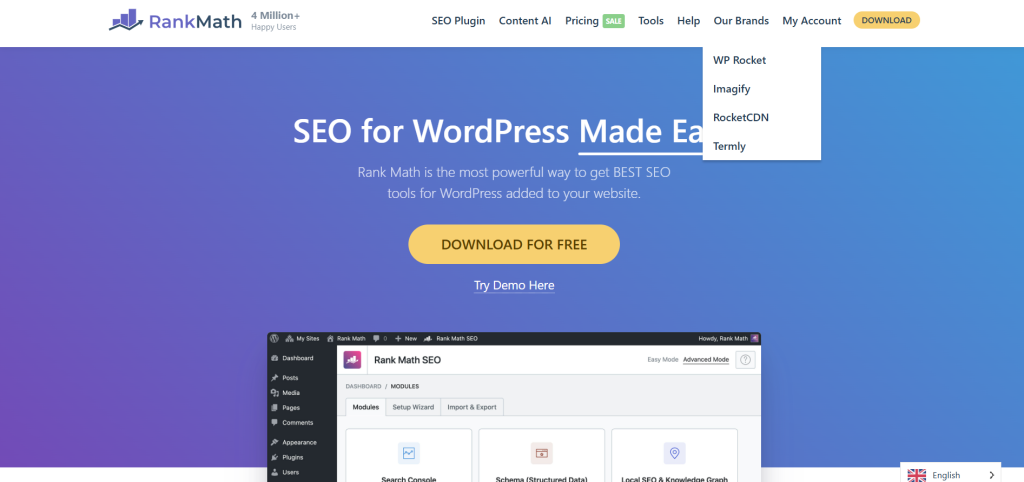
Rank Math is a WordPress plugin that brings automated SEO checks directly into your editor, which is especially handy if your site is built on WordPress and you want SEO guidance without leaving the CMS.
Key features:
- Built-in on-page SEO analysis with a content score
- Automated schema markup for rich snippets
- 404 error monitoring and redirection management
- Google Search Console integration inside the WordPress dashboard
- Multiple focus keyword tracking per page
How To Choose The Right Automated SEO Tool For Your Business
With so many options, narrowing it down comes back to a few practical questions.
Match The Tool To Your Biggest Bottleneck
If technical issues are holding you back, a crawler like Screaming Frog matters more than a content tool. If content quality is the gap, Surfer or Clearscope will move the needle faster.
Think About Who Will Actually Use It
A tool with a steep learning curve is only worth it if someone on your team has the time and expertise to use it properly. Otherwise, you end up paying for features that never get touched.
Do Not Underestimate Onboarding Time
Most platforms take a few weeks to set up properly, connect integrations, and start producing reliable data. Budget for that ramp-up period rather than expecting instant results.
Common Mistakes To Avoid When Automating SEO
Automation removes a lot of manual work, but it also makes it easier to move fast in the wrong direction. Watch out for these:
- Trusting a single tool’s keyword volume data as absolute truth instead of a directional estimate
- Publishing AI-optimized content without any human editing or fact-checking
- Ignoring technical audit results because the fixes feel too small to matter
- Chasing every keyword suggestion instead of prioritizing ones tied to real business goals
- Treating automation as a replacement for strategy rather than a support for it
This is a mistake we see often in our work helping SaaS companies do competitor analysis: the data is only useful when someone knows how to interpret it against your actual business goals.
🚀 Get Your SaaS Brand Cited By AI Search Engines with Queen of Clicks
Tools can hand you the data, but turning that data into visibility inside Google, ChatGPT, Perplexity, and other AI-driven search experiences takes a strategy built specifically for how these systems find and cite sources.
At Queen of Clicks, we work with SaaS businesses to combine technical SEO, content strategy, and AI search optimization so your brand shows up not just in traditional rankings, but in the answers AI platforms give to your future customers. If you want your product mentioned when someone asks an AI tool for a recommendation in your category, let’s talk about what that could look like for your SaaS.
Conclusion
Automated SEO tools have changed what is realistic for a marketing team to accomplish in a week. Whether you need help with technical audits, content briefs, or rank tracking, there is a tool on this list built for that job. The real work still comes down to interpreting what the data is telling you and making decisions that fit your business, not just chasing every number a dashboard shows you.
Start with the biggest gap in your current SEO process, pick a tool built to close it, and give it enough time to actually show results before switching to something new.
FAQs
Do I need more than one SEO tool?
Most teams end up using at least two: one for technical audits and rank tracking, and another focused on content optimization. Very few platforms do both equally well.
How much should a small business budget for SEO tools?
Plenty of solid options exist in the $50 to $150 per month range, though enterprise platforms with advanced reporting can run several hundred dollars monthly.
Can automated tools replace an SEO specialist?
No. Tools speed up data collection and flag issues, but interpreting that data and building a strategy around it still requires human judgment.
How often should I run a site audit?
A full technical audit once a month is a reasonable baseline, with lighter checks weekly if your site publishes content frequently or has a large number of pages.
Are free SEO tools worth using?
Free tools like Google Search Console and Google Analytics are essential and should be used alongside paid tools, not instead of them, since they provide first-party data no third-party tool can replicate.
Will automated SEO tools help with AI search visibility?
Some newer tools are starting to track brand mentions inside AI answers, but most traditional tools were built for classic search rankings and do not yet fully cover AI citation tracking.
How long does it take to see results after using these tools?
Technical fixes can show impact within a few weeks, while content and authority-building efforts typically take three to six months to meaningfully move rankings.