SEO Roadmap for SaaS Companies: How to Create a Winning SaaS SEO Strategy
An SEO roadmap for SaaS companies is a strategic plan that outlines the search engine optimization actions a SaaS business must take, from SaaS keyword research and technical SEO to content creation and link building, in order to drive sustainable organic growth. Rather than random blog posts or one-off fixes, a roadmap maps what to do, when, and why to rank for the terms your future customers are actually searching for.
Organic search still drives the majority of traffic for SaaS websites, as about 53% of total SaaS website visits come from organic search.
Key Takeaways
- A structured SaaS SEO roadmap replaces ad-hoc efforts with clear tasks, timelines, and owners.
- The guide spans technical, content, on-page, and authority work for measurable gains.
- Readers should expect better visibility, qualified traffic, and clearer conversion paths.
- Designed for SaaS marketing leaders, founders, and small cross-functional teams.
- Treat the plan as a living document that evolves with data and market shifts.
What An SEO Roadmap Is (And Why SaaS Teams Need One)
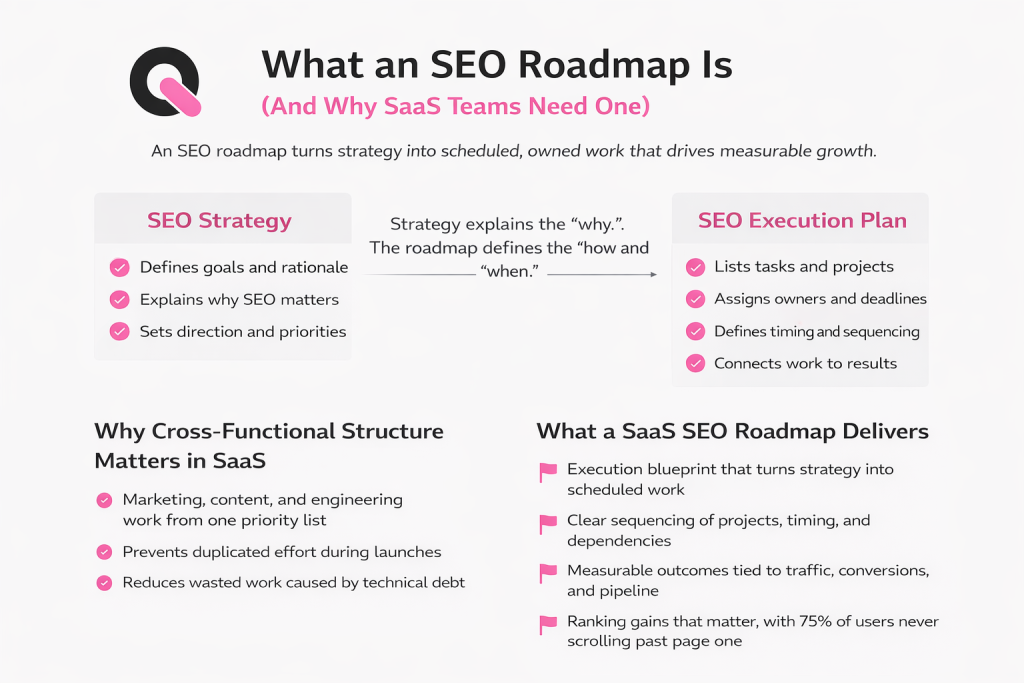
Turning a SaaS SEO strategy into scheduled work means assigning tasks, deadlines, and clear owners so efforts compound. A plan like this links the “what” and “why” to the “how” and “when,” so teams stop doing random fixes and start delivering measurable gains.
The difference between a strategy and a plan is simple. Strategy sets objectives and rationale. The execution plan lists projects, tasks, timing, and sequencing, for example, improving trial sign-up pages or building detailed comparison pages with owners and launch dates.
Why cross-functional structure matters
SaaS search success often needs marketing, content, and engineering to work from the same list of priorities. Structure prevents duplicated work and reduces wasted effort during product launches or while tackling technical debt.
- Execution blueprint: turns strategy into scheduled work with clear owners.
- Sequencing: projects, timing, and dependencies keep teams aligned.
- Measurable outcomes: tie tasks to traffic, conversions, and pipeline impact.
- User behavior: with 75% not scrolling past page one, ranking gains drive acquisition.
What A Winning SaaS SEO Roadmap Includes
A focused plan links core work to measurable growth so teams can prioritize what moves metrics.
Core disciplines and how they help
- Keyword research: map intent, awareness, consideration, purchase, to the funnel so content attracts the right users.
- Content: build both blog pieces and core pages (product, pricing, integrations, alternatives) to capture demand and convert visitors.
- Technical work: fix crawlability, speed, and mobile issues so pages can actually rank and convert.
- On-page optimization: regular updates to titles, headings, internal links, and intent alignment on high-value pages.
- Link building: earn relevant, high-quality links to boost authority instead of chasing volume.
Operational layers every plan must include
Each project needs clear timelines, owners, and dependencies. Visual views help stakeholders see priority and status at a glance.
| Discipline | Purpose | Example tasks | Owner |
| Keyword research | Match intent to funnel stages | Target list, intent tags, gap analysis | Content strategist |
| Content | Acquire and convert visitors | Blog briefs, product pages, editorial calendar | Content lead |
| Technical | Enable indexing and fast UX | Crawl fixes, speed optimizations, mobile QA | Engineering |
| Link building | Build domain authority | Outreach, PR, unlinked mentions | Growth lead |
Use this plan to assign small, trackable tasks and to phase work by impact. A clear plan reduces wasted effort and keeps the whole team aligned.
Why An SEO Roadmap Improves SEO Efforts, Alignment, And ROI
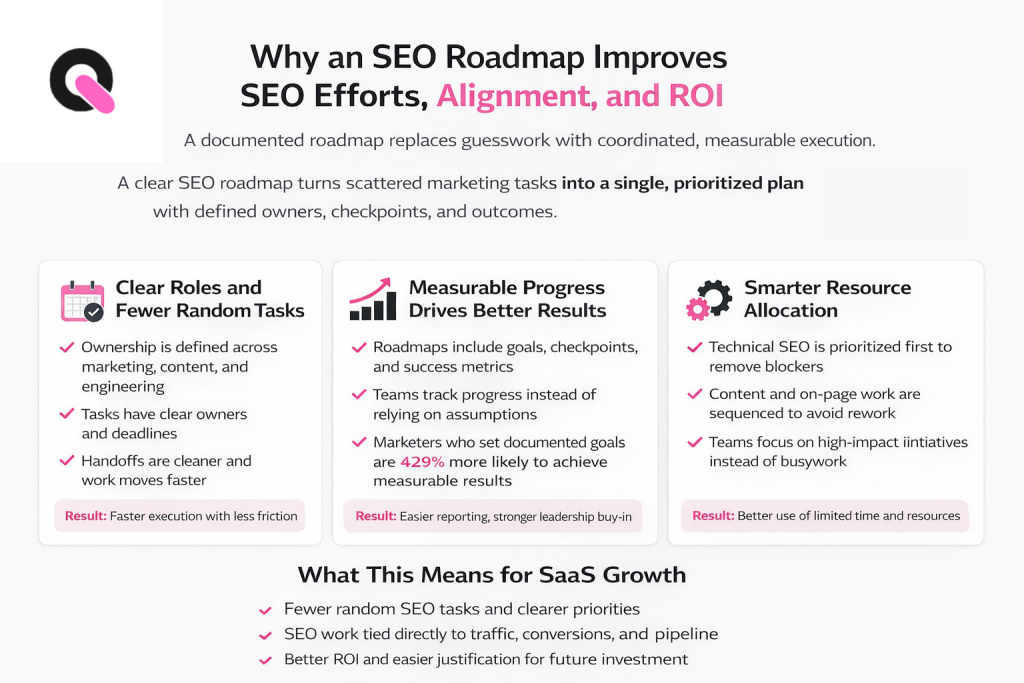
A documented guide turns scattered marketing tasks into coordinated, measurable work. It replaces guesswork with a clear list of projects, owners, and checkpoints. That structure prevents teams from repeating low-value tasks and keeps focus on business outcomes.
Clear Roles and Fewer Random Tasks
Define ownership across marketing, content, and engineering so people stop doing “random acts.”
When roles are explicit, work moves faster and handoffs are cleaner. Stakeholders see who is responsible for each item, which reduces duplication and friction.
Measurable Progress: Goal-Setters Are 429% More Likely to Achieve Results
Marketers who set documented goals are 429% more likely to show measurable results. Use checkpoints and simple metrics to track progress.
Visible goals make it easier to prove impact and secure further support from leadership.
Smarter Resource Allocation for Lean Teams
Prioritize technical fixes first so content and on-page work don’t waste time. This sequencing saves resources and avoids rework.
With a clear plan, small teams can focus on high-impact initiatives that move rankings, traffic, and conversions instead of busywork.
- Reduce random efforts and name owners and timelines.
- Tie work to pipeline and revenue to win stakeholder buy-in.
- Measure progress to improve management and future resourcing.
Define SEO Goals And KPIs That Match SaaS Growth Targets
Tie measurable web goals to the business outcomes your product team tracks. Align targets to qualified sign-ups, demos booked, and pipeline influenced so digital work supports revenue priorities.
Choosing Metrics That Matter: Traffic, Rankings, Conversions, Pipeline
Match KPIs to funnel stages. Awareness should use traffic and visibility. Consideration needs rankings and CTR. Conversion tracks trials, demos, or sign-ups. Revenue requires pipeline attribution.
Writing SMART SEO Goals and Setting Realistic Timelines
Write goals that are Specific, Measurable, Achievable, Relevant, and Time-bound. Pick one primary KPI and two supporting metrics to reduce noise.
- Include buffer time for production, development, and indexing.
- Document assumptions: baseline, resources, and expected impact.
- Ensure analytics collection and clean data to prove success and iterate.
| Goal | Primary KPI | Supporting Metrics | Time Horizon |
| Increase qualified sign-ups | Trials started | Organic traffic, CTR | 6–9 months |
| Improve consideration visibility | Top-10 rankings for product terms | Impressions, CTR | 3–6 months |
| Grow pipeline influenced | Pipeline value attributed | Demos, conversion rate | 9–12 months |
Baseline Your Current Performance With Analytics Data
Measure current organic performance so every task starts from real numbers, not guesses. Capture baseline analytics and key data to make the plan factual and focused.
Establishing Benchmarks for Organic Traffic, CTR, and Engagement
Collect organic traffic by page type: blog, product, and landing pages. Record CTR for top queries and engagement metrics like bounce rate and time on page.
Also track conversion rates on priority landing pages. Segment baselines by intent to spot where the product pages outperform or lag content pages.
Turning Baselines Into Milestones for the Roadmap
Translate gaps into milestone targets: lift CTR on your top 10 pages, grow non-branded traffic share, or improve demo conversion rate by X% in 6 months.
Schedule these milestones as regular review checkpoints to measure progress and prevent end-of-quarter surprises.
- Prioritize high-traffic pages with low CTR for fast wins.
- Use common analytics tools to centralize reporting and cut manual work.
| Baseline | Milestone | Review Cadence |
| Organic traffic by page type | +20% non-branded sessions | Monthly |
| CTR for top queries | Lift top-10 CTR by 15% | Bi-weekly |
| Demo conversion rate | Improve conversion by 10% | Quarterly |
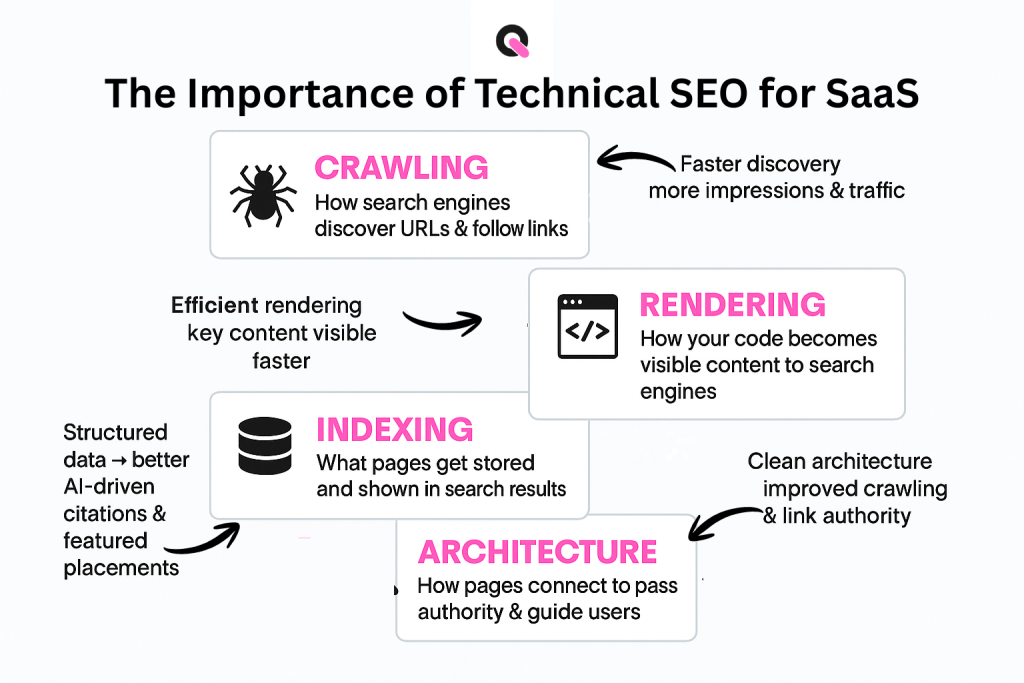
Start With A Technical SEO Audit To Remove Roadblocks
Begin with a systems check to clear indexing errors that cap your site’s visibility. A focused technical audit finds the hidden blockers that stop pages from being found.
Crawlability and Indexing: Finding Errors Before They Cap Visibility
Check for crawl errors, blocked resources, incorrect canonical tags, and orphan pages. These issues prevent search engines from seeing your most important pages.
Use crawl tools to export failures and prioritize fixes by traffic and intent.
Site Speed and UX: Why Small Improvements Can Drive Impact
Speed and usable design affect both rankings and conversions. Faster pages improve user experience and can increase conversions by about 7%.
Optimize templates, compress assets, and measure page performance before and after changes.
Broken Links, Duplicate Content, and Mobile Issues to Fix First
Start with fixes that remove friction: broken internal links, redirect chains, duplicate content, and mobile usability errors.
Focus on high-value pages first, pricing, product, demo, and top blog posts, to maximize impact with limited resources.
- Translate audit findings into clear tasks with owners (engineering vs marketing).
- Include QA steps and measurement so teams can validate performance gains.
- Track outcomes to show the concrete impact of technical optimization.
Find On-Page Optimization Opportunities On High-Value Pages
Small edits on high-value pages often yield measurable gains in clicks and sign-ups. Prioritize pages that already drive traffic, convert visitors, or sit in positions 5–20 for target queries.
Titles, Meta Descriptions, Headings, URLs, and Internal Links
Choose pages for work by volume, intent, and ranking potential:
- Top traffic pages with low CTR.
- High-intent pages (pricing, demo, product) that lead to conversions.
- Pages ranking in positions 5–20 that can move into top results with tweaks.
Use this checklist mindset when editing:
- Titles: clear benefit + target keyword, under 60 characters.
- Meta descriptions: action-oriented, improve CTR, match intent.
- Headings: logical H1/H2 structure and helpful subtopics for users.
- URLs: short, descriptive, and consistent with site structure.
- Internal links: point to demo, trial, and pricing pages to guide conversions.
Optimizing for Search Intent Across Product, Blog, and Landing Pages
Map each element to intent. Product and landing pages should prioritize commercial clarity and CTAs. Blog posts should support core pages with contextual links and aligned CTAs.
Avoid over-optimization. Focus on clarity, user benefit, and natural language rather than keyword stuffing. Measure impact, track rankings and CTR after changes, and iterate based on data.
| Page Type | Primary Focus | Quick KPI |
| Product/Landing | Commercial intent, clear CTAs | Demo/trial conversions |
| Blog | Topical depth, support core pages | Referral clicks to product pages |
| High-potential pages | Rank and CTR lift | Position and CTR change |
Conduct Keyword Research Built For SaaS Search Intent
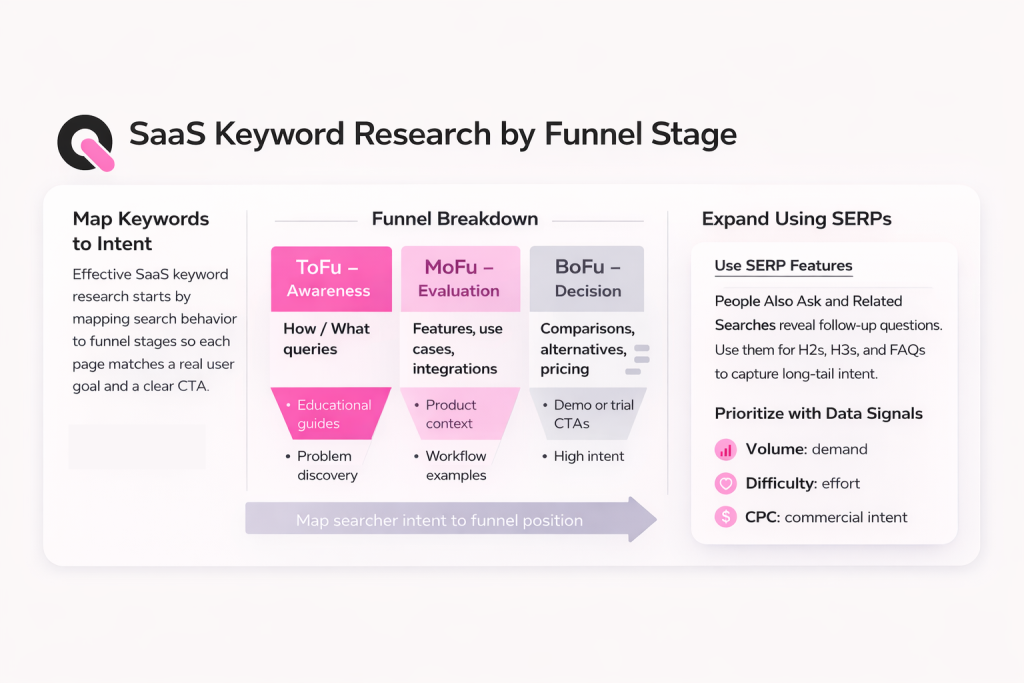
Map search intent to buyer stages so every content piece targets a clear conversion step. List common SaaS query patterns: “software for,” “best,” “alternatives,” “vs,” “pricing,” and “integrations.” Tag each term as awareness, consideration, or purchase.
Mapping Keywords to the Funnel
Awareness queries aim to educate. Consideration queries compare options. Purchase queries show buying intent.
Balancing Head Terms and Long-Tail Keywords
Include a few head keyword targets for long-term authority and many long-tail terms for faster wins and focused traffic.
Competitive Gaps and Topic Opportunities
Run competitor keyword gap analysis to find pages they rank for that you don’t. Turn those gaps into content or feature pages that match intent.
Creating an Executable Keyword Set
- Cluster keywords into topics and assign page types: pillar, feature, comparison, or blog.
- Document volume, difficulty, intent, and the best page to rank.
- Choose targets based on writer availability, product expertise, and engineering bandwidth.
- Convert the final set into scheduled content and optimization tasks.
Build A Content Roadmap That Scales Blog Posts And Core Pages
A scalable content plan keeps your blog posts and core pages working together instead of competing. Focus on both top-of-funnel education and bottom-of-funnel pages that drive demos and trials.
Content Audit: Refresh, Consolidate, or Prune
Catalog all existing pages and posts. Flag high-traffic pieces to refresh, overlapping articles to consolidate, and thin items to prune.
Refreshing keeps rankings steady; consolidation removes cannibalization and improves clarity for users and crawlers.
Editorial Calendar Planning
Create a calendar tied to team capacity. Schedule steady publishing over months, not a one-time sprint. Assign owners, briefs, and launch dates.
Pillar Pages, Supporting Articles, and Internal Linking
Build pillar pages for core topics and supporting articles that address niche queries. Use internal links to funnel readers toward demos and pricing pages.
Content Optimization Standards
Set standards for depth, clear headings, and readability for busy buyers. Aim for practical examples, scannable lists, and concise CTAs.
- Update high-performing blog posts regularly to defend rankings.
- Measure by traffic growth, assisted conversions, and link-driven navigation to core pages.
| Task | Quick Win | Owner |
| Audit & prune | Reduce thin pages | Content lead |
| Pillar build | Topical authority | Product marketer |
| Post updates | Protect rankings | Writer/Analyst |
Plan Link Building And Authority Growth Without Wasting Resources
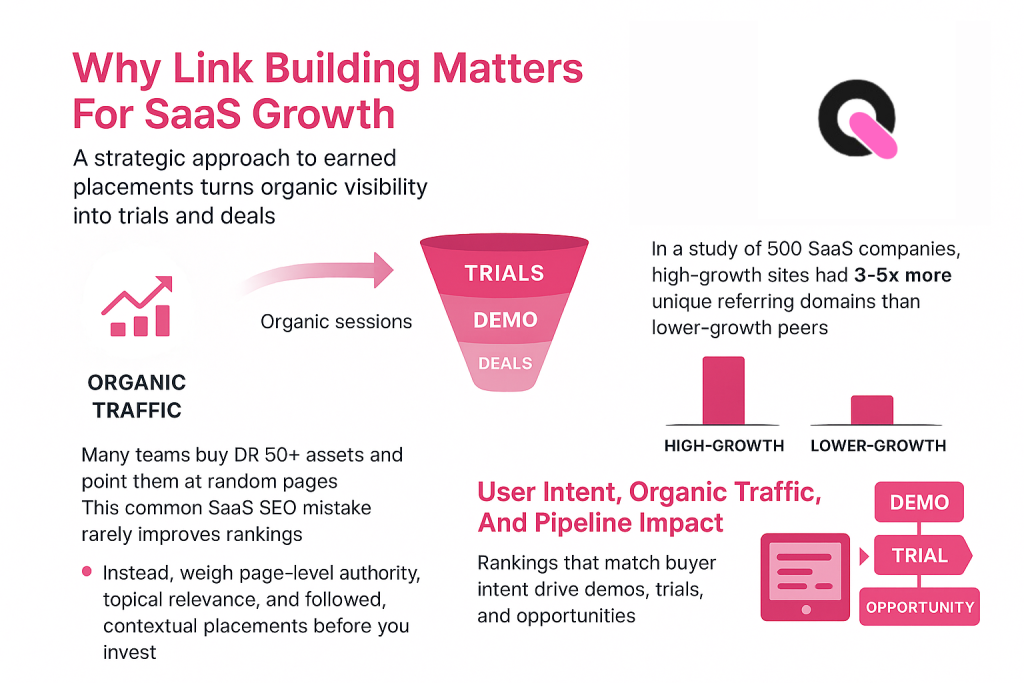
Smart outreach and content-backed campaigns deliver links that move high-value pages, not just the homepage. Treat authority work as targeted support for product, integration, and comparison pages. That focus prevents scatter and improves measurable business results.
Backlink profile review: quality, relevance, and risk
Audit your backlink mix to spot high-authority sources and toxic links. Flag irrelevant or spammy domains for removal or disavow. Prioritize fixes where risk could harm rankings or user trust.
Earning links that support rankings and domain strength
Target opportunities tied to product categories and integrations. Earn citations with expert studies, partnership pages, and thoughtful digital PR. These approaches build sustainable domain authority without heavy outreach volume.
Turning unlinked mentions into links
Track brand mentions and request attribution professionally. Provide the exact URL you want attached and a concise reason for the ask. Scale this with templated outreach and a simple CRM workflow.
- Efficient tactics: data-driven content, integration pages, PR, and partnerships.
- Focus: support specific pages, not only root domain authority.
- Measure: mix linking metrics with rankings, traffic quality, and conversions.
Prioritize SEO Tasks By Impact, Effort, Risk, And Time
Prioritization determines whether your plan moves the needle or gets stuck in busywork. Use clear criteria so teams pick the right tasks and defend tradeoffs with stakeholders.
Quick Wins vs. Big Bets: Using an Impact/Effort Matrix
Plot each project on an impact/effort grid to separate quick wins from long-term bets. Focus first on high-impact, low-effort items to show value early.
Dependencies and Sequencing
Resolve technical crawl and indexing blockers before scaling content and link work. This sequencing prevents wasted time and amplifies later gains.
Weighted Value-Delivery Scoring
Create a scoring model that weights impact, risk reduction, and time criticality against level of effort. Share scores with stakeholders to align resourcing and approvals.
Phasing Across Short-, Mid-, And Long-Term
Phase work into short (1–3 months), mid (3–6 months), and long (6–12 months) windows. Document assumptions and capacity so prioritization stays transparent.
- Tip: Record expected impact and required resources for every task.
- Tip: Re-score projects quarterly to reflect new data and risks.
| Priority | Focus | Typical Time | Expected Result |
| High | Fix crawl/index issues | 1–3 months | Immediate visibility gains |
| Medium | On-page & content updates | 3–6 months | Traffic & conversion uplift |
| Low | Broad link campaigns | 6–12 months | Long-term authority |
Execute And Maintain The Roadmap With Clear Ownership And Workflows
When each task has a single owner, execution moves faster and priorities stay visible. Assign a definition of done and a realistic due date for every task so the whole team can track progress and measure results.
Assigning Owners Across Marketing, Content, and Engineering
Split ownership by type: engineering owns technical fixes, content owns briefs and updates, and marketing owns distribution and tracking. This clear split prevents stalled tasks and poor handoffs.
Use small cross-functional pods for larger efforts so the product, content, and engineering experience aligns during launches.
Roadmap Views Stakeholders Understand: List, Kanban, Timeline
Different stakeholders prefer different ways to see work. A list suits detail-first people. Kanban shows flow and blockers. A timeline helps leadership see launch dates and dependencies.
- List: detailed tasks and owners for daily management.
- Kanban: visual flow for teams that manage work in progress.
- Timeline: planning view for stakeholders focused on launches and results.
Cadences for Reviews, QA, and Ongoing Housekeeping
Set weekly or biweekly check-ins for short-term tasks and monthly KPI reviews for performance and progress. Include QA gates for every launch: staging review, analytics checks, and post-launch validation.
Quarterly re-prioritization keeps the plan current and lets management shift effort when conditions change.
Adapting to Algorithm Changes Without Losing the Plan
Treat the plan as living: when an update hits, re-score priorities, add focused tests, and protect high-value pages first. Document learnings and performance results so future decisions compound past wins.
| View | Best for | Preferred by | Recommended tools |
| List | Detailed task tracking and owners | Project managers, analysts | Asana, Google Sheets |
| Kanban | Flow, blockers, quick wins | Delivery teams, engineers | Trello, Jira |
| Timeline | Launch schedules and dependencies | Leadership, stakeholders | Notion, Monday.com |
| Hybrid | Mix detail and planning for visibility | Cross-functional teams | ClickUp, Airtable |
🚀 How Queen Of Clicks Helps SaaS Businesses Turn A Roadmap Into Results
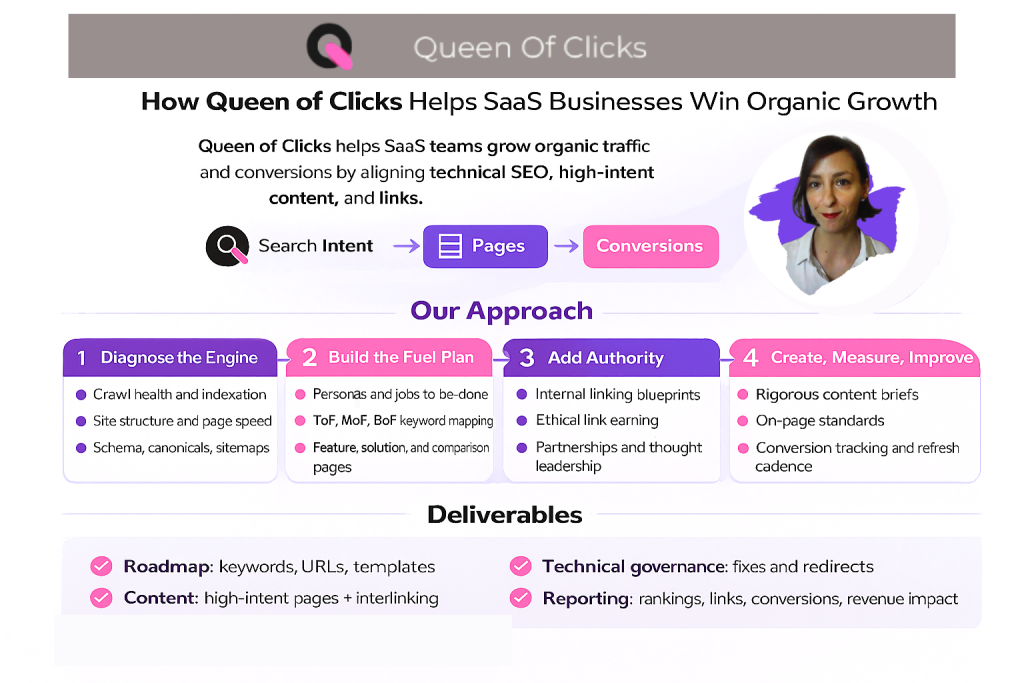
A partner that builds phased plans and enforces measurement accelerates SaaS growth. Queen of Clicks translates growth goals into an executable plan with owners, timelines, and clear KPIs.
Structured Support for SaaS Growth, Including
We focus on practical deliverables that drive visibility and conversions. Work is phased, prioritized, and tied to business resources so teams can execute without surprise rework.
Roadmap creation grounded in your business goals, timelines, and resources
- Roadmap creation aligned to goals: tasks, owners, dependencies, and reporting so execution matches reality.
- Technical prioritization: crawlability, indexing, site speed, and UX fixes where they matter most.
- Keyword research & content planning: intent-driven targets and competitive gaps, not vanity terms.
- On-page optimization & internal linking: boost visibility for product, landing, and content clusters.
- Link building guidance: quality-first outreach to grow long-term authority without wasted effort.
- Analytics, reporting & iteration: measurement, stakeholder-ready reports, and data-led changes to improve results.
Book a Call With Queen of Clicks to Build Your SaaS SEO Roadmap
The deliverable is a working plan, not a PDF on a shelf. It includes prioritization, workflows, and performance checks so teams can prove progress and improve over time.
Book a call with Queen of Clicks to create a tailored plan that fits your team, market, and resources and starts delivering measurable results.
Conclusion
Concrete milestones and regular reviews make execution repeatable and reduce guesswork for busy SaaS teams. A concise SEO plan links strategy to work everyone can act on, so leaders know what to fund and teams know what to deliver.
Remember the sequence: set measurable goals and baselines, fix technical blockers that limit indexing, optimize high-value pages, build keyword-driven content, then grow authority through targeted outreach and partnerships.
Structure and prioritization protect time and resources. That focus improves site visibility, rankings, and qualified traffic while revealing the best opportunities to scale.
Treat the plan as a living process. Review results regularly, update with new data, and adjust when search signals change so work stays aligned to business goals.
Consistent execution is the true differentiator; small, steady wins compound into lasting success.
FAQs
How long does it take for a SaaS SEO roadmap to show results?
Most SaaS companies see early signals (indexing, CTR improvements, ranking movement) within 6–12 weeks, while meaningful traffic and conversion gains usually appear in 3–6 months. Competitive product terms and authority growth can take 6–12 months to fully compound.
How often should a SaaS SEO roadmap be updated?
A roadmap should be reviewed monthly for progress and blockers, and re-prioritized quarterly. Product changes, new competitors, algorithm updates, or shifts in growth targets should trigger immediate adjustments.
Is an SEO roadmap different for early-stage vs. mature SaaS companies?
Yes. Early-stage SaaS focuses on technical foundations, core pages, and fast-win keywords, while mature SaaS roadmaps emphasize authority building, content depth, international SEO, and pipeline attribution.
Who should own the SEO roadmap inside a SaaS company?
One clear owner is critical. Typically this is a Head of Marketing, Growth Lead, or SEO Manager, with execution shared across content, engineering, and product. Without a single owner, roadmaps stall.
How does an SEO roadmap support paid acquisition and sales teams?
A roadmap aligns SEO pages with sales objections, comparison searches, and high-intent keywords, lowering CAC and improving conversion quality. SEO insights also inform ad copy, landing pages, and sales enablement.