SEO for SaaS Startups: A Strategy to Win on the Search Engines
SEO for SaaS startups is the specialized process of attracting, qualifying, and converting users who are actively searching for software solutions, often across long, multi-touch buying journeys. Unlike traditional SEO, where a single keyword can lead directly to a purchase, SaaS SEO must align with how people buy software: they research pain points, compare alternatives, evaluate features, read reviews, and only then decide to start a trial or book a demo.
Key Takeaways
- SaaS SEO is a strategic approach that aligns content, technical optimization, and keyword targeting with the multi-stage buyer journey.
- Defining your target audience and mapping keywords to each stage ensures you attract high-intent users who are more likely to convert.
- Optimizing product pages, comparison content, and educational resources strengthens authority and drives trials, demos, and subscriptions.
- Technical SEO, site architecture, internal linking, and backlink building are important for search visibility and long-term growth.
- Measuring SEO success through meaningful SaaS metrics ensures your efforts translate into sustainable, revenue-driving results.
What Is SEO for SaaS
SaaS SEO is a specialized approach to search engine optimization tailored specifically for software-as-a-service businesses. Unlike traditional SEO, which often focuses on ranking for high-traffic keywords, SaaS SEO is designed to attract the right audience, people actively looking for solutions like yours, and guide them through a multi-stage buying journey. This means SaaS SEO combines three things at once:
- Understanding how your ideal customers search for solutions: It’s not enough to target generic keywords. You need to know the exact terms your potential users type when they’re discovering problems, comparing tools, or evaluating features. This requires deep research into search intent, user behavior, and industry-specific language.
- Building content that matches every stage of their decision-making journey: From educational blog posts and how-to guides to detailed feature pages and comparison content, SaaS SEO ensures that every piece of content serves a purpose. Early-stage users might need resources to understand their pain points, while mid- and late-stage users are looking for concrete reasons to choose your product over competitors.
- Optimizing your product pages, comparison pages, and educational content so Google sees your product as the best answer: Technical SEO, on-page optimization, structured data, and clear site architecture all make your website more discoverable and authoritative. This ensures that when users search for a solution, your product appears prominently and convincingly.
SaaS SEO is built for recurring-revenue businesses. Visibility drives trials, trials lead to adoption, and adoption fuels long-term growth. In other words, SaaS SEO is about creating a predictable acquisition channel that consistently turns search engine visitors into paying subscribers.
Why Is SEO Important for SaaS Startups
For SaaS startups, every new user matters, and organic search is one of the most cost-effective ways to attract high-intent prospects. Unlike paid advertising, which stops generating leads the moment you stop spending, SEO builds long-term visibility that continues to drive qualified traffic over time. SaaS buyers typically go through extensive research before committing to a subscription, and if your website doesn’t appear during these moments, you risk losing potential customers to competitors. Companies that invest consistently in SEO see an average ROI of 748% over three years, making it one of the most effective marketing channels for SaaS growth.
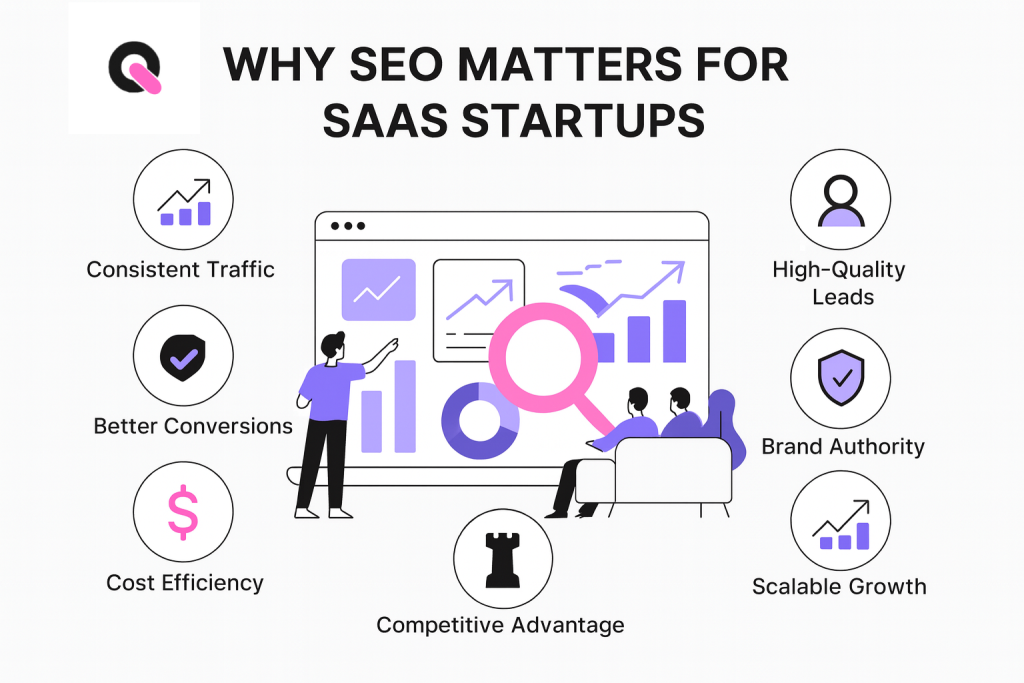
The benefits of SEO for SaaS startups include:
- Consistent, Long-Term Traffic: Once optimized, your website can attract visitors continuously, even months after publishing content, creating a reliable flow of potential leads without ongoing ad spend.
- Higher Quality Leads: SEO attracts users who are actively searching for solutions like yours, which means the traffic you get is more likely to convert into trials, demos, and paying customers.
- Improved Brand Authority: Ranking for key terms in your industry signals to users that your SaaS is a credible, authoritative solution. Over time, this increases trust and recognition among your target audience.
- Better Conversion Opportunities: When you align content with each stage of the buyer journey, from educational blog posts to comparison pages and product features, you can nurture visitors toward becoming paying customers more effectively.
- Cost Efficiency: Unlike paid campaigns that require constant investment, SEO generates organic traffic at a fraction of the cost, making it ideal for startups that need to maximize every marketing dollar.
- Competitive Advantage: Many SaaS startups neglect SEO or use generic strategies. When you implement a targeted SEO approach early, you can outrank competitors and capture users before they even consider alternative products.
- Scalable Growth: SEO builds a foundation for growth that expands as your content and website authority increase, supporting recurring revenue and creating a channel that scales alongside your business.
SEO is a strategic growth engine that connects your product with the people who need it most, at exactly the right time in their decision-making journey.
SEO Strategies for SaaS Startups
Building a successful SaaS business requires more than just a great product; it also requires being discoverable by the right audience at the right time. SEO for SaaS startups is a long-term growth strategy, but knowing where to focus your efforts can make all the difference. The right strategies help you attract qualified leads, guide them through their decision-making journey, and turn search engine traffic into paying customers. In the sections below, we’ll break down the essential SEO strategies that every SaaS startup should implement, from SaaS keyword research and content planning to technical optimizations and authority-building tactics.
Define Your Target Audience
Before you start any SEO effort, you must clearly define who you’re targeting. For SaaS startups, this involves identifying your Ideal Customer Profile (ICP), the users most likely to benefit from your product and convert into paying customers. Key attributes to consider include:
- Industry: e.g., marketing teams, remote software developers, finance departments
- Company Size: small startups, mid-market, enterprise
- Job Role: managers, team leads, executives
- Pain Points: collaboration issues, inefficiency, lack of automation
- Software Needs: task management, analytics, email automation
Example: A project management SaaS might target mid-sized marketing teams struggling with remote collaboration. Knowing this helps you:
- Select relevant, high-intent keywords
- Tailor content to user problems
- Design product pages and landing pages that resonate
Pro Tip: Use surveys, customer interviews, and analytics to validate assumptions. A clear audience definition improves traffic quality and conversion rates dramatically.
Map Keywords to the Buyer Journey
SaaS buyers rarely convert immediately, they progress through multiple stages: awareness, consideration, and decision. Mapping keywords to these stages ensures your content matches their intent.
| Stage | User Intent Example | Keyword Example | Content Type |
| Awareness | Learn about a problem | “how to manage remote teams” | Blog post, guide, tutorial |
| Consideration | Compare different solutions | “project management SaaS vs Trello” | Comparison page, case study |
| Decision | Ready to try or purchase | “best project management tool for marketing” | Landing page, demo signup |
Tip: Tailoring content to each stage increases engagement and drives qualified leads further down the funnel. Use analytics to see which stage generates the most conversions and refine accordingly.
Prioritize High-Intent Keywords
Not all keywords are equal. High-intent keywords target users ready to act, often signaling a stronger likelihood of conversion.
- Look for transactional keywords with words like “buy,” “trial,” “demo,” “best,” or “comparison.”
- Focus on feature-specific searches, e.g., “CRM integration with email signature software.”
- Avoid keywords that attract general interest but low conversion potential.
Example: Someone searching for “best email marketing software for startups” is closer to signing up than someone searching for “what is email marketing.”
Pro Tip: Use tools like Ahrefs, SEMrush, or Moz to analyze keyword difficulty, search volume, and CPC to prioritize effectively.
For example, let’s take a look at the metrics for the keyword “CRM integration with email signature software.”

This shows the monthly search volume in the United States is 90, and keyword difficulty is 17, which is quite possible to rank for this keyword.
Build a Strong Topical Map
A topical map organizes your content around core themes, helping search engines understand your expertise and improving rankings across multiple keywords.
- Pillar Pages: Broad topics like “Remote Team Collaboration Tools”
- Cluster Content: Subtopics like “Time Tracking Apps for Marketing Teams” or “Best Task Management Integrations”
- Internal Linking: Connect clusters to pillars for authority distribution
Benefits:
- Signals subject expertise to Google
- Improves organic visibility across multiple related keywords
- Guides users logically through your content
Example: HubSpot’s blog uses a pillar-cluster structure, covering marketing automation broadly while linking to detailed posts on email workflows, lead scoring, and CRM integrations.
Create Comparison Pages
Comparison pages are extremely effective for decision-stage buyers, helping them choose between alternatives.
- Target high-intent searches like “Our CRM vs Salesforce” or “Best Marketing Automation Tools Compared.”
- Include features, pricing, pros/cons, and real-world use cases
- Add CTAs like “Start Free Trial” to capture conversions
Why it works: Users evaluating alternatives are closer to purchasing. Comparison pages can increase dwell time, reduce bounce rate, and directly drive signups.
Publish Educational Content
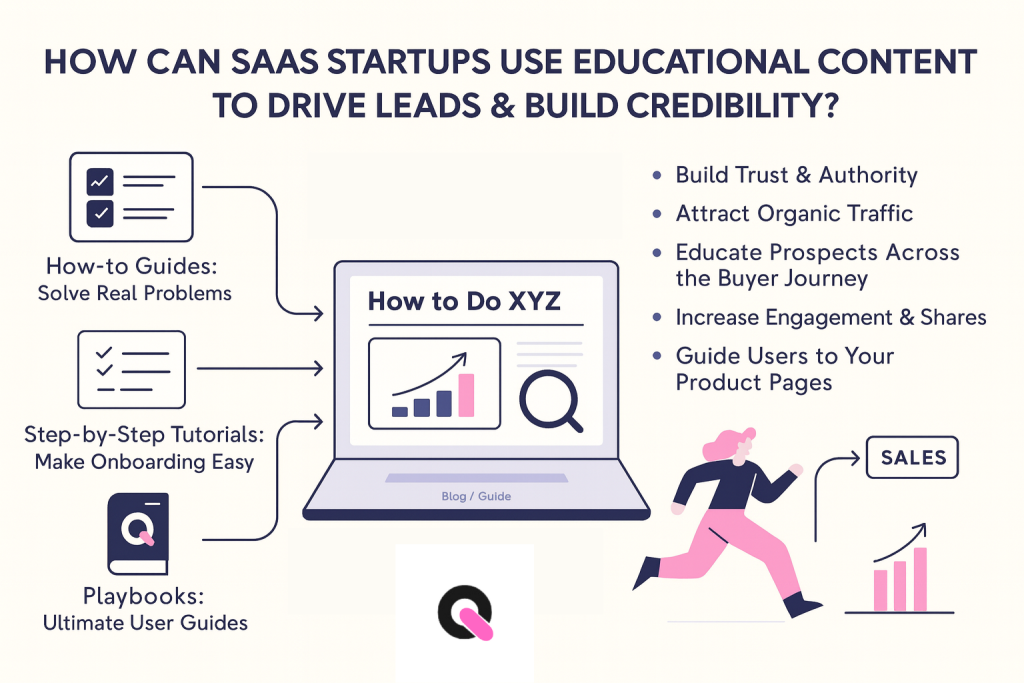
Educational content builds trust, authority, and engagement, particularly in the awareness and consideration stages.
Examples:
- How-to guides: “How to Automate Your Email Campaigns”
- Tutorials: “Step-by-Step Setup for Remote Team Tracking”
- Industry reports: “2025 Marketing Automation Trends”
- Playbooks: “The Ultimate Guide to Onboarding New Users in SaaS”
Benefits:
- Positions your startup as an expert
- Attracts organic traffic from users seeking solutions
- Provides internal linking opportunities to product pages
Pro Tip: Combine blog content with visuals, infographics, or videos to increase engagement and sharing.
Optimize Product and Feature Pages
Product pages are often the main conversion point for SaaS websites. Optimization includes:
- Clear Headlines: Highlight key benefits, e.g., “Automatic Workflow Automation for Remote Teams”
- Benefit-Driven Copy: Explain how features solve real problems
- Structured Data: Implement schema markup for better SERP visibility
- Fast Load Times: Google favors quick-loading pages for rankings and UX
- Strong CTAs: Encourage trial signup, demo request, or newsletter subscription
Example: A SaaS page that clearly states “Save 10 hours/week with automated task management” directly communicates value and increases trial signups.
Implement Technical SEO Best Practices
Technical SEO ensures your site can be crawled, indexed, and understood by search engines. Key areas include:
- Site Speed: Pages should load under 3 seconds
- Broken Links: Regular audits to fix 404s or redirects
- Structured Data: Rich snippets for products, reviews, and pricing
- Mobile Optimization: Mobile-first indexing is standard
- JavaScript SEO: Use server-side rendering for React, Angular, or Vue sites
Example: A React-based SaaS site without server-side rendering may have pages that Google cannot index, causing missed ranking opportunities.
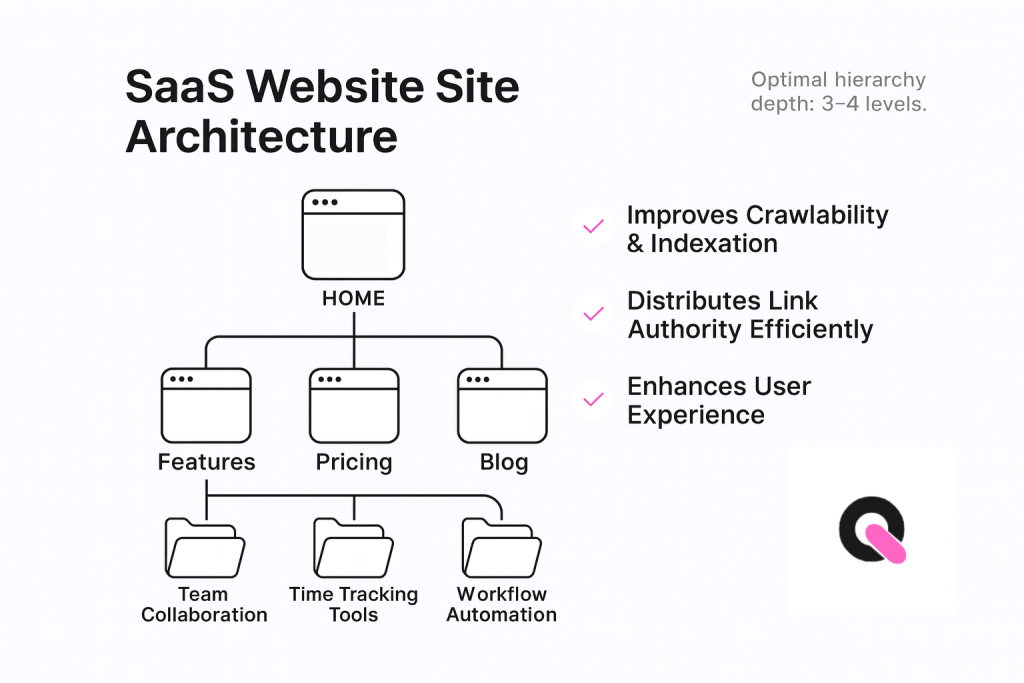
Build a Clean Site Architecture
A logical site structure helps both users and search engines navigate content.
Example Hierarchy:
- Homepage
- Features
- Team Collaboration
- Time Tracking Tools
- Workflow Automation
- Team Collaboration
- Pricing
- Blog
- Features
Benefits:
- Improves crawlability and indexation
- Distributes link authority efficiently
- Enhances UX by guiding visitors to the right content
Pro Tip: Limit hierarchy depth to 3–4 levels for optimal SEO.
Use Strategic Internal Linking
Internal links connect related content, improve crawlability, and guide users to conversion pages.
Best Practices:
- Link high-authority pages to new content
- Use descriptive anchor text (e.g., “Learn more about workflow automation”)
- Link blog posts to relevant product pages
Example: A post on “Remote Team Productivity Tips” links to the time-tracking feature page, increasing conversions and signaling relevance to search engines.
Optimize for Search Intent
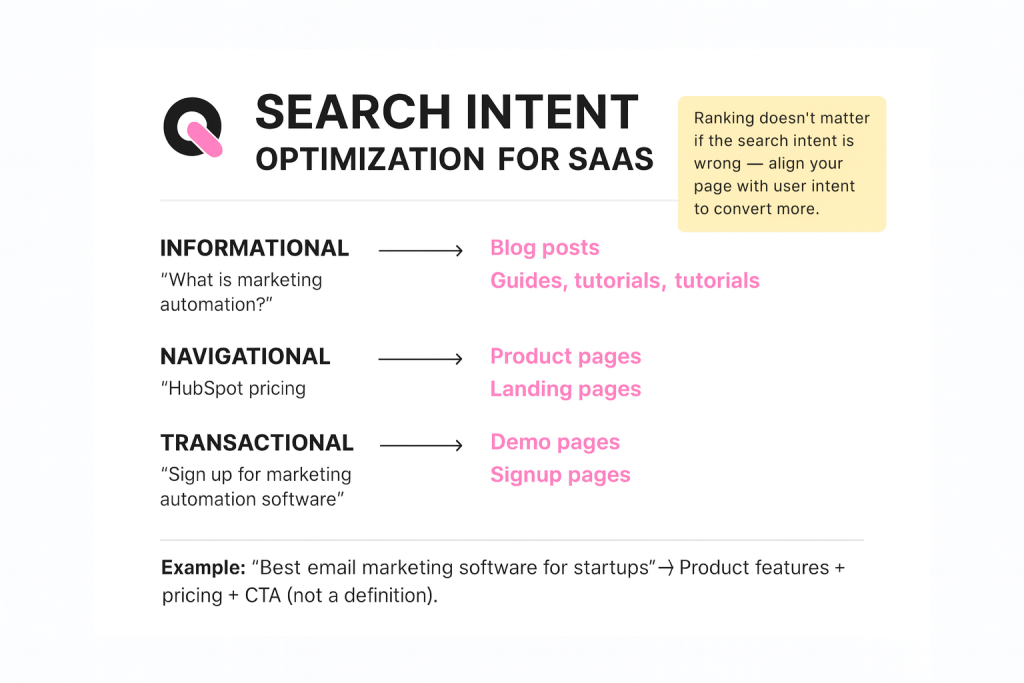
Understanding search intent helps you rank for the right queries. Every keyword falls into one of three main categories:
- Informational: Users want to learn something (“What is marketing automation?”)
- Navigational: Users are looking for a specific brand or product (“HubSpot pricing”)
- Transactional: Users are ready to act (“Sign up for marketing automation software”)
Why it matters: Targeting the wrong intent can generate traffic that never converts. Align your content type with the intent:
- Informational → Blog posts, tutorials, guides
- Navigational → Landing pages, product pages
- Transactional → Demo pages, signup pages
Example: Optimizing a page for “best email marketing software for startups” should highlight your product’s features, pricing, and CTA for a free trial, not just explain what email marketing is.
Use Customer Data
Your existing users are a goldmine for SEO insights. They help you discover the exact language, pain points, and search behavior of your target audience.
How to use customer data:
- Analyze support tickets and live chat transcripts for common questions
- Review onboarding notes for frequently mentioned features
- Conduct surveys to learn which terms customers use naturally
Example: If multiple users ask, “Can I automate Slack notifications for tasks?”, that phrase becomes a long-tail keyword for content or a landing page.
Benefits:
- Generates authentic, user-focused keyword ideas
- Ensures content resonates with real pain points
- Improves conversion by addressing customer-specific needs
Monitor Competitor SERPs
Tracking competitors helps identify opportunities and gaps in your SEO strategy.
Steps to monitor:
- Identify your top 3–5 competitors
- Analyze their ranking keywords, content structure, and backlink profile
- Look for high-performing content gaps you can target
Example: If a competitor ranks for “best project management SaaS for startups” but only covers basic features, you can create a comprehensive guide that includes integrations, pricing comparisons, and customer reviews.
Tools to use: Ahrefs, SEMrush, Moz, or Google Search Console for competitor insights.
Benefits:
- Uncover untapped keywords
- Benchmark your content against industry leaders
- Stay ahead by identifying trends early
Build Authority With Backlinks
Backlinks signal trust and authority to Google, which is essential for ranking in competitive SaaS niches.
Strategies to earn backlinks:
- Guest posting on SaaS, tech, and industry blogs
- Publishing research, case studies, or original reports
- Listing your product in software directories and review sites
- Building relationships with industry influencers
Example: Contributing a detailed article to HubSpot or TechCrunch linking back to your SaaS feature page can boost rankings and drive referral traffic.
Benefits:
- Higher search rankings
- Increased referral traffic
- Establishment as a thought leader
Track Important SEO Metrics
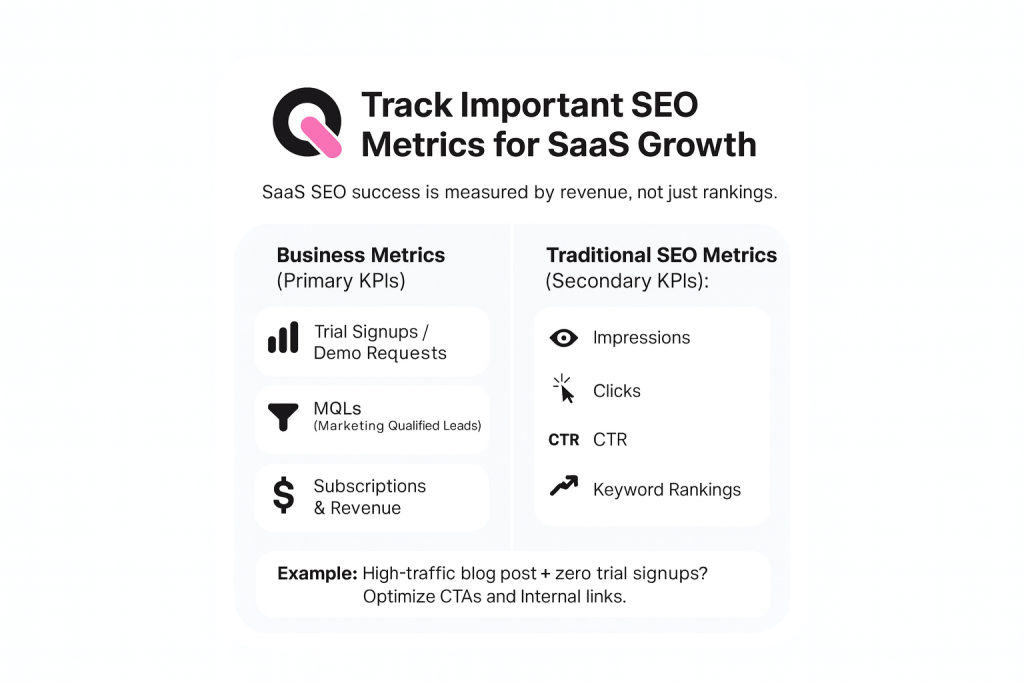
SEO for SaaS is about driving business outcomes. Track metrics that tie SEO efforts directly to revenue growth.
Key metrics:
- Trial signups/demo requests: Are visitors taking action?
- MQLs (Marketing Qualified Leads): Are leads relevant and likely to convert?
- Subscriptions/revenue: Ultimate measure of success
- Traditional SEO metrics: Impressions, clicks, CTR, and rankings
Example: If a blog post on “Automating Email Marketing for Startups” brings high traffic but no trial signups, consider optimizing CTAs or linking to relevant product pages.
🚀 Improve SEO for Your SaaS Startup with Queen of Clicks
If you’re ready to turn search into a growth engine for your SaaS startup, let Queen of Clicks guide the way. With a focused specialization in SaaS SEO services, AI‑search optimization, and high-converting WordPress websites, we craft strategies that don’t just drive clicks, they power trials, demos, and recurring subscriptions.
Here’s how we help SaaS startups succeed:
- Data-Driven Keyword Strategy: Identify high-intent keywords that attract qualified prospects.
- Full-Funnel Content Creation: Craft blogs, guides, and landing pages for every stage of the buyer journey.
- Technical SEO Optimization: Improve site crawlability, speed, and structured data for better rankings.
- High-Impact Backlinks: Build authority through strategic, industry-relevant link acquisition.
- Conversion-Focused Web Design: Create product and feature pages designed to turn visitors into paying users.
- Performance Tracking & Reporting: Measure metrics that matter, trials, demos, and subscription growth.
Whether your goal is to increase organic visibility, outrank competitors, or turn search traffic into a predictable acquisition channel, Queen of Clicks has the expertise to make it happen.
Ready to grow your SaaS with SEO that works? Contact us today!
Conclusion
With a strategic SEO approach that aligns with how software buyers search, compare, and decide, SaaS startups can attract high-intent users, build trust and authority, and convert traffic into recurring revenue. From defining your target audience and mapping keywords to the buyer journey, to creating educational content, optimizing product pages, and building authority through backlinks, every element of SaaS SEO works together to create a predictable, scalable acquisition channel.
Investing in SEO early sets the foundation for long-term growth, ensuring your startup doesn’t just compete but stands out in search results, reaches the right prospects at the right time, and converts them into loyal customers. With the right strategy, your SaaS product can consistently win visibility, drive trials, and fuel sustainable revenue growth, turning search engines into a reliable partner in your success.
FAQs
How Long Does It Take for SaaS SEO to Show Results?
SEO is a long-term strategy, and for SaaS startups, noticeable results typically take 3–6 months for initial traction, and 6–12 months for significant organic traffic and conversions. Factors affecting timing include website age, competition, content volume, and backlink authority. Consistent optimization accelerates growth.
Should SaaS Startups Focus More on Blog Content or Product Pages?
Both are essential, but the focus depends on your stage:
- Early stage: Educational blog content builds awareness and attracts prospects.
- Growth stage: Product pages and landing pages help in converting leads.
A balanced strategy linking blogs to product pages ensures traffic converts efficiently.
Can SaaS SEO Work Without Paid Ads?
Yes. SaaS SEO can generate consistent, organic leads without paid campaigns, though combining SEO with PPC or social ads can accelerate visibility and lead generation, especially in competitive niches.
How Can SaaS Startups Use Analytics to Improve SEO?
SaaS startups can leverage analytics tools like Google Analytics, Search Console, and heatmaps to understand which pages attract the most traffic, where users drop off, and which keywords drive conversions. This data helps refine content strategy, optimize underperforming pages, and improve the overall user journey to increase trial signups and subscriptions.
What Types of Content Convert Best in SaaS SEO?
Content that educates while demonstrating product value tends to convert best. This includes how-to guides, tutorials, case studies, comparison pages, and feature-specific landing pages. Educational content nurtures leads in the awareness stage, while product-focused pages guide them toward signing up for trials or demos.