15 SaaS SEO Mistakes to Avoid & What to Do Instead
If you’re building a SaaS business, you probably know how important organic search is for growth. After all, most buyers still begin their journey online, yet many SaaS companies stick to the same old SEO playbook and wonder why the results don’t follow. In fact, recent research reveals that a single misstep in the SaaS SEO strategy can wipe out hundreds, or even thousands, of potential customers.
The problem? Many SaaS teams focus on traffic volume, or marketing buzzwords, instead of business outcomes, ranked keywords mean nothing if they don’t convert.
That’s why this post zeroes in on the 15 most common SaaS SEO mistakes we’ve seen again and again, and what to do instead. We’ll walk through missteps like chasing the wrong keywords, neglecting technical fundamentals, overlooking internal linking, or treating content as a checklist rather than a strategy.
Key Takeaways
- SaaS SEO is about driving qualified leads, not just increasing traffic.
- Conducting thorough keyword research based on user intent ensures your content reaches the right audience.
- Optimizing technical SEO and site structure helps search engines crawl and index your pages.
- Focus on high-value, problem-solving content rather than feature-heavy or thin pages.
- Cross-functional collaboration and regular measurement help turn SEO efforts into tangible business outcomes.
Why Is SEO for SaaS Important
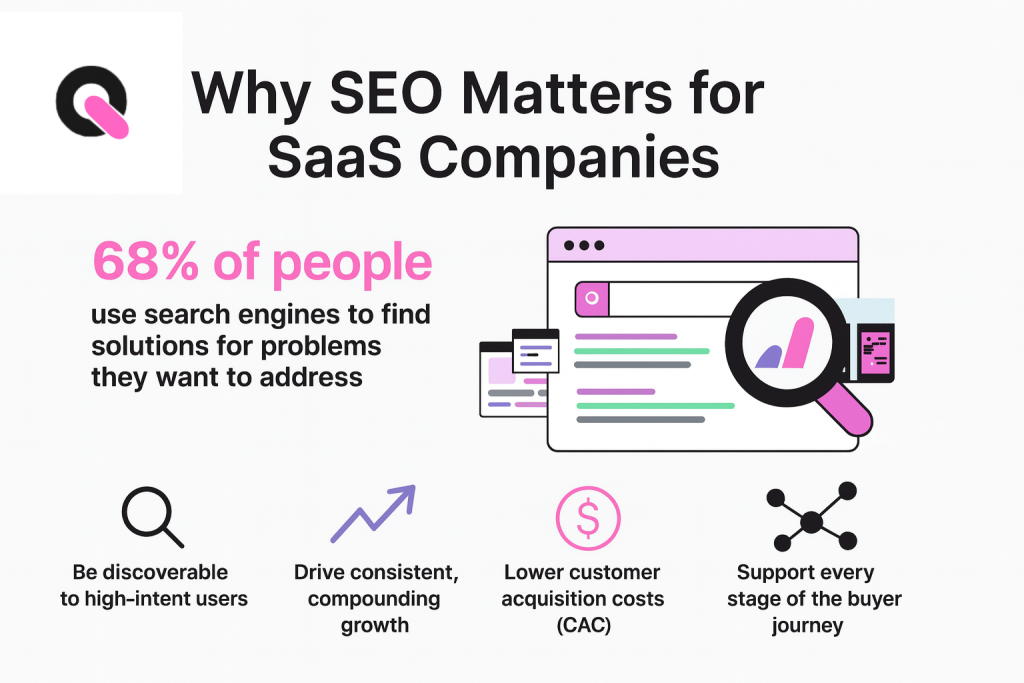
For SaaS companies, SEO is about becoming discoverable to people actively looking for solutions your product provides. According to a recent study by Google, 68% of people use search engines to find solutions for things they want to address. That means if your SaaS brand isn’t visible in search results, you’re missing out on a huge portion of your potential customer base.
Unlike paid ads that disappear when the budget runs out, SEO delivers consistent, compounding growth. It helps SaaS companies attract high-intent users at every stage of the buyer journey, from initial problem awareness to product comparison and final decision.
Strong SaaS SEO also helps lower customer acquisition costs (CAC) over time. When you target intent-based keywords and optimize your product, integration, and comparison pages, you create a sustainable pipeline of qualified leads and demo sign-ups.
15 Costly SaaS SEO Mistakes to Avoid
Even the best SaaS products can struggle to get noticed without a solid SEO strategy. Many companies make the same mistakes over and over, from targeting the wrong keywords to neglecting technical fundamentals, mistakes that can cost traffic, leads, and revenue.
1. No Clear SEO Strategy or Goals
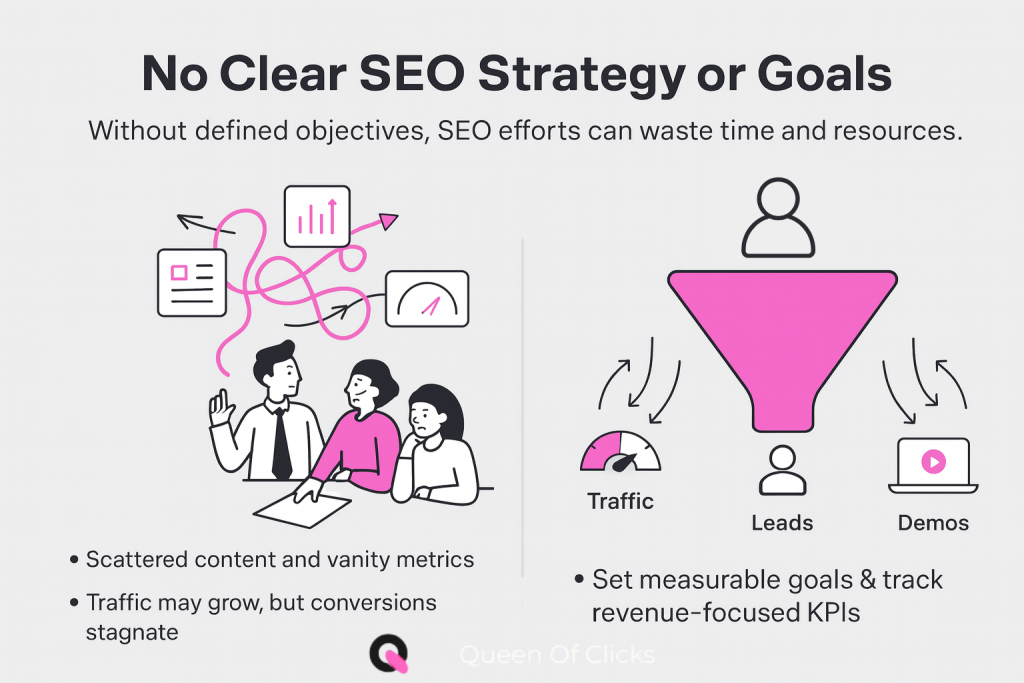
Many SaaS companies dive into SEO without a defined strategy, which leads to scattered efforts and wasted resources. Without clear objectives, teams often chase vanity metrics like overall traffic instead of meaningful outcomes like leads, demo requests, or trial signups.
Example: A SaaS analytics platform spends months writing blog posts on generic topics but never aligns them with user pain points or product pages. Traffic grows slightly, but the number of demos remains stagnant.
What to do instead: Establish measurable goals. Define KPIs that tie directly to revenue (e.g., trial signups, demo requests, MQLs). Build a 6–12 month roadmap that prioritizes high-impact content, technical fixes, and link-building efforts. Revisit and adjust your strategy quarterly to reflect changes in the market, competition, or product features.
2. Poor Keyword Research Ignoring Intent and Customer Language
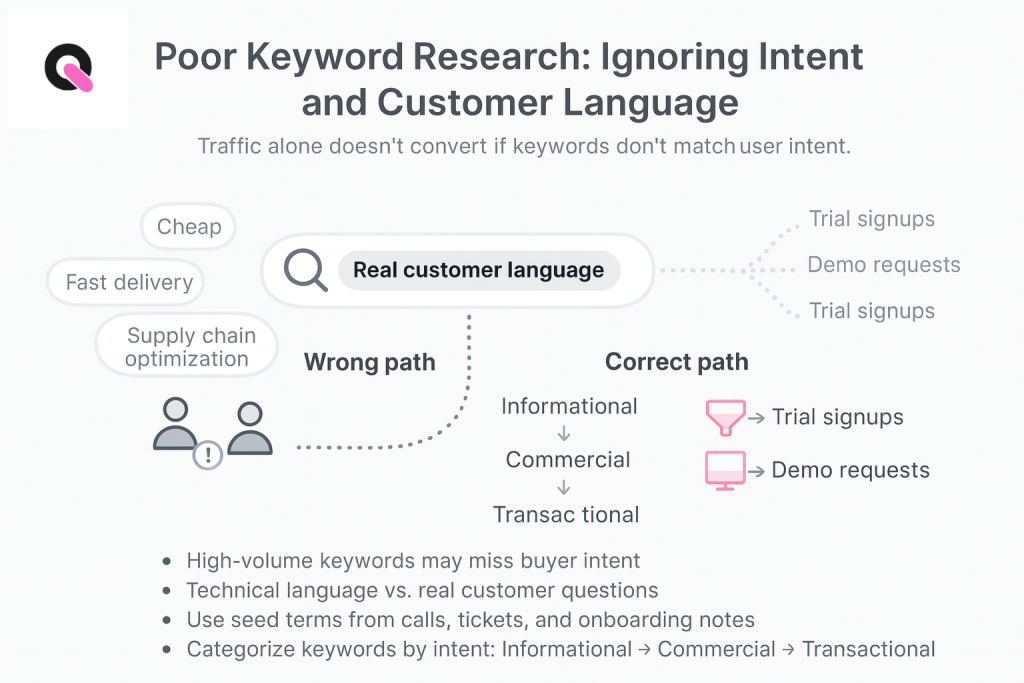
Targeting high-volume keywords without understanding user intent is one of the biggest mistakes SaaS companies make. Traffic might increase, but if visitors aren’t looking to buy or evaluate your solution, it won’t convert. Additionally, using only technical or internal product language often misses how real users describe their problems.
Example: A project management SaaS targets “task management software” because it has high search volume but ignores long-tail queries like “how to manage remote team tasks,” which reflect actual buyer intent.
What to do instead: For SaaS keyword research, use seed terms from customer calls, support tickets, and onboarding notes. Categorize keywords by intent: informational (learning), commercial (evaluation), or transactional (ready to convert). Prioritize keywords that match your product’s solution and buyer journey stage.
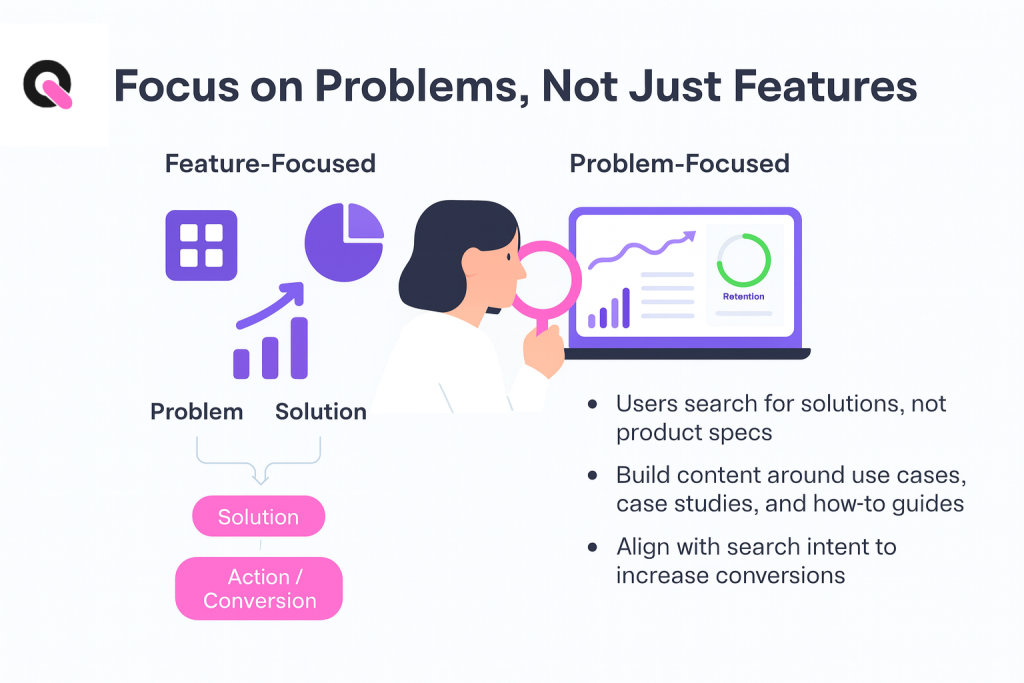
3. Focusing on Features Instead of Problems and Use Cases
Feature-led content appeals to product teams but often fails to match what prospects search for. People search for solutions to problems, not features.
Example: Instead of targeting “advanced reporting dashboard,” users are searching for “how to track SaaS churn” or “analyze customer retention.”
What to do instead: Build pages around problems your software solves. Include use-case pages, case studies, or “how-to” guides that show your solution in action. This approach aligns with search intent and improves conversion rates.
4. Chasing Volume Over Relevance
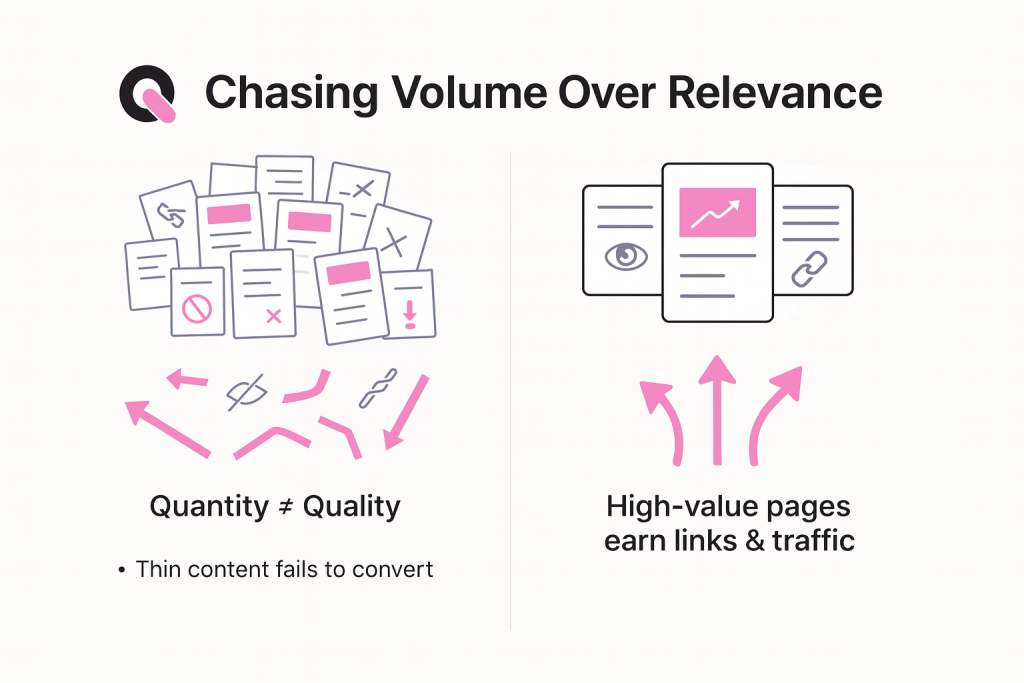
Many teams try to produce as much content as possible to hit every keyword opportunity. Quantity over quality often leads to thin, low-value pages that fail to convert and may even hurt your site’s authority.
Example: A SaaS startup publishes 50 short blog posts in one month with minimal insight. Most posts don’t rank, get minimal traffic, and attract few links.
What to do instead: Focus on creating fewer, high-quality pages that answer real user questions. Include original research, examples, and actionable advice. High-value content naturally earns links and drives sustainable traffic.
5. Neglecting Technical SEO
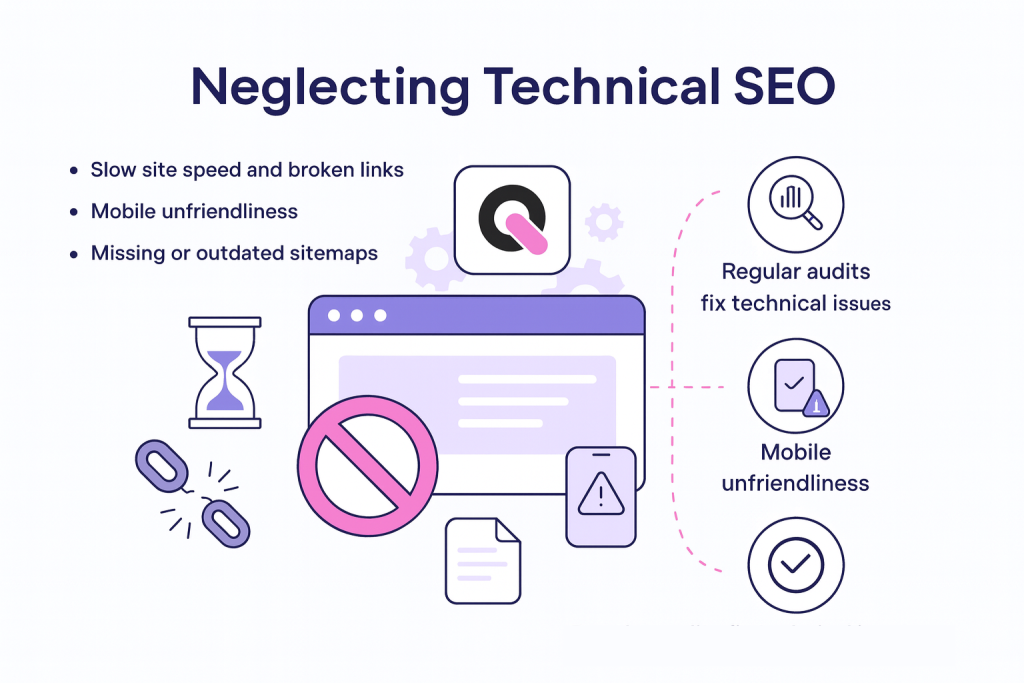
Even the best content won’t perform if search engines can’t crawl, index, or understand your site. Technical issues like slow loading times, broken links, mobile unfriendliness, or missing sitemaps block rankings.
Example: A SaaS website with a modern JS framework isn’t properly indexed, so key product pages never appear in search results.
What to do instead: Conduct regular technical audits. Fix crawl errors, optimize site speed, ensure mobile responsiveness, and submit an up-to-date XML sitemap. Tools like Google Search Console, Ahrefs, or Screaming Frog can identify issues early.
6. Bad Site Architecture and Internal Linking
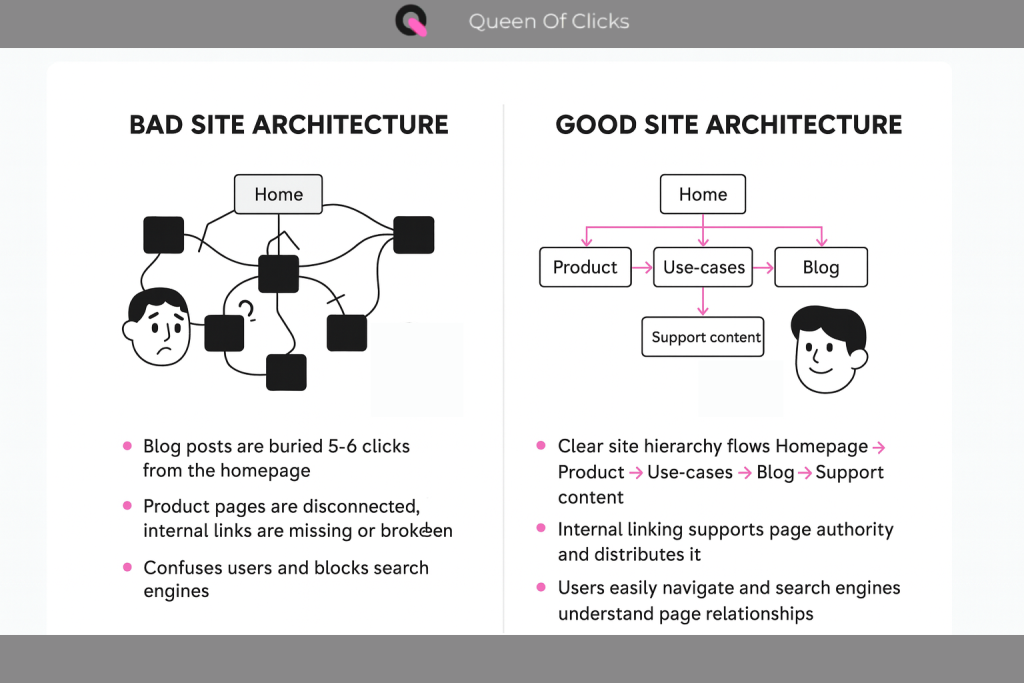
A confusing hierarchy and poor internal linking can prevent both users and search engines from discovering your most important pages.
Example: Blog posts are buried 5–6 clicks from the homepage and don’t link to product pages, meaning authority isn’t distributed effectively.
What to do instead: Design a logical site structure: homepage → product → use-cases → blog → support content. Use contextual internal links to connect related pages and help search engines understand relationships. Ensure important pages receive sufficient link equity.
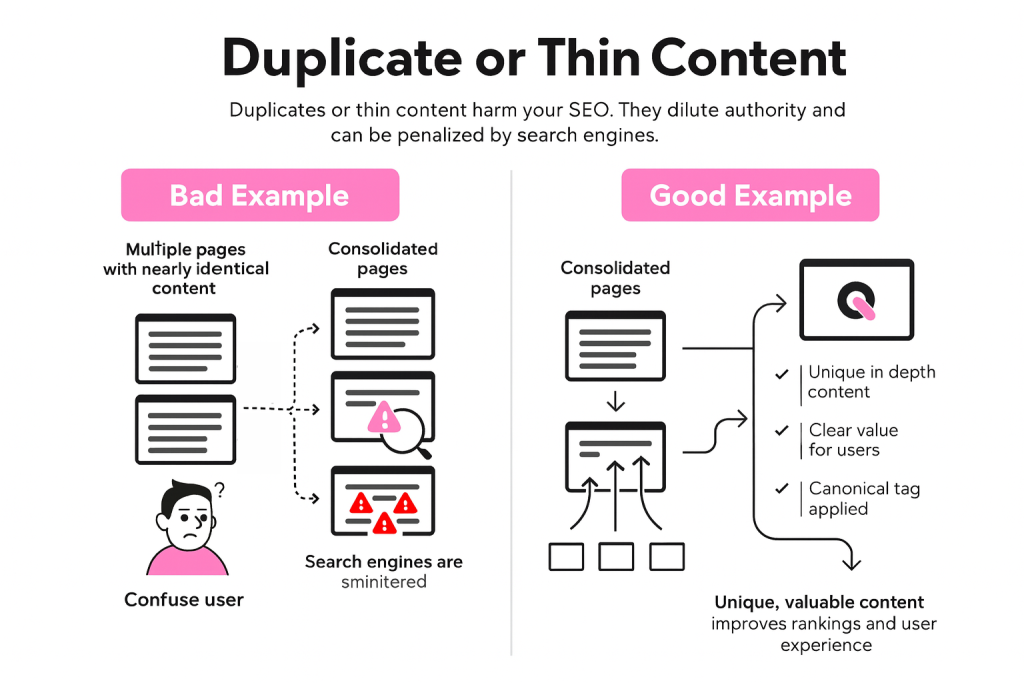
7. Duplicate or Thin Content
Duplicate pages, near-identical product descriptions, or low-value category pages split authority and confuse search engines.
Example: Multiple integration pages for the same tool have slightly different copy but compete for the same keywords.
What to do instead: Consolidate duplicates using canonical tags, merge thin content, and create unique, in-depth pages for each topic. Focus on adding value for users, not just keyword coverage.
8. Not Mapping Keywords to Pages
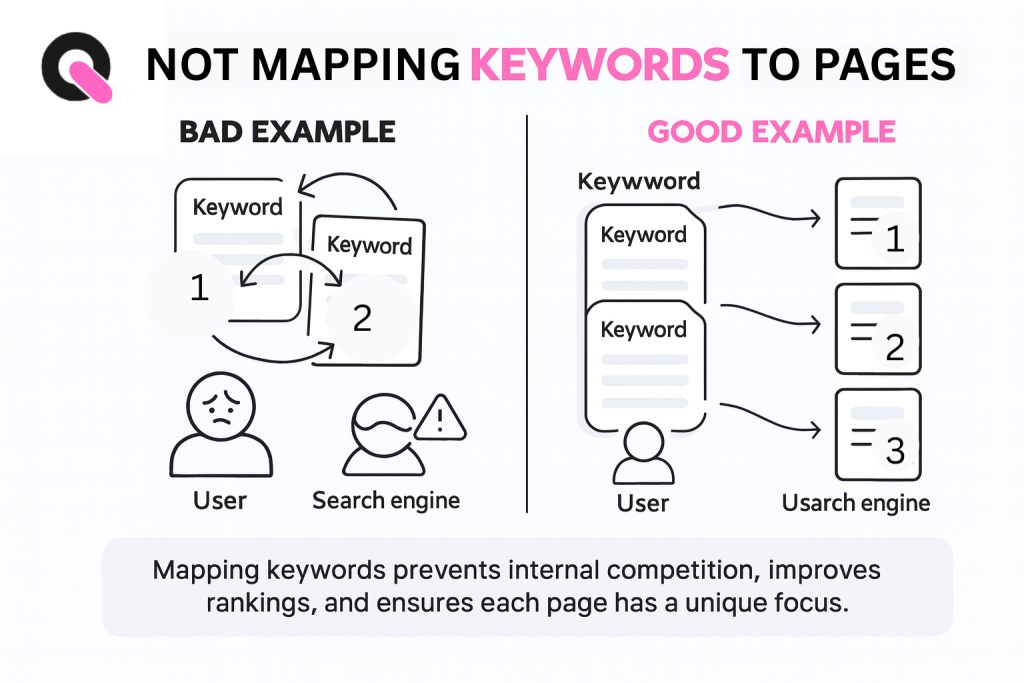
Without a keyword-to-page map, multiple pages can compete for the same terms, diluting rankings and missing opportunities.
Example: Two blog posts target “SaaS onboarding best practices,” causing neither page to rank well.
What to do instead: Assign one primary keyword per page and a few related secondary keywords. Track these in a keyword map and ensure every page has a clear, unique focus.
9. Ignoring Search Intent Across the Funnel
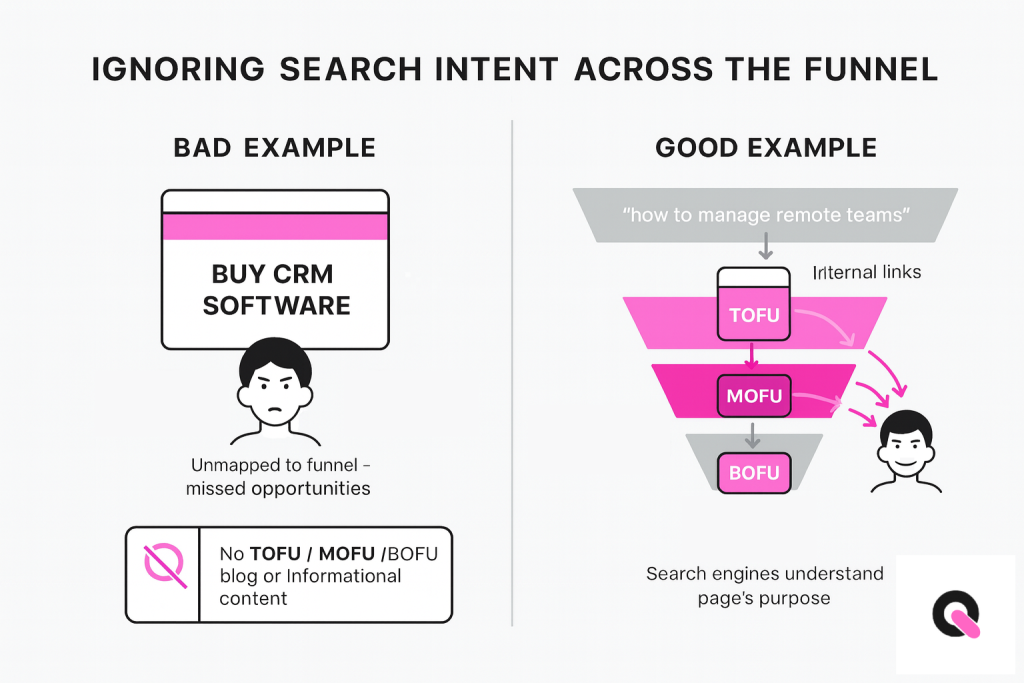
Many SaaS companies only target bottom-of-funnel (BOFU) keywords like “buy CRM software,” missing earlier stages where prospects are researching or comparing solutions.
Example: A company’s content strategy is entirely focused on product pages, ignoring blog topics like “how to manage remote teams,” which would attract users early in the funnel.
What to do instead: Build content for awareness (TOFU), evaluation (MOFU), and decision (BOFU) stages. Connect pages with internal links so users can move naturally through the funnel.
10. Weak or Spammy Link-Building Tactics
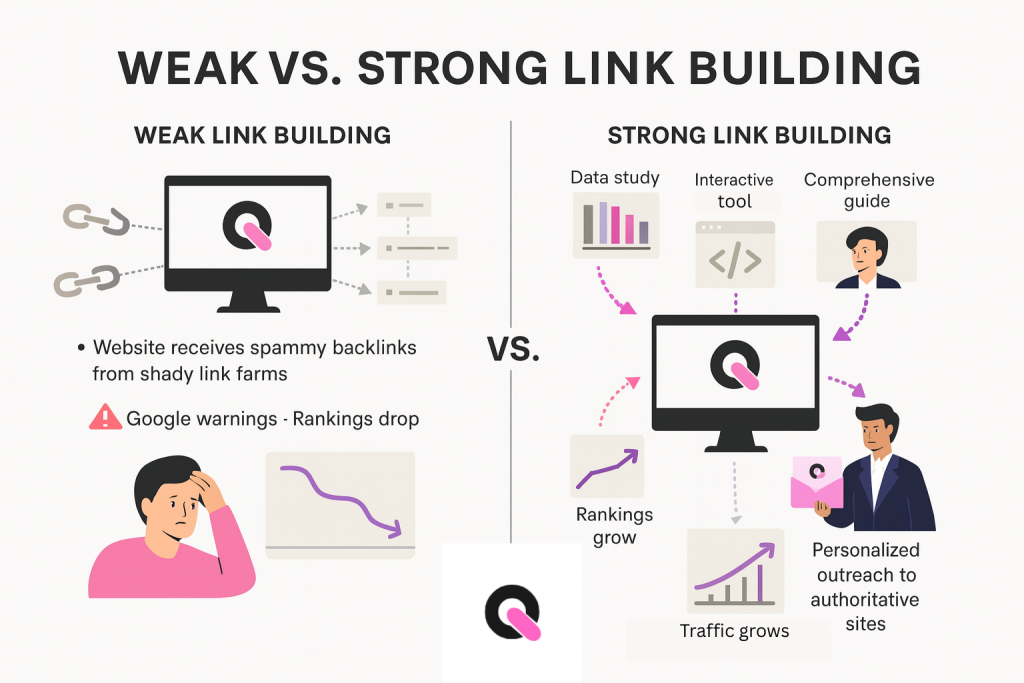
Acquiring low-quality links or using aggressive outreach can harm your authority and risk penalties from Google.
Example: A startup buys backlinks from link farms; Google devalues them and rankings drop.
What to do instead: Create genuinely link-worthy assets like data studies, interactive tools, or comprehensive guides. Use personalized outreach to earn high-quality backlinks from authoritative sites in your niche.
11. Neglecting Product Pages That Matter for SaaS
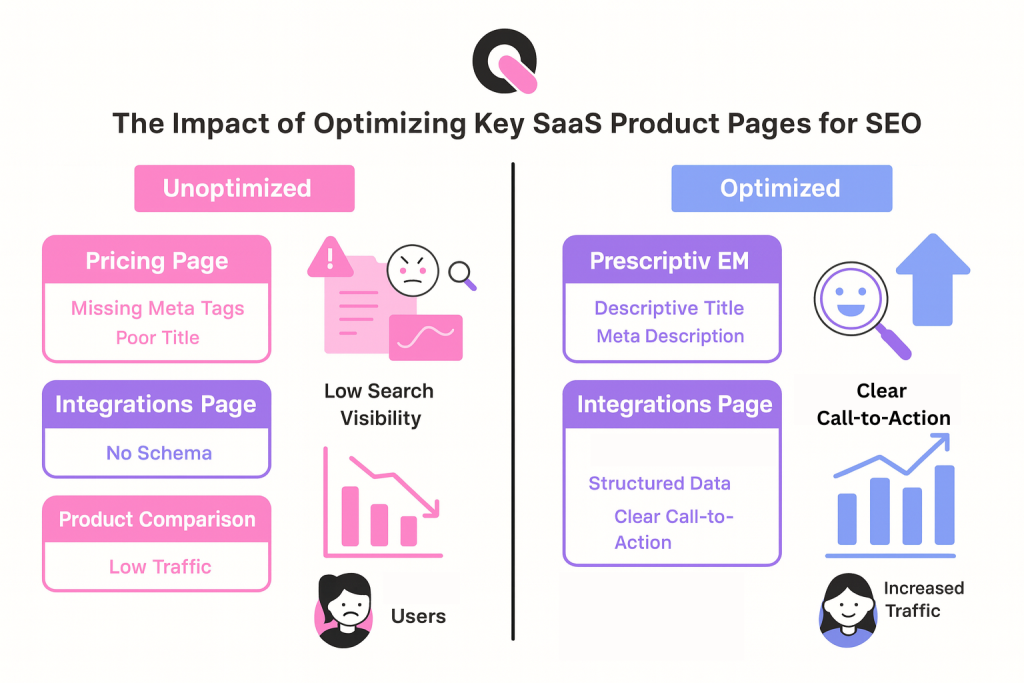
Pages like pricing, integrations, and product comparisons often drive the highest-intent traffic but are sometimes under-optimized.
Example: The pricing page lacks proper titles, meta descriptions, and schema, making it invisible for search queries like “SaaS analytics tool pricing.”
What to do instead: Optimize key pages with descriptive titles, meta tags, structured data, and clear calls-to-action. Ensure these pages address user intent and include comparisons or benefits clearly.
12. No Measurement or Attribution
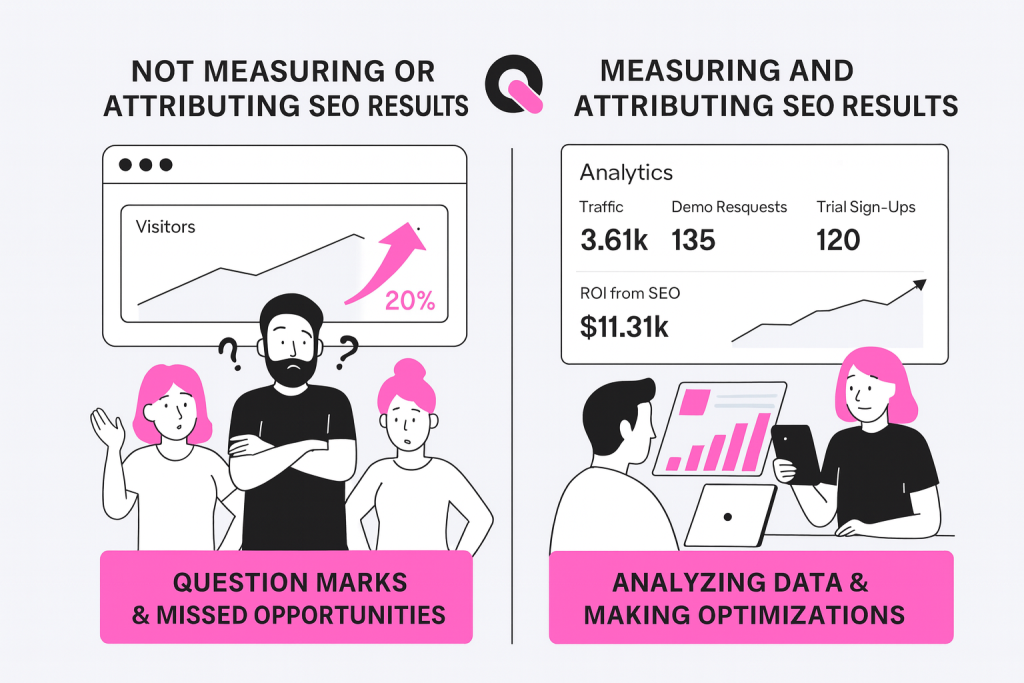
SEO efforts that aren’t tracked can’t be optimized. Teams often monitor traffic only, without linking it to leads or revenue.
Example: Organic traffic increases by 20%, but the company doesn’t measure how many of those visitors requested a demo or signed up for a trial.
What to do instead: Implement analytics with event tracking and UTM parameters. Tie organic performance to conversions and revenue metrics to show ROI and guide optimizations.
13. Ignoring Conversion Rate Optimization
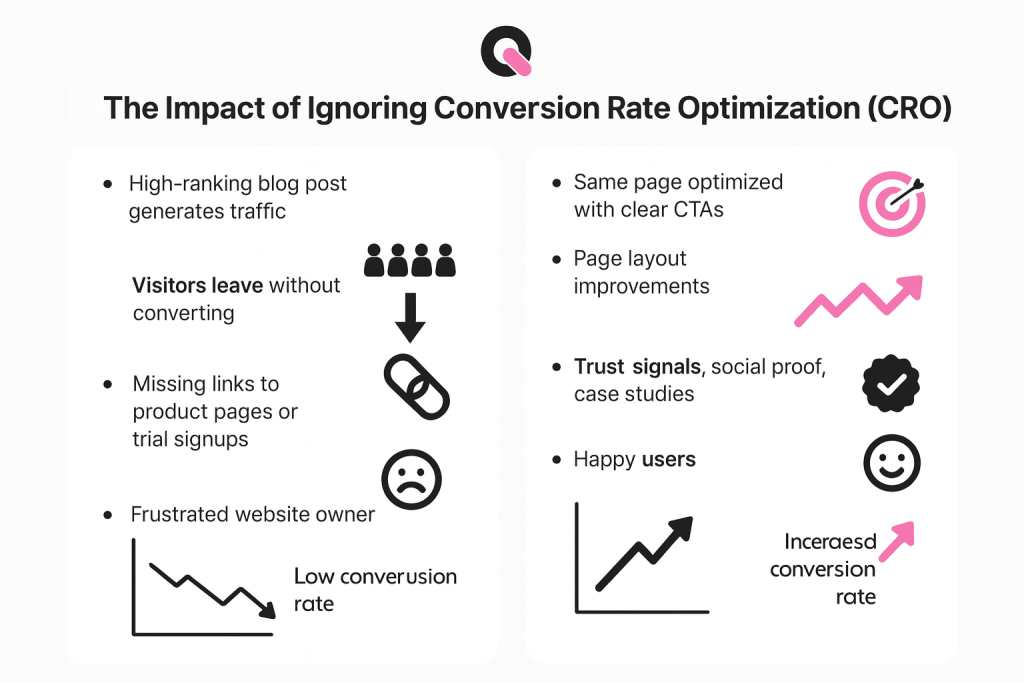
Driving traffic is meaningless if visitors don’t convert. Many SaaS companies neglect CRO on organic landing pages.
Example: A blog post ranking #1 for “reduce churn in SaaS” generates traffic but has no links to relevant product pages or trial signups.
What to do instead: Test CTAs, page layout, trust signals, and microcopy. Include social proof, case studies, and clearly guide users toward next steps.
14. Poor Use of Structured Data and Metadata
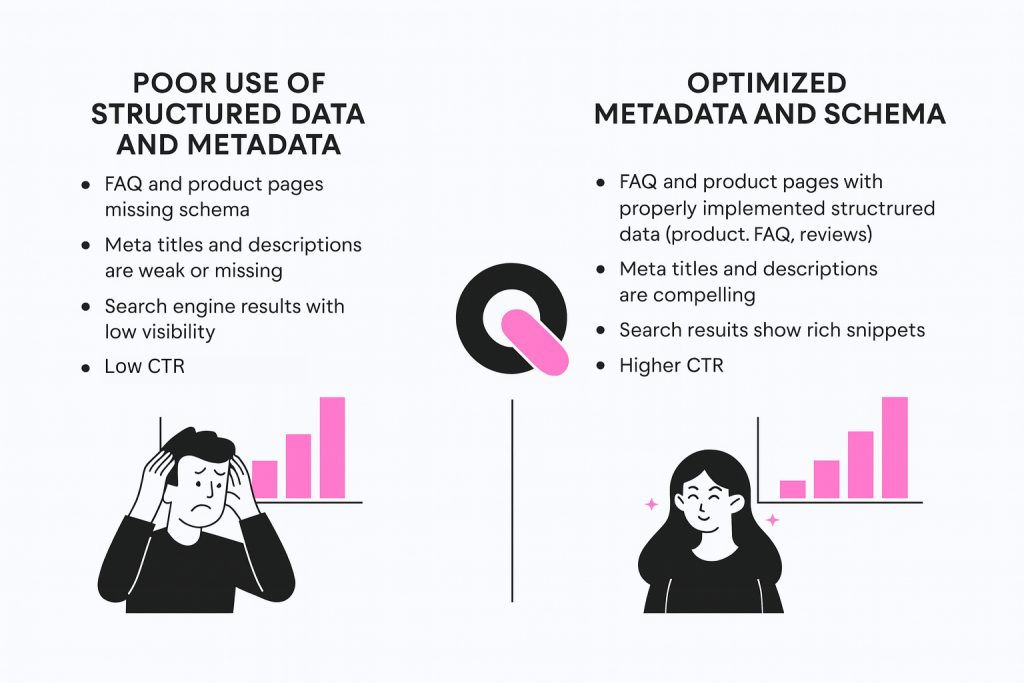
Missing or poorly optimized metadata and schema mean lost opportunities for rich results and higher CTR.
Example: FAQ or product pages lack schema, so they don’t show rich snippets, reducing visibility in search results.
What to do instead: Implement relevant structured data (product, FAQ, reviews), write compelling meta titles and descriptions, and ensure they reflect the content and intent of the page.
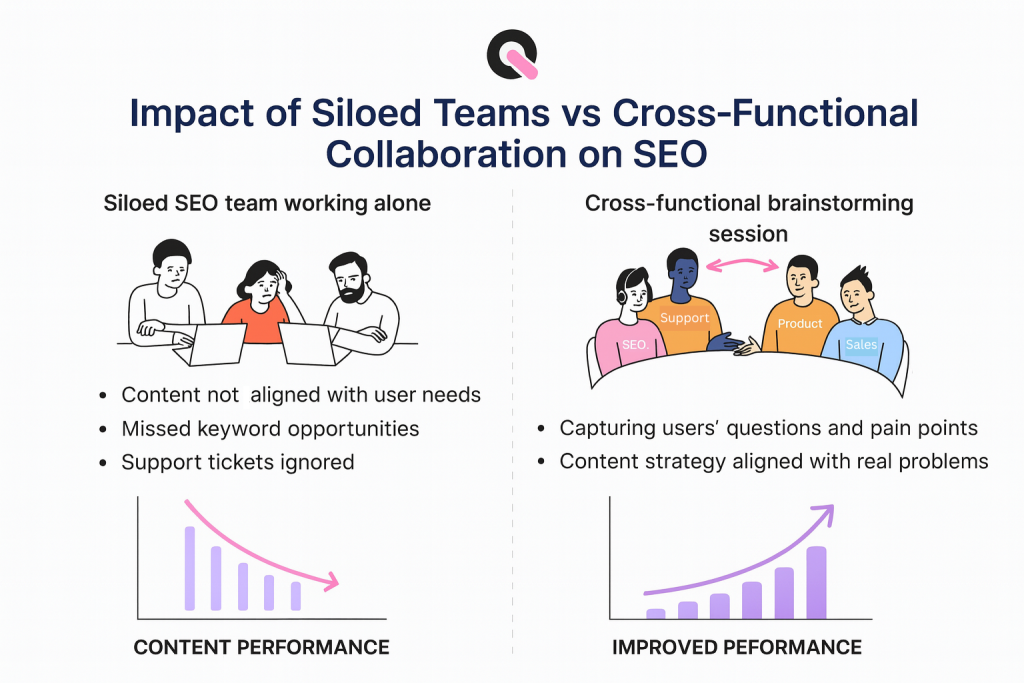
15. Siloed Teams and Lack of Cross-Functional Collaboration
SEO teams working in isolation miss valuable insights from other departments, reducing content effectiveness.
Example: Support tickets reveal common user questions, but the content team doesn’t use them, resulting in missed keyword opportunities.
What to do instead: Run cross-functional brainstorming sessions. Capture questions and pain points from support, product, and sales. Align content strategy with real user problems for maximum impact.
🚀 Improve Your SaaS SEO Strategy with Queen of Clicks
If you’re ready to improve your SaaS SEO strategy, partner with Queen of Clicks, a modern SaaS SEO agency built for tech‑forward companies just like yours. Through our SaaS SEO services, we help SaaS businesses gain traction, lead with value, and drive sustainable growth:
- Data‑driven SEO strategy that aligns with your business goals, not just vanity traffic.
- AI‑search and LLM (Large Language Model) optimisation to reach users across both classic search engines and emerging AI platforms.
- WordPress web design and development with SEO built in, so your site not only looks good but converts.
- Technical and on‑page SEO execution: site‑speed, crawlability, schema markup, integration with your SaaS product pages, use‑case pages, and key conversion funnels.
- Content strategy tailored to buyer intent, from problem‑aware to decision‑ready, aligned with your SaaS offering and user journey.
- Cross‑functional collaboration: working closely with product, support, and marketing teams to capture real user language and pain‑points (so you aren’t writing content nobody searches for).
Let’s turn your SEO investment into qualified leads, demo requests and trial sign‑ups (not just traffic). Contact us at Queen of Clicks and let’s discuss how we can elevate your SaaS visibility together.
Conclusion
SaaS SEO is about creating a strategic, data-driven approach that aligns with your buyer’s journey and business goals. Avoiding the common mistakes outlined above, from neglecting technical SEO to ignoring search intent or failing to track conversions, can save your SaaS company from wasted effort and missed opportunities.
When you focus on high-quality, problem-focused content, optimizing key product pages, maintaining a solid site structure, and fostering cross-functional collaboration, you can build an SEO strategy that drives sustainable traffic, generates qualified leads, and ultimately supports long-term growth.
FAQs
How often should I update my SaaS content for SEO?
SaaS content should be updated at least every 6–12 months, or sooner if your product, pricing, or integrations change. Regular updates ensure your content stays accurate, improves rankings, and reflects evolving user intent.
Should SaaS blogs target international audiences?
Yes, if your product serves multiple regions. Consider creating geo-targeted pages or language-specific content, and implement hreflang tags to signal search engines which version of a page to show to users in different locations.
Can SaaS SEO work without a blog?
While blogs are a common and effective tool, SaaS SEO can succeed with strong product pages, resource centers, case studies, and FAQs. The key is to answer user questions and capture search intent, even if content isn’t published in blog format.
How do SaaS companies measure SEO ROI?
ROI can be measured when you track metrics tied to revenue, such as demo requests, trial signups, MQLs, and customer acquisition costs. Tools like Google Analytics, GA4, and CRM integrations help attribute organic traffic to conversions.
Is mobile optimization necessary for SaaS websites?
Absolutely. Google prioritizes mobile-first indexing, and many users research software on mobile devices. Ensure responsive design, fast load times, and easy navigation for the best SEO and user experience.
How can SaaS startups compete with established brands in SEO?
Startups should focus on niche topics, long-tail keywords, and user problems that larger competitors may overlook. Creating highly-targeted, value-driven content and earning authoritative backlinks can help gain visibility quickly.
How can SaaS companies balance SEO with paid advertising?
SEO and paid advertising should complement each other. Use paid campaigns to target high-intent keywords while SEO builds long-term organic visibility. Insights from paid campaigns can inform SEO strategy, as they reveal which keywords and messaging convert best.