SaaS SEO Guide for Scaling Organic Growth
SaaS SEO is the practice of optimizing a software website to attract, educate, and convert buyers through organic search. It combines a strong technical foundation with intent-driven content so decision-makers can find feature pages, comparisons, and solutions at every stage of the buying journey.
This SaaS SEO guide blends strategy and execution: SaaS keyword research, on-page best practices, link building, and measurement. Measurement focuses on conversions, cohorts, and refresh cadence, not just raw traffic, to tie efforts to business outcomes.
Key Takeaways
- Three pillars, engine, fuel, and oil, form the backbone of a repeatable growth plan.
- Technical setup like sitemaps, schema, canonical tags, and 301 redirects is foundational.
- Content must map across ToF/MoF/BoF and match user intent to improve signups.
- Measure outcomes with conversion-focused metrics, cohort analysis, and content refresh cadence.
- Authoritative, evergreen content and strong site architecture compound gains over time.
What Is SaaS SEO?
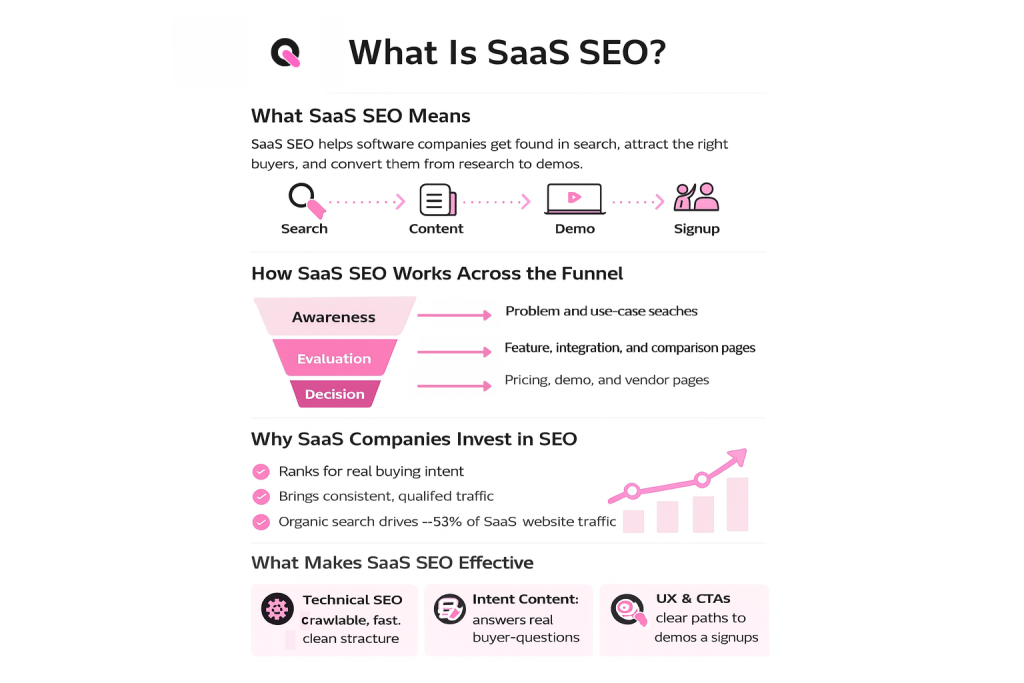
SaaS SEO is the practice of optimizing a software company’s website and content so it can be found, read, and trusted by potential buyers throughout every stage of their journey, from early research to demo requests and conversions. It blends technical foundations (like crawlability and structured data) with intent-led content that maps to problem awareness, solution evaluation, and purchase intent.
For SaaS companies, this means ranking for queries that reflect real use cases and buying intent so organic search becomes a predictable source of qualified leads and long-term growth, especially since organic search still drives around 53% of total website traffic for SaaS sites.
Defining the practice across the buyer journey
At its core, this discipline optimizes a software website and content to rank in search engines for queries that reflect real use cases and buying intent. Top‑of‑funnel pages surface pain and opportunity. Middle pages compare categories, features, and integrations. Bottom pages support pricing, demos, and vendor comparisons.
How organic traffic compounds for growth
Each quality page earns links and internal referrals. Over time these assets boost domain authority and lift visibility for new content. That compounding reduces customer acquisition costs as evergreen pages keep attracting qualified visitors without ongoing media spend.
- Technical prerequisites: crawlability, clean architecture, fast performance, valid schema, and canonicalization.
- Intent-focused content: answers real questions, shows product fit, and eases evaluation.
- UX alignment: clear paths to product pages and CTAs so search traffic converts to signups.
How SaaS SEO Differs From Traditional SEO
For complex products, search work must map personas to deep, decision-stage content. Buyers often include engineers, procurement, and end users. Each stakeholder seeks different facts and proof points.
Long sales cycles mean informative blog posts alone won’t close deals. Mid‑funnel and bottom‑funnel assets, comparison pages, integration docs, and implementation guides, drive evaluation and vendor selection.
- Persona research: Define jobs‑to‑be‑done and match queries to roles.
- Content mapping: Create templates for use cases, industries, and features to scale.
- Site structure: Internal navigation and interlinking help buyers and crawlers find depth quickly.
Technical clarity matters. Canonical tags, schema, and fast loading keep large websites indexable and trustworthy. Align marketing and product teams so feature names, metadata, and docs stay accurate and consistent.
| Aspect | Traditional Search | Product-Focused Search | Why It Matters |
| Audience | General consumers | Multi-stakeholder B2B buyers | Different questions and trust signals |
| Content Mix | Top‑of‑funnel posts | ToF + MoF + BoF: comparisons, integrations, docs | Supports long evaluation paths |
| Site Needs | Simple landing pages | Scalable templates, deep product hubs | Easier maintenance and crawlability |
| Technical Focus | Basic speed and tags | Canonicalization, schema, index controls | Prevents duplicate content and loss of rank |
Why SaaS Companies Should Invest In SEO
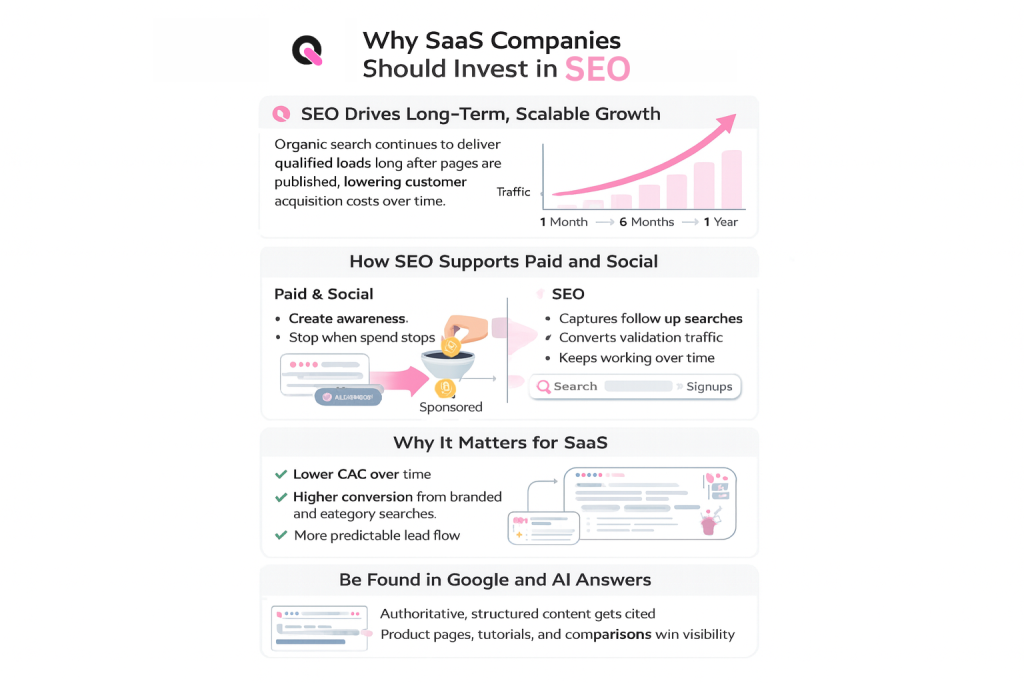
Organic search remains one of the few scalable channels that keeps delivering qualified leads after the initial work is done. It compounds: pages that match intent earn clicks and conversions long after publication. That persistence lowers acquisition costs over time.
Lower CAC and channel synergy with paid and social
Paid ads and social media spark awareness. Buyers then return to search to validate options and compare features.
When your product and comparison pages rank, that follow-up traffic converts better. Optimized content turns ad interest into signups without constant media spend.
- Durable growth: organic traffic keeps sending qualified visitors.
- Attribution lift: branded and category searches after an ad exposure often lead to higher conversion rates.
- Cost resilience: search investments compound while paid costs rise and pause when budgets stop.
Visibility in Google and emerging AI answers
Search engines and AI tools prefer authoritative, structured sources. Pages that clearly explain features, solutions, and comparisons are likelier to be cited in AI-driven results.
Build a nucleus of product pages, tutorials, and comparison content to win in both traditional search and new answer surfaces.
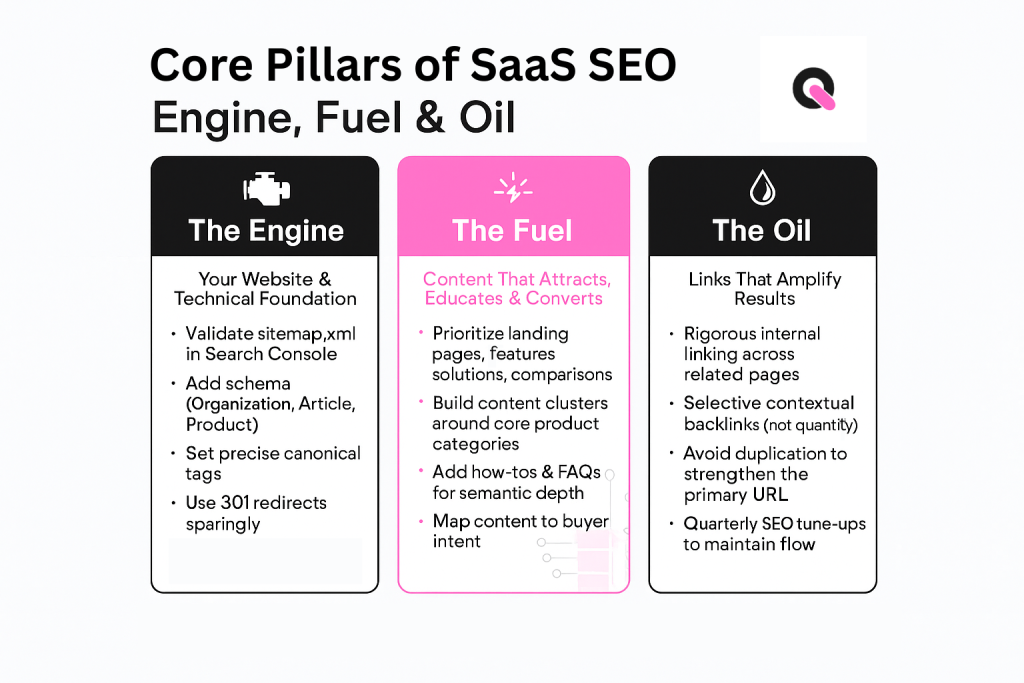
The Three Core Pillars: Engine, Fuel, And Oil
Think of organic growth as a machine: the platform, the pages, and the authority that keeps them moving. Each pillar must work together so that content converts and rankings scale.
The Engine: Website And CMS Foundations
The engine is your website and CMS. Fast hosting, security, flexible templates, and control over schema, canonicals, sitemaps, and redirects are essential.
Without these controls, pages load slowly, crawl errors appear, and content impact drops.
The Fuel: High-Intent Content And Landing Pages
Fuel is the content you publish: feature pages, solution pages by persona, comparison (“VS”) pages, and optimized blog posts.
Landing pages turn search intent into conversions while blog articles widen reach and build trust.
The Oil: Internal Links, Backlinks, And Authority
Oil is the links and the authority. Internal links form topical clusters and pass equity. External backlinks grow domain authority and speed indexation.
Link building for SaaS includes earning relevant backlinks via partnerships, PR, and contributor content strengthens rankings across clusters.
- Engine performance constrains content outcomes, fast sites amplify good content.
- Landing pages translate intent; articles expand visibility.
- Internal links clarify topic relationships and distribute authority.
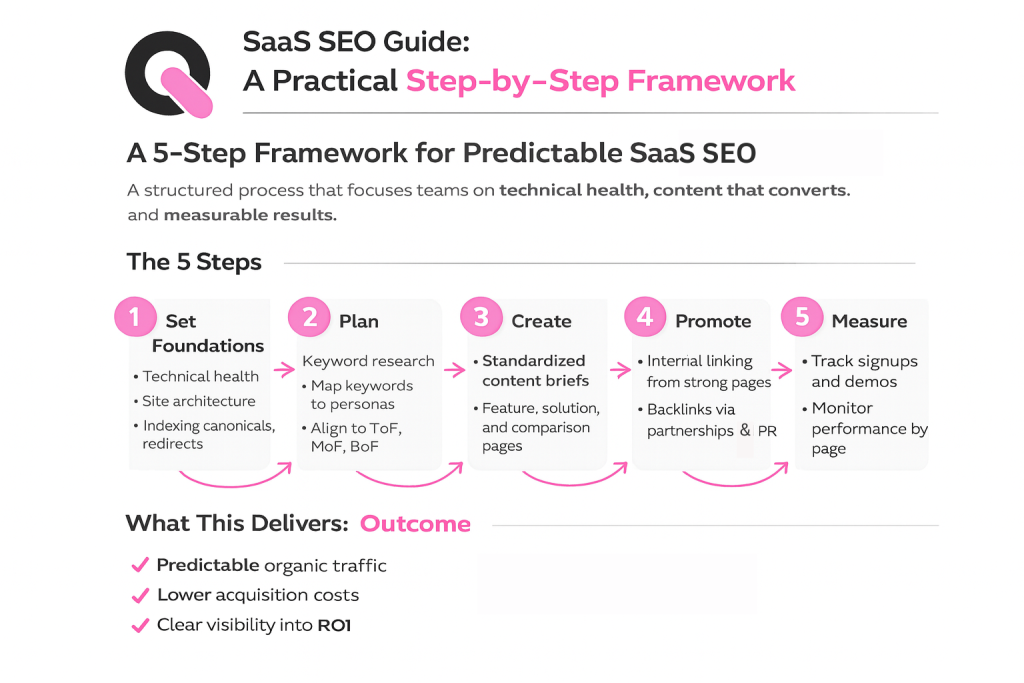
SaaS SEO Guide: A Practical, Step-By-Step Framework
Begin with a structured five-step process to make search traffic predictable and profitable. This keeps teams focused on the technical fixes, the content that converts, and the measurement that proves impact.
Set Foundations: Technical Health and Site Architecture
Confirm sitemap submission in Google Search Console, add appropriate schema types, enforce canonical tags, and configure necessary 301 redirects. These items prevent duplicate content and speed indexation.
Plan: Map Keywords to Personas and Funnel Stages
Derive seed topics from jobs‑to‑be‑done, cluster related queries, and map each keyword to ToF, MoF, or BoF. Assign a clear target page for every intent so content aligns with the buyer journey.
Create: Briefs, Templates, and Editorial Quality
Standardize briefs for feature pages, solution pages, comparisons, and articles. Include required headings, data points, CTAs, and internal link suggestions to keep quality consistent across the website.
Promote: Internal Linking and Link Earning
Use contextual internal links from high‑traffic pages to new assets. Pursue backlinks through partnerships, guest contributions, and digital PR to grow topical authority.
Measure: Conversions, Cohorts, and Refresh Cadence
Track signups, demo requests, and cohort conversion by landing page in Google Analytics and Search Console. Revisit priority pages quarterly to update examples, data, and UX to sustain rankings.
- Technical setup
- Ideation & keyword research
- Creation using briefs
- Publishing and link-building
- Monitoring and refresh
Keyword Research For SaaS Companies
Effective SaaS keyword research begins with people: who searches, why they search, and what outcome they want. Synthesize analytics, interviews, and market tools to define personas and clear jobs‑to‑be‑done. This anchors every target keyword to user intent.
Define personas and jobs-to-be-done
Map roles to queries. Use analytics to see which pages real users visit. Add interviews and product data to turn behavior into JTBD statements you can target.
Build topic clusters and parent topics
Group semantically related terms under parent topics so a single landing page can win multiple related searches. Support those pages with blog posts that cover long‑tail modifiers and niche use cases.
Target achievable, commercial-intent keywords
Balance difficulty, domain authority, and search volume. Use CPC as a proxy for commercial value and focus on terms the website can rank for within 6–12 months.
Use competitor gaps to prioritize
- Audit competitor top pages to find missing features or persona variants.
- Map head terms to core landing pages and long tails to supportive content.
- Document primary and secondary target keywords per URL to avoid cannibalization.
Mapping Keywords To The Buyer Journey
Map keywords to specific buying moments so each page answers a clear question at the right time. This makes it easier for searchers to progress from curiosity to conversion on your website.
Top of Funnel: Problem and Opportunity Searches
Top‑of‑funnel targets attract problem‑aware users. Use educational content, templates, and how‑to pieces that surface common pain points.
Blog posts and long‑form articles should introduce solution categories naturally and link to deeper pages.
Middle of Funnel: Solutions, Features, and Integrations
Middle pages speak to prospects who evaluate options. Create category pages, feature explainers, and integration walkthroughs that show fit.
Integration pages tied to major ecosystems boost relevance for buyers using established tool stacks.
Bottom of Funnel: Pricing, Demos, Reviews, and Comparisons
Bottom pages capture purchase intent. Prioritize pricing, demo signup flows, customer reviews, case studies, and clear “VS” comparisons.
Well‑built alternatives pages shape competitive evaluation and win high‑intent clicks.
- Content hierarchy: interlink ToF educational assets → MoF solution pages → BoF landing pages.
- Persona pages: create role- or industry-specific pages to increase resonance and conversions.
- CTAs and UX: maintain consistent calls to action and frictionless flows across all stages.
| Stage | Primary Content | Primary Goal |
| ToF | How‑tos, templates, blog posts | Awareness and lead capture |
| MoF | Feature explainers, integrations, use cases | Evaluation and product fit |
| BoF | Pricing, demos, reviews, VS pages | Conversion and signups |
On-Page SEO Best Practices For SaaS Websites
Keyword targeting and on-page SEO shape how users and search engines interpret each page on your product website. Focus on clear signals, titles, metadata, URLs, images, and links, so pages rank and convert.
Titles, Meta Descriptions, And Descriptive URLs
Craft concise titles that place the primary term near the start. This improves relevance in search results and helps click-through rates.
Write meta descriptions that explain value, include one key term, and set realistic expectations for the page content.
Use human-readable URLs with target keywords and avoid long query strings or IDs.
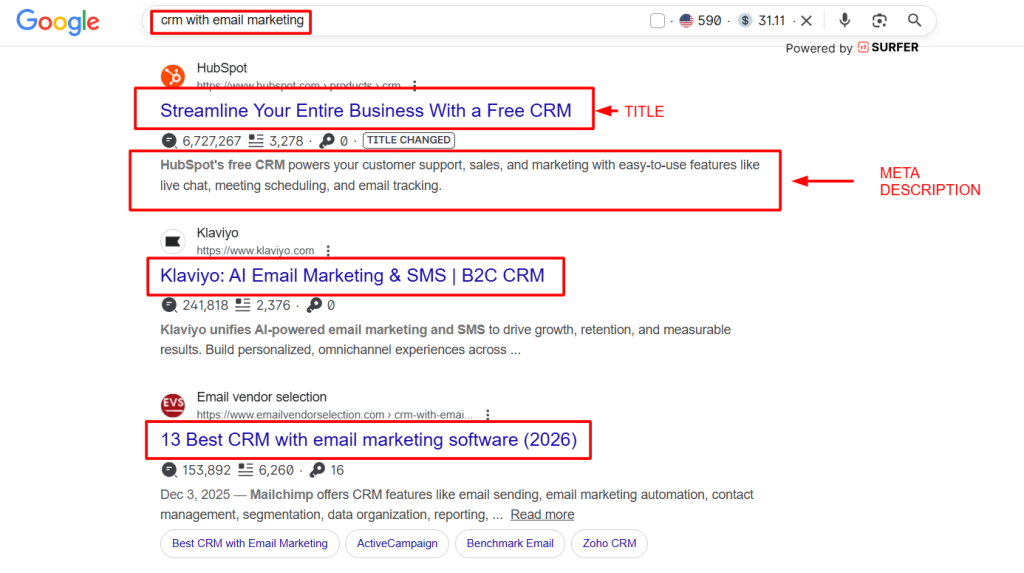
Image Optimization And Accessible Alt Text
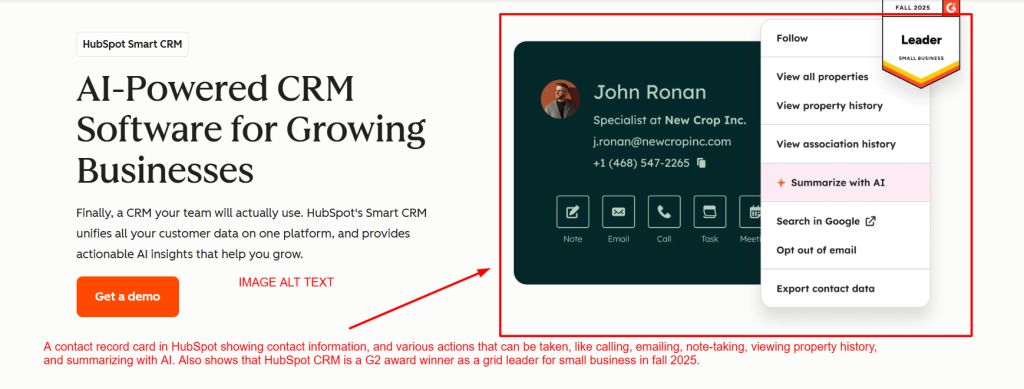
Optimize images with descriptive filenames and alt text that reflect the image and page topic. Compress assets or use WebP to balance quality and speed.
Accessible alt text aids screen readers and provides additional context for search engines.
Internal Link Placement To Pass Equity
Place internal links in contextual body copy to connect related topics and send authority to priority landing pages.
Structure headings semantically for scanability, reduce thin sections, and add depth where intent requires it.
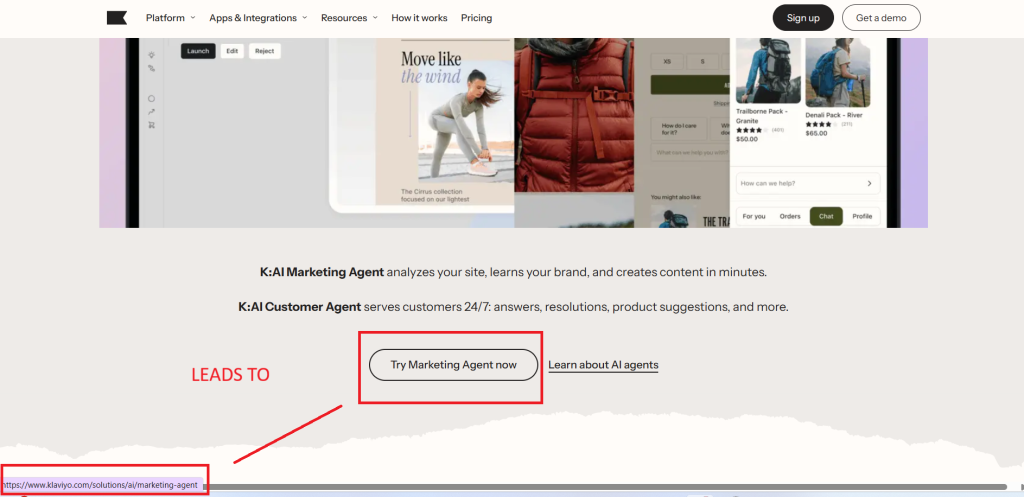
Quick checklist:
- front-loaded titles, clear meta lines, readable URLs.
- Image alt text, modern formats, and size compression.
- Contextual internal links and logical heading hierarchy.
| Element | Best Practice | Why It Matters | Example |
| Title | Keep to 50–60 chars; primary term first | Improves ranking relevance and CTR | Product analytics for marketing teams |
| Meta description | Summarize benefit; include one key term | Sets expectations and reduces bounce | See how our tool streamlines reporting |
| Images | Descriptive filename + alt; use WebP | Speeds pages and aids accessibility | marketing-dashboard-overview.webp |
| Internal links | Contextual links within body copy | Passes equity and guides navigation | Link from blog posts to feature pages |
Technical SaaS SEO Essentials
A reliable technical SaaS SEO foundation keeps a website discoverable and prevents small errors from eroding long-term visibility.
Sitemaps, Indexing, and Crawl Health
Submit a complete sitemap.xml to Google Search Console and verify indexing status regularly.
Monitor crawl stats to spot 3xx chains and 4xx errors that waste crawl budget. Fix broken links and remove orphaned pages.
Schema Markup and Canonicalization
Add schema per page type, Organization for the homepage, and Article for posts, so machines interpret content correctly.
Set canonical tags globally and override them for duplicate or near-duplicate resources to declare a single source of truth.
301 Redirects and Avoiding Redirect Chains
Use 301s when URLs change. Avoid multi-hop chains and map old URLs directly to final targets.
Consolidate redirects to preserve link equity and speed up server responses.
Site Speed, Core Web Vitals, and CDNs
Improve Core Web Vitals, minimize JS/CSS, lazy-loading noncritical assets, and enable caching.
Leverage HTTP/2 and a CDN for global delivery. Treat performance as both a ranking and conversion factor, especially on mobile.
- Verify sitemap.xml and inspect index coverage.
- Add appropriate schema types and validate markup.
- Enforce canonical tags and handle duplicates.
- Implement direct 301 mappings; remove chains.
- Optimize Core Web Vitals with bundling, caching, and CDNs.
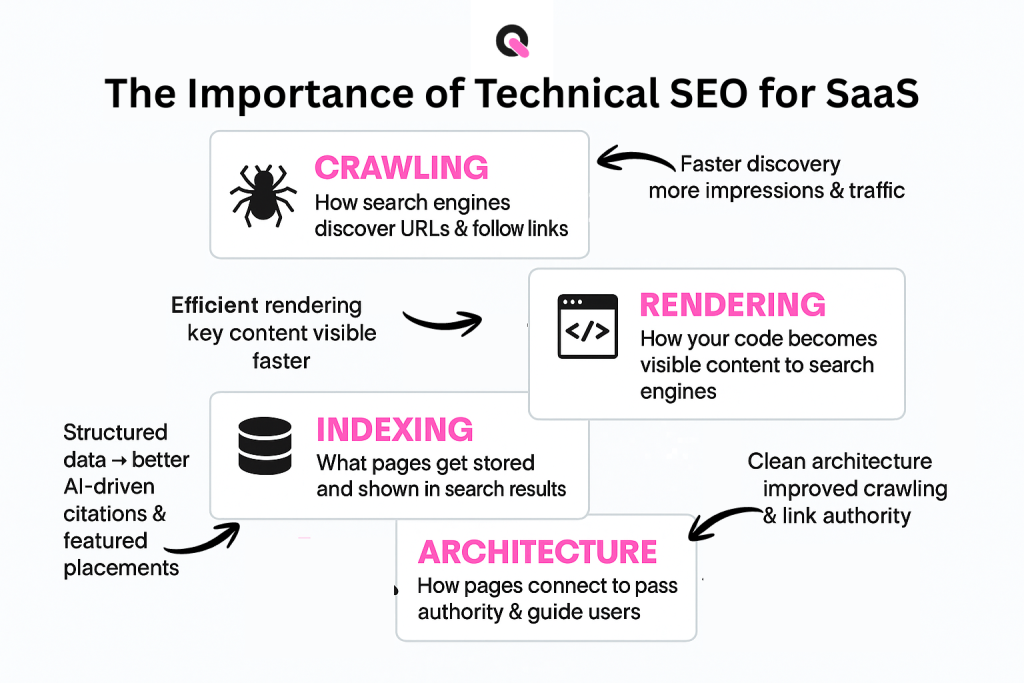
Building Authority: Internal Links And Backlinks
Links are the connective tissue that turns isolated pages into a trusted topical hub. A deliberate linking program helps search engines understand which pages are primary and which pages support them.
Interlinking to Establish Topical Authority
Define pillar pages for major topics and cluster related articles around each pillar. Link from pillar → cluster and cluster → pillar so equity flows both ways.
Place contextual links inside body copy near relevant passages rather than only in navigation or footers. Use descriptive anchor text that reflects the destination’s topic.
Guest Posts, Partnerships, And Digital PR
Prioritize backlink targets in niche publications, partner ecosystems, and industry resources that your buyers trust. Pitch unique data, integration guides, or frameworks that journalists and partners can cite.
Create linkable assets, original research, calculators, and templates, that naturally earn references and shares across podcasts, newsletters, and partner blogs.
- Pillar-cluster model: cornerstone pages link to in-depth articles and receive contextual links back.
- Anchor text: keep it descriptive and varied to avoid over-optimization.
- Quality over quantity: track link authority and relevance, not raw counts.
| Tactic | Primary Goal | Where to Execute | Expected Outcome |
| Pillar-cluster internal links | Organize topical coverage | Core landing pages and long-form articles | Higher relevance for topic clusters; improved page discovery |
| Contextual body links | Pass equity where it matters | Within article paragraphs and case studies | Better rankings for priority pages; clearer UX |
| Digital PR & guest posts | Earn authoritative backlinks | Niche trade sites, partner blogs, industry journals | Increased domain authority and referral traffic |
| Linkable assets | Natural link acquisition | Research pages, calculators, templates | Sustained inbound links and resource citations |
Content Strategy For SaaS Growth
Prioritizing intent-first pages creates clearer paths from query to demo. Build a compact library of feature pages, solution pages by role or industry, and comparison (“VS”) pages that answer buyer questions directly.
High-Intent Landing Pages: Features, Solutions, And Alternatives
Create consistent templates for landing pages so benefits, use cases, pricing cues, and CTAs appear predictably. Focus each page on a single intent: feature fit, role-specific solutions, or competitive comparison.
SEO-Optimized Blog Posts That Educate And Convert
Map blog posts to parent topics and clusters. Write short, actionable posts that link to product pages and related landing pages. Use examples, steps, and clear next-step CTAs like trials or demos.
Content Refreshes To Sustain Rankings
Set a refresh cadence for priority pages. Update stats, screenshots, and messaging every 3–6 months. Measure ranking and conversion uplift after each refresh to prioritize future updates.
- Tip: Integrate internal links from blog articles to product pages to pass authority and guide visitors.
| Asset | Primary Goal | Cadence |
| Feature landing page | Show product fit and convert | Review quarterly |
| Solution/role page | Resonate with buyer persona | Review every 6 months |
| Comparison (VS) page | Capture competitive intent | Update after product changes |
User Experience And Conversion Alignment
Good UX turns search visitors into users, as it removes the friction between discovery and action. Focus on clear paths that connect landing content to product choices. A simple site structure with direct links to features, pricing, and support reduces time-to-value for visitors.
Navigation, Messaging, And Frictionless CTAs
Prioritize a navigation that surfaces features, solutions, pricing, and resources. This helps visitors move from discovery to the right pages quickly.
Align messaging with persona pain points and desired outcomes. When headings and body content match intent, time on page and relevance increase.
- Place CTAs consistently: above the fold and inside sections; offer both demo and trial options.
- Streamline forms: minimal fields and clear privacy language to raise completion rates.
- Optimize for mobile: fast, responsive pages boost engagement and signups.
- Use microcopy: answer objections inline (security, integrations) to reduce friction.
- Connect UX to internal links: guide visitors to deeper resources without dead ends.
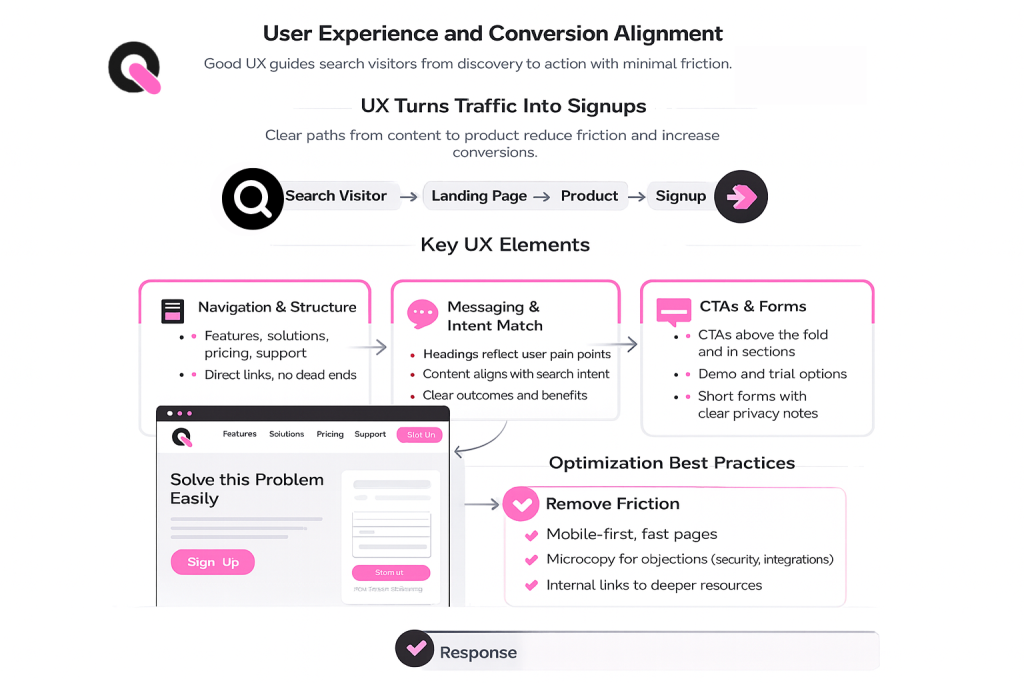
Measurement And Iteration
Measure what matters: tie pages and campaigns to real conversions so search work drives revenue. Use index and query data to decide what to fix, refresh, or expand next.
Search Console, Google Analytics, And Cohort Tracking
Monitor impressions, clicks, and average position in Google Search Console to spot high‑impression but low‑CTR pages. Those pages often need better titles or meta descriptions.
Track trials, demos, and assisted conversions in Google Analytics and segment by landing page and acquisition path. Analyze cohorts by first page touched to link content to revenue outcomes.
Refreshing Content And Expanding Clusters
Refresh decaying content with new data, examples, and updated schema while preserving URL equity via canonicals or 301 redirects when needed.
- Expand winning clusters with integrations, industry angles, and comparison pages.
- Correlate new backlinks and link growth with ranking shifts to measure when domain authority crosses thresholds for a cluster.
- Iterate briefs and templates based on pages that convert best.
| Metric | Action | Why It Matters |
| Impressions & CTR | Update title/meta | Improves click volume and quality traffic |
| Conversions by page | Adjust CTAs & form flow | Ties content to revenue |
| Index coverage | Fix soft 404s/noindex | Ensures pages can rank and be measured |
Common SaaS SEO Mistakes To Avoid
There are some common SaaS SEO mistakes you need to avoid. Small technical slips and weak content choices silently cap organic visibility for product sites. Fixing these issues often yields faster gains than creating more posts.
Thin content, duplicate pages, and neglected links
Avoid short articles and landing pages that fail to answer user intent. Each page should offer clear, actionable value.
Detect duplicate content and consolidate overlapping URLs. Use canonical tags or 301 redirects to declare the primary source.
- Prevent redirect chains: map old URLs directly to final targets to preserve equity.
- Improve performance: optimize images and limit heavy JavaScript to speed the website.
- Internal links: connect related assets to build topical authority and distribute link equity.
- Backlinks matter: invest in quality links, domain authority caps rankings without them.
- Keep basics tight: descriptive titles, clean URLs, and helpful meta descriptions raise CTR.
- Refresh cadence: update priority content regularly to avoid ranking decay.
| Mistake | Symptom | Quick Fix |
| Thin pages | High bounce, low time on page | Expand with examples, steps, and CTA |
| Duplicate content | Multiple URLs for same topic | Canonicalize or consolidate with 301 |
| Redirect chains | Slow responses, lost equity | Map direct 301s to final URL |
| Weak linking | Poor internal flow and low authority | Add contextual internal links; earn backlinks |
Recommended Tools And Workflows
Choose a compact stack and repeatable process so teams move quickly from research to publish to measurement. The right combination of research tools, briefing templates, CMS controls, and monitoring routines keeps content reliable and indexable while reducing reviews and rework.
Research, Briefing, Publishing, and Monitoring Stack
Research stack: use keyword discovery and clustering tools, SERP analysis, and commercial-intent scoring to build topic lists and prioritize pages. Track difficulty and intent so each target aligns with a conversion goal.
Briefing workflows: create standardized briefs that list the primary keyword, suggested headers, target audience, internal link targets, schema type, and on-page requirements (length, examples, CTA). Add a QA checklist for factual accuracy and product naming.
CMS capabilities: require custom fields for metadata, schema injection, canonical controls, and automated sitemaps. These features let authors publish without engineering for every change.
Publishing QA: validate title and meta, check URL structure, confirm schema markup, verify contextual internal links, and run a quick mobile performance check before launch.
Monitoring routines: track rankings, indexation, conversions, and new backlinks weekly. Review cohort performance monthly and schedule content audits and redirect planning on a quarterly cadence.
- Document SOPs for brief creation, publish checks, and refresh cadence.
- Maintain cross‑functional reviews with content, product, design, and engineering.
- Store templates and results centrally to scale consistency as pages grow.
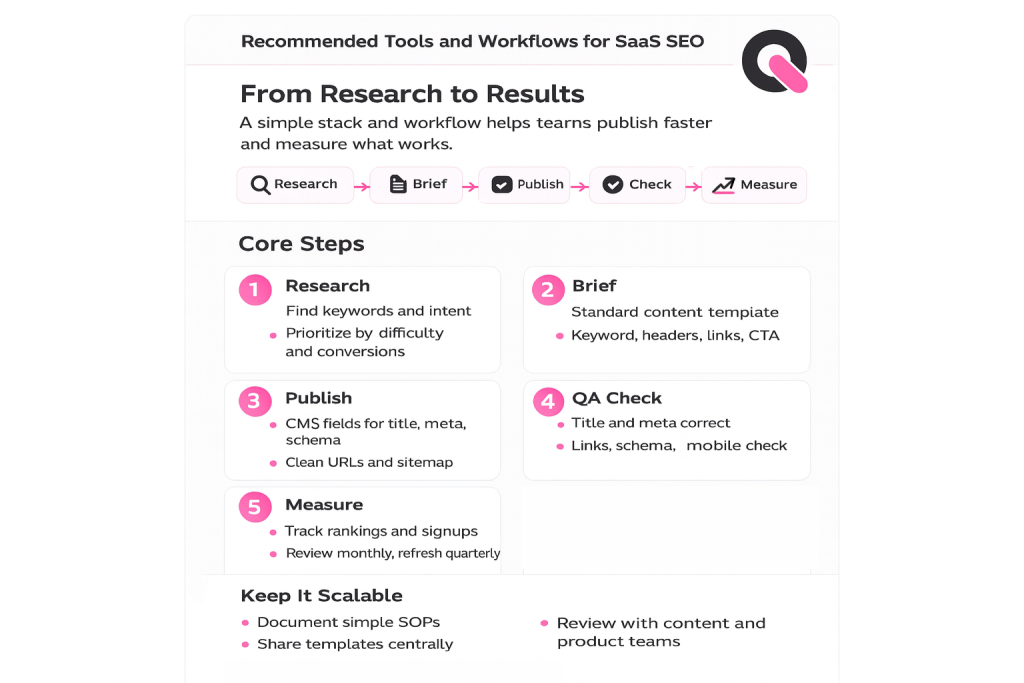
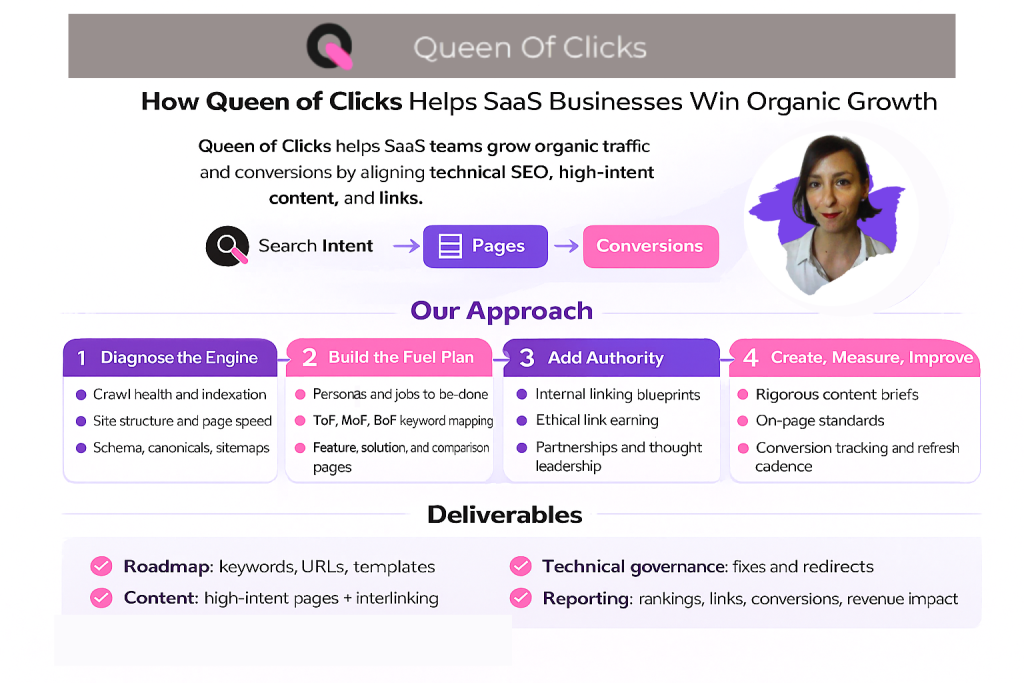
How Queen of Clicks Helps SaaS Businesses Win Organic Growth
Queen of Clicks helps product teams turn search intent into repeatable, revenue-driving pages. We combine technical fixes, high-intent content, and link programs to move rankings and conversions together.
Our Approach
We diagnose the engine first: crawl health, information architecture, page speed, schema, canonicals, and sitemaps so every page can be found and indexed.
Next, we build the fuel plan. We map personas and jobs‑to‑be‑done to ToF, MoF, and BoF, design feature, solution, and VS page templates, and prioritize clusters by effort and commercial value.
We add the oil by creating internal linking blueprints and running ethical link-earning via partnerships and thought leadership to lift domain authority.
Finally, we create with intent and measure what matters: rigorous briefs, on-page standards, conversion tracking, cohort analysis, and a refresh cadence tied to outcomes.
What You Get
- Roadmap: prioritized keywords, mapped URLs, and content templates.
- Content production: high-intent landing pages and optimized articles, plus interlinking plans.
- Technical governance: fixes, redirect strategy, and protections to preserve equity.
- Reporting: rankings, links, conversions, and revenue-attributed cohort analysis.
Next Step
Ready to compound organic traffic and convert more visitors? Book a strategy call with Queen of Clicks to review your website posture and identify the fastest path to impact.
Conclusion
A focused program that pairs technical hygiene with intent-led content creates steady, measurable growth for product websites.
Keep the three pillars front and center: a healthy engine (technical site), targeted fuel (high‑intent content and landing pages), and oil (internal and external links) to compound authority and conversions.
Follow the five-step flow, set foundations, plan, create, promote, and measure, so work ties directly to outcomes, not just rankings. Map keywords to ToF, MoF, and BoF so each page serves a clear buyer moment.
Refresh priority assets, run cohort-focused reporting, and use templates and QA checklists to scale reliably. Early investment builds durable authority and faster wins for organic traffic.
When you’re ready to accelerate execution, connect with Queen of Clicks to turn this plan into action and faster results.
FAQs
Is SaaS SEO Worth It For Early-Stage Or Pre-Revenue Companies?
Yes, if focused correctly. Early-stage teams should prioritize BoF and MoF pages (features, integrations, alternatives) over broad blog content. This builds future pipeline while keeping costs lower than paid channels long term.
How Much Content Does A SaaS Company Actually Need?
There is no fixed number. Most successful SaaS sites start with:
- Core feature pages
- 3–5 solution or persona pages
- Key integration and comparison pages
- A small blog cluster to support each pillar
Depth and intent alignment matter more than volume.
Can One Page Rank For Multiple SaaS Keywords?
Yes, when keywords share the same intent. A well-structured landing page with clear sections can rank for a parent topic and many related variations without creating separate URLs that dilute authority.
How Often Should SaaS Pages Be Updated For SEO?
Priority pages should be reviewed every 3–6 months. Updates may include new features, screenshots, pricing cues, customer examples, or improved internal links. Regular refreshes help maintain rankings and conversion rates.
Is Blog Traffic Less Valuable Than Landing Page Traffic?
Not inherently. Blog traffic introduces problem-aware users, while landing pages convert solution-aware users. Blog content becomes highly valuable when it feeds internal links and nurtures visitors toward MoF and BoF pages.
How Do You Decide Between Creating A New Page Or Expanding An Existing One?
Create a new page when intent differs. Expand an existing page when the query variation represents the same buyer question. This keeps authority consolidated and avoids splitting ranking signals.
Does SaaS SEO Change For Different Industries?
The fundamentals stay the same, but language, proof points, and compliance requirements vary. Industry-specific pages (e.g., healthcare, finance, logistics) often outperform generic content by matching buyer context more closely.