How to Combine SEO and PPC for SaaS Lead Generation
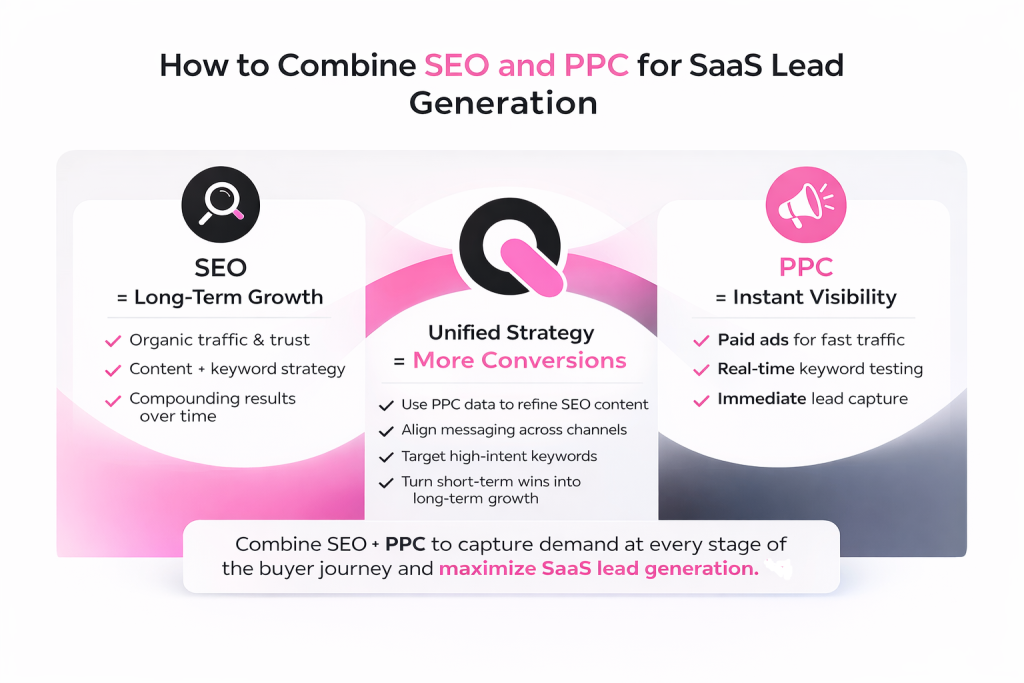
In SaaS, lead generation is about capturing demand at the exact moment buyers are researching, comparing, and deciding. That’s why relying on a single channel is no longer enough. Search engine optimization (SEO) and pay-per-click (PPC) advertising serve different roles in the buyer journey, and when used together, they create a powerful, full-funnel growth engine.
SEO SEO builds long-term visibility and trust. It helps your SaaS brand appear when prospects are actively researching solutions, educating themselves, and evaluating options. Over time, this compounds into a steady stream of high-intent traffic with lower acquisition costs. PPC, on the other hand, delivers immediate visibility. It places your product in front of decision-makers right when they’re searching for solutions, making it ideal for capturing demand quickly and testing messaging, offers, and keywords in real time.
The real advantage comes from combining the two. Data shows that organic search drives around 53% of all website traffic, while paid search contributes about 27%, highlighting how both channels dominate search-driven discovery and should work together rather than in isolation. At the same time, performance data in SaaS reveals that SEO traffic converts at roughly 2.1% compared to 1.0% for PPC, demonstrating the trust and intent behind organic visits.
Together, these insights explain why leading SaaS companies don’t choose between SEO and PPC, they integrate them. SEO nurtures and educates buyers over time, while PPC captures demand at critical decision points. The result is a more predictable, scalable lead generation system that balances short-term wins with long-term growth.

Key Takeaways
- Unified paid search and organic search work together to capture more traffic and clicks.
- Data from ads can guide content and keyword choices for better rankings.
- Aligning landing pages with campaigns raises conversion rates.
- Consistent brand messaging across channels improves visibility at the top of results.
- Short-term campaigns can support long-term website performance goals.
Understanding the Roles of SEO and PPC in SaaS
Paid search brings visitors immediately, while steady optimization builds trust and visibility over months. Both play clear, complementary roles in a modern marketing mix.
Defining PPC
PPC lets teams pay for top placement in search engine results. That paid visibility drives fast traffic and yields rapid data on which keywords and ads convert.
The Long-Term Value of SEO
Search engine optimization focuses on content, technical fixes, and authority-building. It requires time and consistent effort but improves organic rankings and trust.
- PPC gives instant visibility at the top of pages.
- Organic work builds lasting brand authority without ongoing ad spend.
- Using paid data helps refine content, keywords, and conversion paths.
| Feature | PPC | SEO |
| Speed | Immediate | Slow, steady |
| Cost Profile | Pay per click | Investment in content and site |
| Best Use | Testing keywords and landing pages | Building lasting rankings and trust |
How to Combine SEO and PPC for SaaS Lead Generation
When teams align paid campaigns with content work, they can win more real estate on the search engine results page. This alignment helps capture both immediate clicks from ads and steady visitors from organic search.
Use ads data to refine keywords and content. That data reveals which queries drive conversions. Then apply those insights to landing pages and editorial plans.
- Align messaging across paid and organic channels to boost trust.
- Prioritize high-intent keywords that show strong conversion rates.
- Use quick wins from PPC SEO tests to inform longer-term content strategy.
How to Use Cross-Channel Keyword Intelligence
Real-time ad metrics reveal search patterns that inform smarter content choices. Sharing performance across teams lets marketers move fast and stay aligned. This boosts visibility on the search engine results page while improving page relevance.
Sharing Data Between Channels
Share top-performing keywords from paid reports with content teams. Use Google Ads insights to find queries that drive conversions and traffic. Then test those phrases in short paid campaigns before locking them into a long-term strategy.
- Identify high-intent keywords that work in both paid and organic channels.
- Use ads performance to refine landing pages and cut wasted spend.
- Align pages and content with tested queries to raise quality scores and lower costs.
| Source | What it reveals | Action | Benefit |
| Google Ads | Real-time clicks, conversions | Test keyword variants | Faster insight on intent |
| PPC campaigns | High-cost, high-return terms | Prioritize for content | Improved traffic quality |
| Organic analytics | Long-term traffic trends | Match pages with top queries | Stronger, lasting visibility |
How to Align Content Strategy for Maximum Impact
Strong SaaS SEO content and alignment ensure every channel speaks with one clear voice. This consistency builds trust with prospects and improves conversion rates for B2B buyers in the United States.
Use paid insights to guide editorial choices. Run short ad tests and capture the best keywords and creative that drive clicks and conversions. Then mirror that language on pages and blog posts.
Create content that answers specific user needs. Focus on formats that match intent: quick landing pages for high-value queries and long-form posts for awareness. This raises relevance and organic traffic over time.
- Keep voice, tone, and branding consistent across ads and organic listings.
- Let top-performing keywords from PPC campaigns inform the SEO strategy.
- Review content performance regularly and make data-driven edits.
| Action | Benefit | Metric |
| Align messaging across channels | Stronger brand trust | Conversion rate |
| Use paid insights in editorial | Higher relevance on search results | Organic traffic |
| Regular performance reviews | Continuous improvement | Pages ranked |
How to Optimize Landing Pages for Conversion
Clear messaging and fast load times are the difference between clicks that matter and clicks lost. A focused page aligns ad copy with on-page content and delivers a seamless path for visitors.
Improving Quality Scores
Relevance matters: use targeted keywords in header tags and calls-to-action to boost both organic rankings and paid performance. Match your ad text with landing page headlines and keep content concise.
Fast page speed, mobile-ready layouts, and clear value statements improve quality score. Use campaign data to test variations and remove friction that lowers conversions.
Retargeting Strategies
Retargeting re-engages visitors who left without converting. Show tailored ads that mirror the message on the page they saw.
- Segment audiences by intent and page behavior.
- Use shorter, focused funnels for returning visitors.
- Measure which ads drive clicks and which drive conversions, then iterate.
| Focus | Action | Impact |
| Quality score | Match ad and page messaging | Lower cost per click |
| Retargeting | Personalized creative | Higher return visits |
| Data | A/B test CTAs | Improved conversions |
How to Track Performance and Measure Success
Clear measurement ties every campaign action to real business outcomes, so teams can prove value fast. Use a central dashboard that pulls clicks, impressions, and conversion points into one view.
- Use Google Analytics and Google Search Console to monitor traffic, rankings, and site health.
- Hold regular cross-channel meetings so the team can share data and adjust strategy in real time.
- Analyze which ads, keywords, and content drive the most conversions and allocate budget accordingly.
- Iterate on landing pages and campaign creative based on performance insights.
| Tool | Key Metrics | Recommended Action |
| Google Analytics | Sessions, bounce rate, conversions | Track conversion paths and set goals for landing pages |
| Google Search Console | Impressions, clicks, search queries | Identify high-value keywords and fix crawl issues |
| Ad platform reports | Cost per click, click-through rate, ad spend | Test ad variants and shift spend to top performers |
| BI dashboard | Revenue by channel, ROI, trends | Combine sources for executive reporting and budget decisions |
🚀 How Queen of Clicks Helps SaaS Businesses Scale
Queen of Clicks pairs bespoke tactics with clear metrics to scale subscription businesses fast. We craft focused marketing plans that align paid campaigns with content and landing page work. Our process centers on measurable steps that improve visibility and conversions.
Customized SaaS Strategies
We build tailored programs for each product and audience segment. That means targeted pages, refined messaging, and campaign setups that match buyer intent.
Data-Driven Growth
Our team uses performance data to prioritize what moves the needle. We test offers, review conversion paths, and scale what works while cutting wasted spend.
- Strategic alignment: messaging and pages tuned for higher quality scores and user trust.
- Measurable wins: campaigns optimized for traffic that converts to trials and customers.
- Ongoing analysis: regular reporting so your team sees progress and ROI.
Book Your Consultation
Schedule a call with our specialists to explore a customized plan. We will outline priorities, expected performance gains, and next steps for sustainable growth.

Conclusion
A smart alignment between paid ads and organic work builds a more resilient acquisition engine. Use a clear SEO PPC plan that balances quick paid wins with steady organic growth. This mix captures urgent clicks while supporting lasting visibility.
Rely on data and tested keywords from ads to guide content choices and landing page edits. Track traffic and results, then iterate with those insights for steady improvement. Small experiments yield big results when teams share what they learn.
Keep brand messaging consistent and make measurable decisions. This practical strategy helps sustain conversions and scale your product in the United States market.
FAQs
When is the right time to start combining SEO and PPC?
The best time is from the beginning. Even if budgets are limited, running small PPC campaigns alongside SEO efforts helps validate keywords and messaging early, which improves long-term organic performance.
Can SEO reduce PPC costs over time?
Yes. Strong SEO can improve brand visibility and relevance, which often leads to higher click-through rates and better Quality Scores in PPC campaigns, ultimately lowering cost per click (CPC).
How do you avoid keyword cannibalization between SEO and PPC?
Instead of avoiding overlap, control it strategically. Use PPC for high-converting, competitive keywords while allowing SEO to dominate informational and long-tail queries. Monitor performance and adjust bids where organic rankings are strong.
What types of SaaS keywords work best for a combined strategy?
High-intent keywords such as “best [category] software,” “pricing,” and “alternatives” perform well in both channels. These keywords signal that users are close to making a decision.
Should SaaS companies use the same landing pages for SEO and PPC?
Not always. PPC landing pages are often more conversion-focused and streamlined, while SEO pages may include more detailed content for ranking purposes. However, both should align in messaging and intent.
How long does it take to see results from combining SEO and PPC?
PPC can generate results within days, while SEO typically takes 3–6 months to show significant impact. When combined, PPC delivers short-term leads while SEO builds sustainable growth over time.
What metrics matter most when combining SEO and PPC?
Focus on conversion rate, cost per acquisition (CPA), customer acquisition cost (CAC), and lifetime value (LTV). Tracking how both channels contribute to these metrics gives a clearer picture of overall performance.
Is combining SEO and PPC effective for all SaaS business models?
Yes, but the approach varies. For example, product-led SaaS may focus more on high-volume keywords and free trial conversions, while enterprise SaaS may prioritize high-intent, lower-volume keywords and longer sales cycles.