
SaaS SEO Audit: How to Identify Issues, Fix Rankings, and Boost Organic Growth
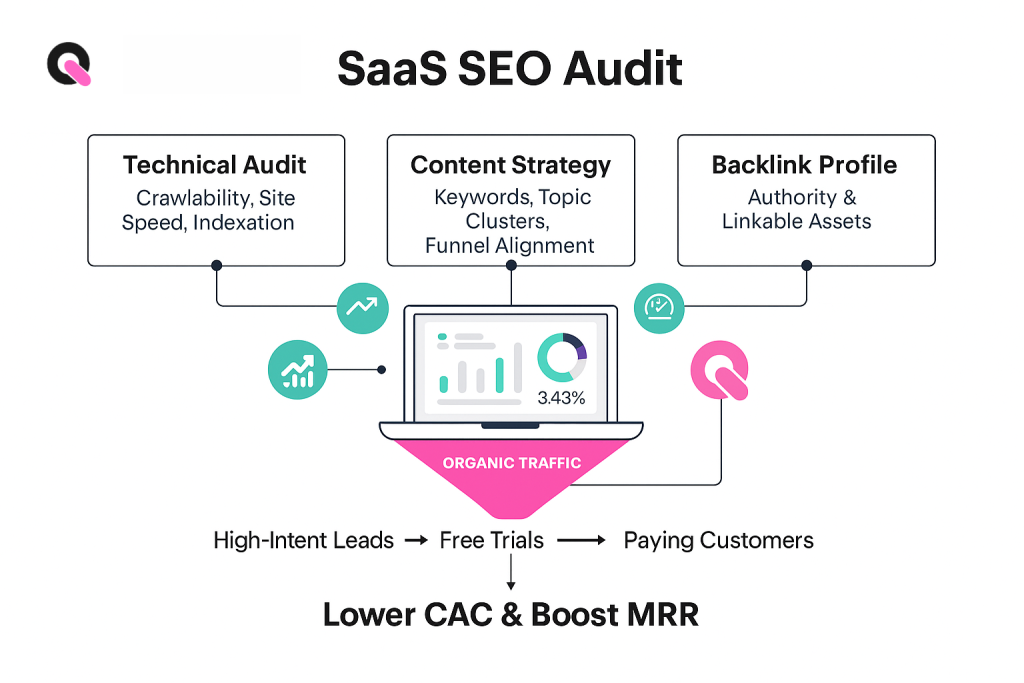
A SaaS SEO audit is an analysis designed to identify every bottleneck, technical, content, and authoritative, that is preventing your website from acquiring qualified leads and driving Monthly Recurring Revenue (MRR) through organic search.
Key Takeaways
- A SaaS SEO audit must prioritize technical health (crawlability, speed, and indexation) as the foundation for all subsequent growth efforts.
- The audit’s core goal is to identify and fix search intent mismatches to ensure content attracts visitors ready for trial sign-ups and demos, not just casual readers.
- Successful organic growth hinges on creating a prioritized action roadmap from the audit, focusing on high-impact fixes over low-value vanity tasks.
- Beyond content and technical fixes, the audit must include a conversion analysis to ensure high-ranking pages effectively bridge traffic to MRR.
- Continuous competitor benchmarking and AI-search optimization help in maintaining authority.
What Is a SaaS SEO Audit?
A SaaS SEO Audit is a comprehensive, deep-dive examination of a Software-as-a-Service (SaaS) platform’s organic search presence, technical foundation, content strategy, and backlink profile. Unlike a generic website audit, the SaaS SEO and SaaS SEO audit is specifically focused on identifying constraints that hinder high-intent lead generation, free trial sign-ups, and ultimately, Monthly Recurring Revenue (MRR). Consistent investment in SEO delivers an average 748% ROI over three years, making it one of the most powerful growth channels for SaaS companies.
It is a systematic process designed to answer a single question: “What specific, actionable changes must be made to maximize the volume and quality of organic traffic and convert it into paying users?” The audit moves beyond simple ranking checks to analyze key business drivers like customer acquisition cost (CAC) and customer lifetime value (LTV), and ensures every ranked page is optimized for both search engines and the user’s journey through the sales funnel.
Why Are SEO Audits for SaaS Important?
Relying solely on paid advertising leads to spiraling CAC. An SEO audit shifts the focus from costly, transactional spending to building a sustainable, high-LTV asset.
Building a Sustainable Customer Acquisition Channel
The core importance of the audit lies in establishing organic search as a scalable and predictable channel. When technical barriers are removed and content perfectly aligns with user intent, rankings solidify, providing a steady flow of qualified traffic that doesn’t cost money per click.
Lowering Customer Acquisition Cost (CAC)
Organic traffic, once achieved, is essentially free. When you optimize your site for keywords that lead directly to sign-ups (e.g., “best CRM for small business,” “project management software free trial”), you reduce dependency on Google Ads and Facebook Ads, dramatically lowering your blended CAC over time.
Uncovering Hidden Growth Opportunities
Many SaaS platforms are unaware of simple fixes that unlock significant growth. The audit often reveals:
- “Low-Hanging Fruit”: Pages ranking on page two (positions 11-20) that can jump to page one with minor on-page tweaks.
- Content Gaps: High-volume keywords used by competitors that the audited site has completely neglected.
- Technical Constraints: Issues like slow loading speeds or improper indexing that are throttling the entire site’s potential.
How to Do an SEO Audit for Your SaaS
A complete audit must be broken down into specific, structured phases to ensure no critical element is overlooked.
Start with Technical SEO
Technical SEO is the scaffolding of your organic performance. Without a flawless foundation, all other efforts will be hampered. For SaaS sites, which often rely on complex JavaScript frameworks and dynamic pages, this step is paramount.
Crawlability and Indexability
- Check robots.txt: Ensure critical folders (like the blog, resource pages, or feature landing pages) are not accidentally disallowed. Verify that no private user-facing areas are inadvertently indexable.
- Analyze XML Sitemaps: Verify that the primary sitemaps submitted to Google Search Console (GSC) are clean, only contain canonical versions of pages, and exclude unnecessary or non-indexable URLs (e.g., filtered search results, user profile pages).
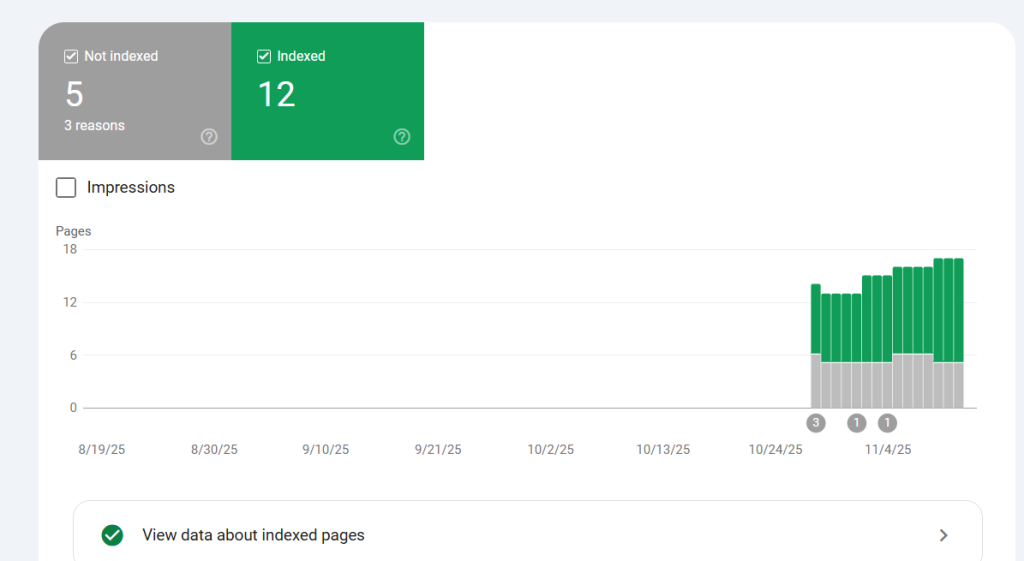
- Identify Indexation Issues: Use the Coverage Report in GSC to find pages that Google has deemed “Excluded.” Investigate the reasons (e.g., “Crawled – currently not indexed,” “Duplicate, submitted canonical”) to bring high-value pages back into the index.
Core Web Vitals (CWV) and Page Speed
Speed is a direct ranking factor and a critical element of user experience, especially for interactive SaaS interfaces.
- Audit LCP (Largest Contentful Paint): Focus on speeding up the loading of the main content block on your high-traffic pages (homepage, key feature pages).
- Audit INP (Interaction to Next Paint): Analyze how quickly your site responds to user interaction (clicks, taps). Excessive third-party scripts or large JavaScript bundles are common culprits.
- Mobile-First Indexing: Ensure your platform is fully responsive and loads equally fast and functional on all mobile devices, as this is how Google primarily evaluates your site.
| Area to Audit | Key Checks for SaaS | Tools to Use |
| Crawlability & Indexation | Robots.txt: Ensure no critical pages (e.g., product pages, /blog/) are accidentally blocked. XML Sitemap: Verify it’s submitted to Google Search Console (GSC) and only contains high-value, canonical URLs. Index Status: Use GSC to check for “Excluded” or “Noindexed” pages that should be ranking. | Google Search Console, Screaming Frog |
| Site Speed & Core Web Vitals (CWV) | Performance: Analyze Largest Contentful Paint (LCP), Interaction to Next Paint (INP), and Cumulative Layout Shift (CLS). SaaS sites with feature-heavy dashboards must prioritize speed. Optimization: Check for unoptimized images, excessive JavaScript rendering (a common issue with modern frameworks like React/Vue), and slow server response times. | Google PageSpeed Insights, GTMetrix |
| Architecture & Internal Linking | Site Hierarchy: Ensure important pages (pricing, key features, pillar content) are easily reachable, ideally within three clicks of the homepage. Internal Links: Identify “orphan pages” (pages with no internal links) and ensure descriptive anchor text is used to distribute link equity to high-value pages. | Screaming Frog, Sitebulb |
| Mobile-Friendliness & Security | Responsiveness: Ensure the site is fully responsive, as Google operates on mobile-first indexing. HTTPS: Verify a valid SSL certificate and ensure all HTTP pages 301 redirect to HTTPS (check for mixed content warnings). | Google Search Console Mobile Usability Report |
| Structured Data | Check for implementation of relevant Schema Markup, such as Organization, SoftwareApplication, Product, or FAQ schema, to enhance visibility and eligibility for rich results. | Structured Data Testing Tool |
Analyze On-Page SEO
On-page analysis ensures that, technically, your pages are perfectly communicating their topic and intent to search engines.
Meta Tags and Headers
- Review Titles and Descriptions: Ensure every high-value page has a unique, keyword-optimized title tag (under 60 characters) and a compelling meta description (under 160 characters) that acts as a call-to-action (CTA).
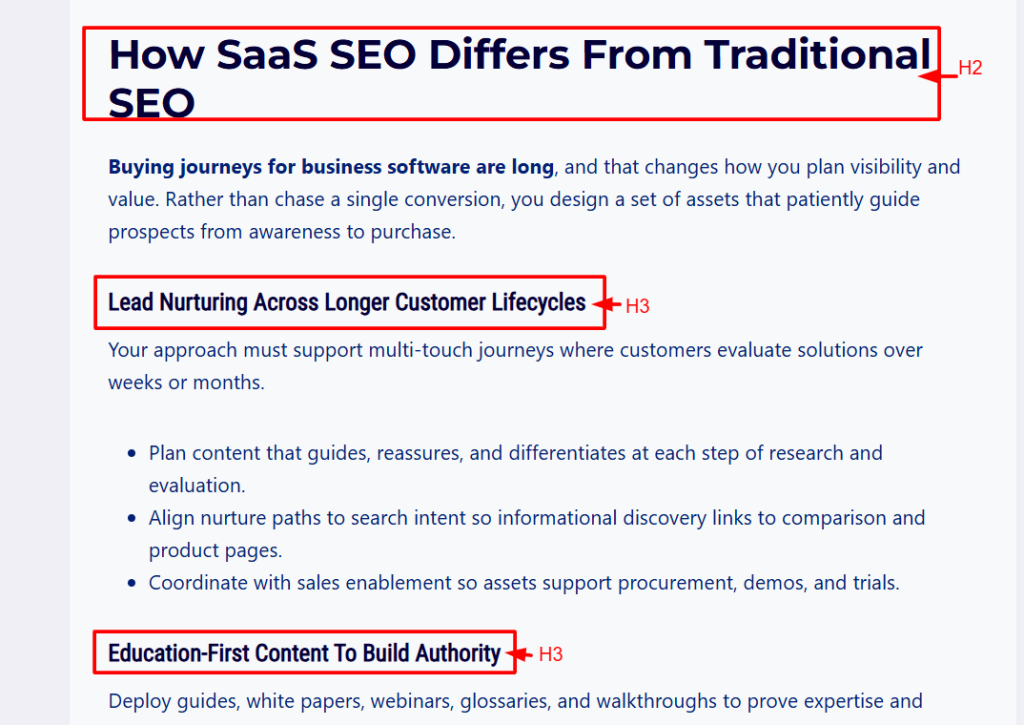
- H1 and Content Structure: Confirm there is only one H1 tag per page, and it contains the primary target keyword. Use H2, H3, and H4 tags to logically structure the content and cover related sub-topics, boosting topical depth.
Internal Linking Structure
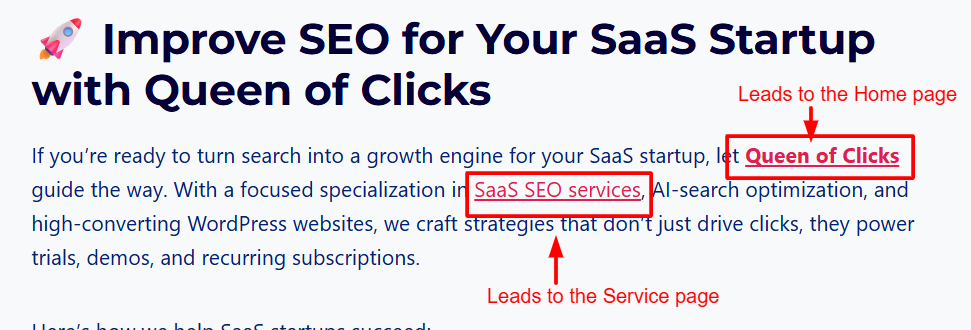
- Audit Link Equity Flow: Trace the path of internal links. Ensure your strongest pages (those with the most backlinks/authority) link to your most important money pages (pricing, trial sign-up, core features), passing authority throughout the site.
- Identify Orphan Pages: Find pages that have no internal links pointing to them. These pages are difficult for users and search engines to discover and must be integrated into the site’s main architecture.
Review Your Current Keyword Rankings
This phase determines the effectiveness of your existing content strategy and identifies immediate opportunities for improvement.
- Analyze Performance by Funnel Stage: Segment your rankings based on the intent: Top-of-funnel (informational blog content), Middle-of-funnel (comparison/review content), and Bottom-of-funnel (pricing/trial pages). Identify which stage is underperforming.
- Target Opportunity Keywords: Identify keywords where you rank in positions 4 through 15. A minor optimization (refreshing the meta title or adding a section of content) can move these pages to the top spots, yielding the fastest organic traffic gains.
Evaluate Content Quality & Coverage
For SaaS, content must do more than inform; it must establish expertise and solve a business problem that the product addresses.
Search Intent Alignment
- The Intent Mismatch Check: Use search results pages (SERPs) to see what content Google prefers to rank for your target keywords. If you are targeting an “informational” keyword with a product landing page, or a “transactional” keyword with a general blog post, you have an intent mismatch and will never rank well.
- Depth and Topical Authority: Assess if your content covers a topic comprehensively. Are you merely scratching the surface, or are you creating “10x content” that is demonstrably better and more useful than everything else currently ranking?
Content Pruning and Consolidation
- Identify Thin Content: Flag pages with low word counts, high bounce rates, and zero organic traffic. These dilute your site’s overall quality score.
- Consolidate: Merge similar, thin articles into one definitive “Pillar Page.” Delete or noindex content that is hopelessly outdated or irrelevant, 301 redirecting its URL to a relevant, high-quality page.
| On-Page Element | Audit Checklist | Best Practice for SaaS |
| Meta Titles & Descriptions | Are they unique, within character limits, and do they include the primary keyword? | Write compelling titles (50-60 characters) that feature a benefit or unique selling proposition (USP). Descriptions (140-160 characters) should act as a high-intent CTA. |
| Header Tags (H1, H2, H3) | Does the H1 contain the primary keyword? Is there only one H1 per page? Do H2s and H3s structure the content logically? | Use H-tags to break the content into scannable chunks, helping both users and search engines understand the flow and topical relevance of the page. |
| URL Structure | Are the URLs short, descriptive, and clean? | Use keywords in the URL and structure them logically (e.g., /blog/saas-seo-audit or /features/reporting). Avoid unnecessary words or long strings of numbers. |
| Topical Authority | Does the page thoroughly cover the topic, including related subtopics and semantic keywords? | Use content clusters where a main pillar page links out to multiple supporting sub-topic articles, establishing your brand as a deep expert in a specific niche. |
Examine Backlinks & Authority
Backlinks are authority signals. For SaaS, this means securing links from reputable tech publications, review sites, and industry partners.
Toxic Link Analysis
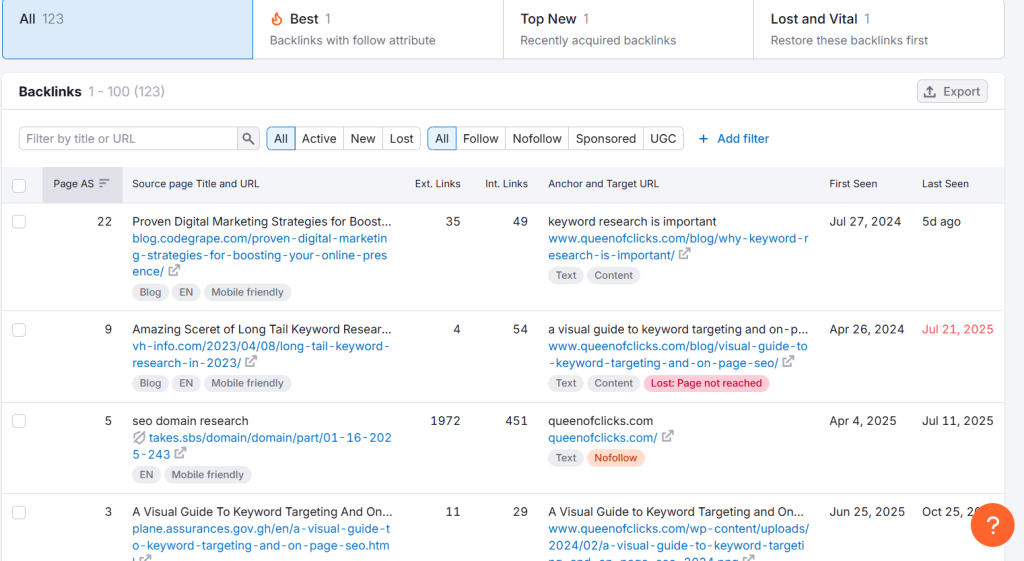
- Identify Spam: Use backlink tools to find links from irrelevant foreign domains, link directories, or sites with clear spam signals. These links can lead to algorithmic penalties.
- Disavow Toxic Links: Submit a disavow file through GSC to tell Google to ignore these harmful links.
Competitor Link Gap Analysis
- Find Your Opportunities: Analyze the backlink profiles of your top 3-5 competitors. Use a backlink tool to find domains that link to them but not to you. These are the highest-potential targets for your future outreach campaigns.
Review the SaaS Website Experience (Conversion)
SEO traffic is worthless if it doesn’t convert. This phase audits the bridge between an organic visitor and a paying user.
- CTA Placement and Clarity: Are the primary Calls-to-Action (e.g., “Start Free Trial,” “Request Demo”) immediately visible and compelling on all high-intent organic landing pages?
- Value Proposition: Is the unique selling proposition (USP) of your product clearly stated on the pages driving organic traffic? A fast-loading, highly-ranked page won’t convert if the visitor doesn’t immediately understand the value.
Examine Product Pages for SEO
SaaS product and feature pages require a unique SEO approach.
- Feature Keyword Mapping: Ensure each core feature page is optimized for both branded and non-branded keywords (e.g., “Time Tracking Software” alongside “Acme Time Tracking Feature”).
- Schema Markup: Implement SoftwareApplication and Product schema with key details like ratings, pricing, and operating system compatibility. This increases eligibility for rich results in the SERPs.
Audit AI-Search Visibility
As search engines integrate more generative AI features (e.g., Google’s SGE), content visibility is changing.
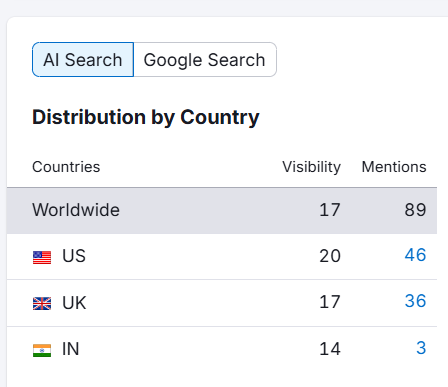
- Factuality and EEAT (Experience, Expertise, Authoritativeness, Trustworthiness): Assess content for clear citation, author expertise, and factual accuracy. Generative AI models prioritize content that exhibits high EEAT, making author bios, cited sources, and clear business contact information critical.
- Concise Summaries: Ensure key content sections have clear, short summaries that can be easily pulled by AI models for featured snippets or answer boxes.
Competitor Benchmarking
A continuous benchmarking loop helps in staying ahead in the market.
- Feature-Level Keyword Analysis: Go beyond general keywords. Analyze which competitors are winning traffic for highly specific integration, comparison, and alternative keywords (“Acme vs. ZenDesk,” “Trello alternative with Gantt charts”).
- Content Volume & Velocity: Track the rate at which top competitors are publishing new content and the overall size of their indexable content base. This helps set realistic goals for your own content production.
Top 5 Tools Used for SEO Audits
| Tool | Primary Function in SaaS Audit | Key Metric/Use Case |
| Google Search Console (GSC) | The primary source of truth for Google’s perception of your site. | Index Coverage, Core Web Vitals, Crawl Stats, Search Performance (Queries & Impressions) |
| Screaming Frog | Deep, technical website crawl for large-scale analysis. | Identifying broken links (404s), redirect chains, missing meta data, and orphan pages. |
| Ahrefs | World-class backlink and competitive analysis. | Link gap analysis, Toxic link identification, Keyword difficulty scoring, Content gap analysis. |
| SEMrush | All-in-one SEO, content, and PPC platform. | Keyword ranking tracking, On-page SEO checker, Site audit reports (often more user-friendly than Screaming Frog). |
| Google PageSpeed Insights | The official source for Google’s site speed evaluation. | Diagnosing LCP, INP, and CLS scores for individual, high-value URLs. |
How to Use the SEO Audit for Your SaaS
The output of the audit is not a report; it is a Prioritized Action Roadmap.
Creating a Priority Roadmap
- Categorize Findings: Group all issues by type (Technical, Content, On-Page, Link Building).
- Score by Impact vs. Effort:
- High Impact / Low Effort (Quick Wins): These are tackled first (e.g., fixing broken H1 tags on high-traffic pages, updating outdated meta descriptions).
- High Impact / High Effort (Major Projects): These are scheduled second and require resource allocation (e.g., a complete content cluster build, fixing JavaScript rendering issues).
- Establish Milestones: Assign ownership and realistic timelines (e.g., “Phase 1: Technical Fixes complete by end of Q1,” “Phase 2: Content Refresh complete by mid-Q2”).
Measuring Success and Iteration
The audit is the first step in a continuous optimization loop. Set clear, business-focused KPIs (e.g., increase MQLs from organic search by 15% in 6 months). Review the execution of the roadmap monthly and run a mini-audit every six months to track progress and identify new constraints.
Improve Your SEO with Queen of Clicks
Don’t let technical debt and content gaps erode your potential Monthly Recurring Revenue (MRR). Queen of Clicks is a modern SaaS SEO agency specializing in helping your software business get found, loved, and clicked on the search engines. Our approach blends data-driven strategy, cutting-edge AI technology, and creative design to deliver measurable growth and lasting online success.
How We Deliver Future-Ready SaaS Growth
We offer specialized services designed for the unique challenges of the SaaS industry:
- SaaS SEO Strategy: We focus on developing data-driven SEO strategies that prioritize high-intent keywords, ensuring you attract qualified leads ready to convert into paying customers.
- AI Search & LLM Optimization: As search evolves towards conversational AI and Large Language Models (LLMs), we optimize your content and website to maintain visibility across all new discovery platforms, making your business future-ready.
- WordPress Website Development: We build high-performing, sleek, and conversion-focused WordPress websites that are technically optimized for search engines and designed to perform beautifully and convert effortlessly.
We believe that real growth comes from a balance of creativity and data. Stop settling for generic SEO plans and start getting results that truly matter, smarter visibility, stronger engagement, and measurable MRR growth.
Ready to Turn Clicks into Customers?
If you are ready to transform your organic channel into your most reliable customer acquisition machine, contact us and take the next step.
Conclusion
A SaaS SEO audit is the single most important investment you can make in your organic growth strategy. It moves you from reacting to market changes to proactively controlling your destiny. When you systematically examine your technical foundation, content strategy, authority, and user experience, you not only fix current ranking problems but build a resilient, high-converting digital asset capable of driving massive, sustainable growth for years to come.
FAQs
How often should we conduct a comprehensive SaaS SEO Audit?
A comprehensive SaaS SEO Audit should be conducted at least once per year. However, in the highly competitive and rapidly evolving software industry, a quarterly check-up (focusing on technical health, top-performing content, and competitor movements) is highly recommended. You should also run an immediate, targeted audit anytime you experience a:
- Major algorithm update (Google Core Updates).
- Significant drop in organic traffic or conversions.
- Major site migration (rebranding, platform change).
- Large-scale content deployment (launching a new feature/pillar).
How long does a typical comprehensive SaaS SEO Audit take to complete?
The duration of a comprehensive audit depends heavily on the size and complexity of the SaaS platform.
- Small to Medium Sites (under 500 pages): Typically take 1 to 2 weeks for data gathering, manual review, and report generation.
- Large Enterprise Sites (500+ pages, multiple subdomains, or international setup): Can take 2 to 4 weeks to complete a thorough analysis and deliver a fully prioritized roadmap.
It’s important to differentiate this from an automated scan, which is quick but lacks the expert manual review and strategic prioritization necessary for high-value SaaS recommendations.
What is the role of competitor reverse-engineering in a SaaS SEO Audit, beyond just finding backlink gaps?
Competitor reverse-engineering extends far beyond backlink analysis; it is a strategy benchmark. We analyze the competitor’s site structure to understand their content hierarchy, focusing on how they organize their feature pages, use cases, and integrations. This reveals successful topical clusters and optimal internal linking strategies. Also, we analyze their top-ranking pages to understand the depth and format of content that Google rewards in your specific niche, whether it’s long-form guides, interactive tools, or concise comparison tables, allowing you to mimic and exceed that proven successful format.
When should we use a sub-domain versus a sub-directory for new content, like a community forum?
For SEO authority, a sub-directory (/community/) is generally preferred because it keeps content under the main domain, allowing it to benefit from the main site’s established authority and backlink profile. A sub-domain (community.example.com) often requires building SEO authority virtually from scratch.
What is the single most important factor for ranking content in a competitive SaaS niche?
The single most important factor is Topical Authority. It’s not enough to cover a single keyword; you must demonstrate deep expertise and create comprehensive clusters of related content, internally linked together, proving your site is the definitive source for that entire topic area.